 Copyright © yoice.net – Quote Artwork
"Feminism is a muddled idea that women are free when they serve their employers but slaves when they help their husbands."
Gilbert Keith Chesterton

Feudalism Quotes – Reflections on Historical Social Order
A curated collection of feudalism quotes reflecting on power, structure, and social hierarchies in historical contexts.
This collection of feudalism quotes provides thoughtful perspectives on the structures and dynamics of historical social systems. They highlight themes of authority, dependency, and social hierarchy characteristic of feudal societies. The quotes encourage reflection on power relations and cultural developments of the past. These contributions offer valuable insights into the cultural heritage and philosophical dimensions of feudalism.
"Feminism is a muddled idea that women are free when they serve their employers but slaves when they help their husbands."
Gilbert Keith Chesterton
"Ordinary men and women are too small-minded to govern their own affairs, that order and progress can only come when individuals surrender their rights to an all-powerful sovereign."
Barack Hussein Obama II
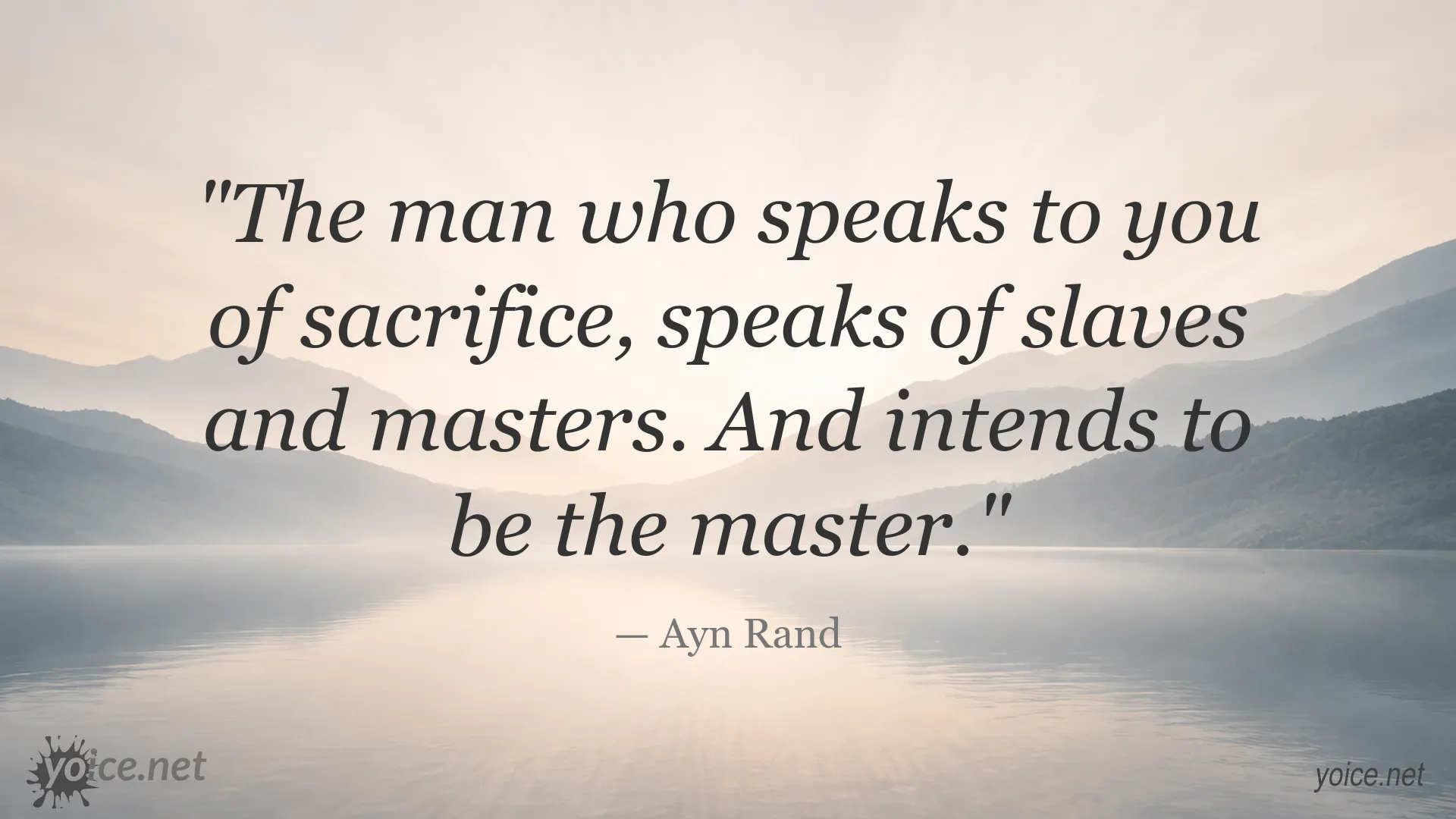
"The man who speaks to you of sacrifice, speaks of slaves and masters. And intends to be the master."
Ayn Rand
"History does not belong to us; we belong to it."
Hans-Georg Gadamer
"Financial dependence on the state is the foundation of modern serfdom."
G. Edward Griffin
"More whites were brought as slaves to North Africa than blacks brought as slaves to the United States or to the 13 colonies from which it was formed. White slaves were still being bought and sold in the Ottoman Empire, decades after blacks were freed in the United States."
Thomas Sowell
"Fascism is the bourgeoisie’s fighting organisation that relies on the active support of Social-Democracy. Social democracy is objectively the moderate wing of fascism.... These organisations (i.e. Fascism and social democracy) are not antipodes, they are twins."
Joseph Stalin
"There are two ways to conquer and enslave a nation. One is by the sword. The other is by debt."
John Quincy Adams
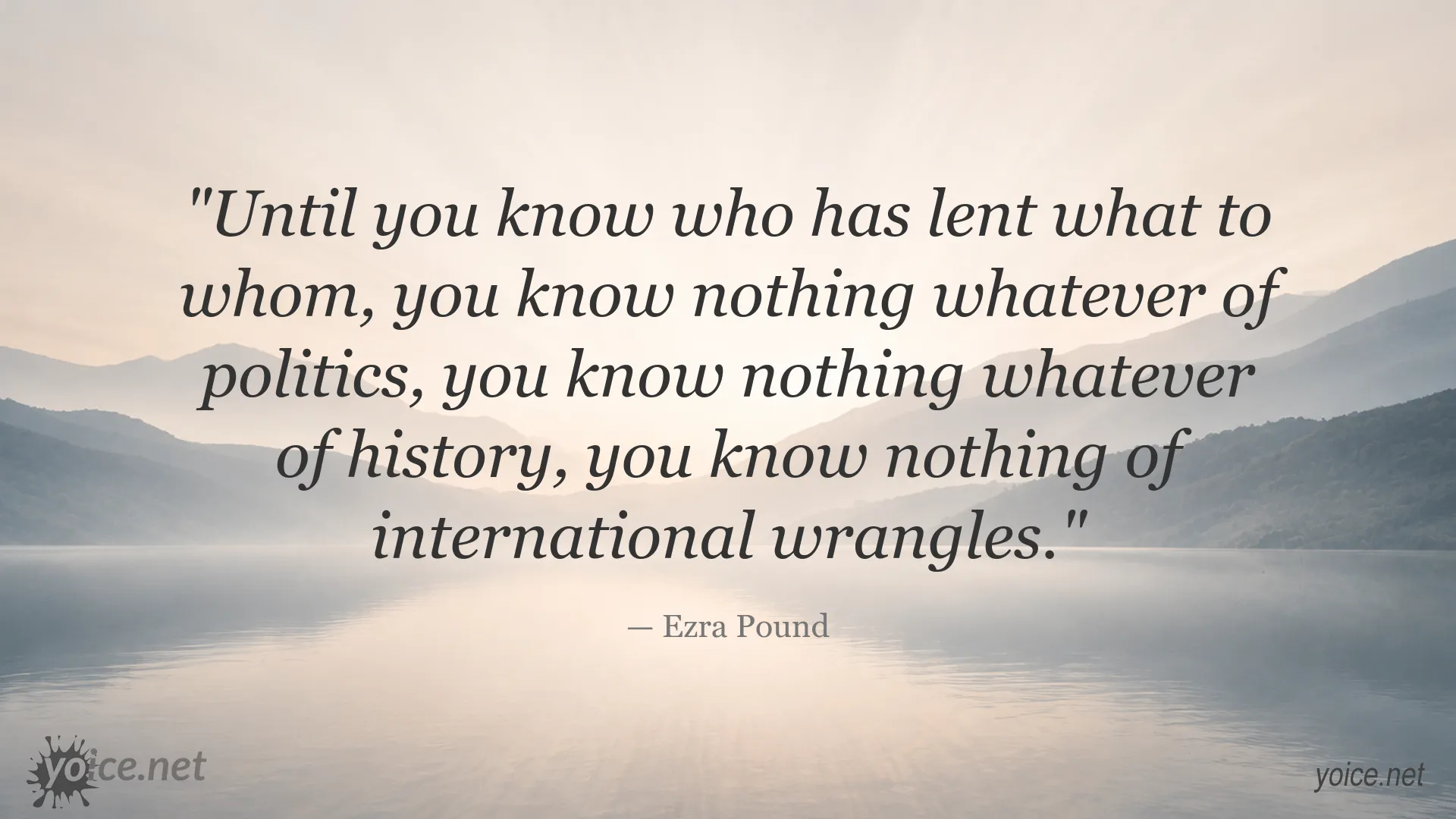
"Until you know who has lent what to whom, you know nothing whatever of politics, you know nothing whatever of history, you know nothing of international wrangles."
Ezra Pound
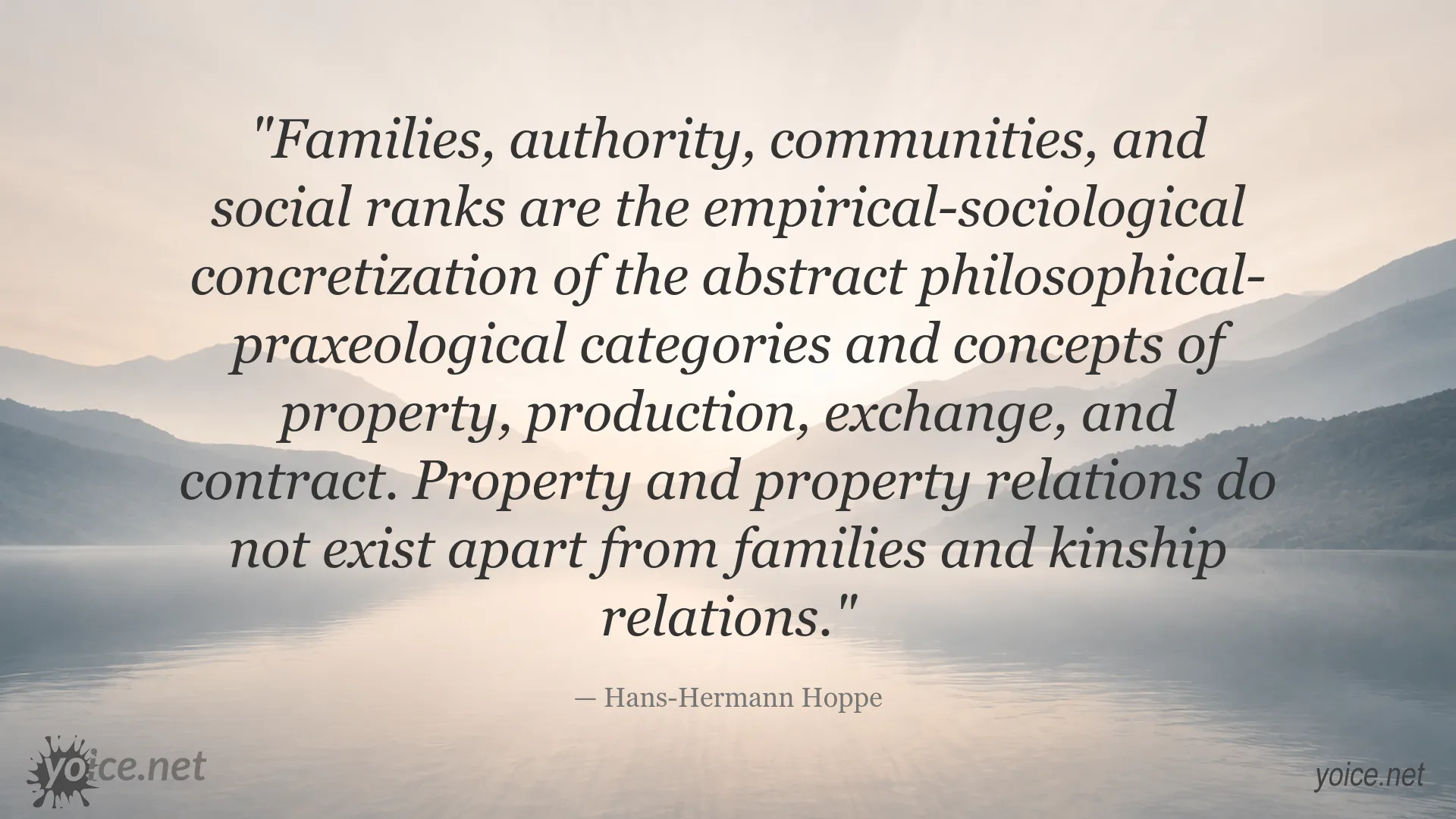
"Families, authority, communities, and social ranks are the empirical-sociological concretization of the abstract philosophical-praxeological categories and concepts of property, production, exchange, and contract. Property and property relations do not exist apart from families and kinship relations."
Hans-Hermann Hoppe
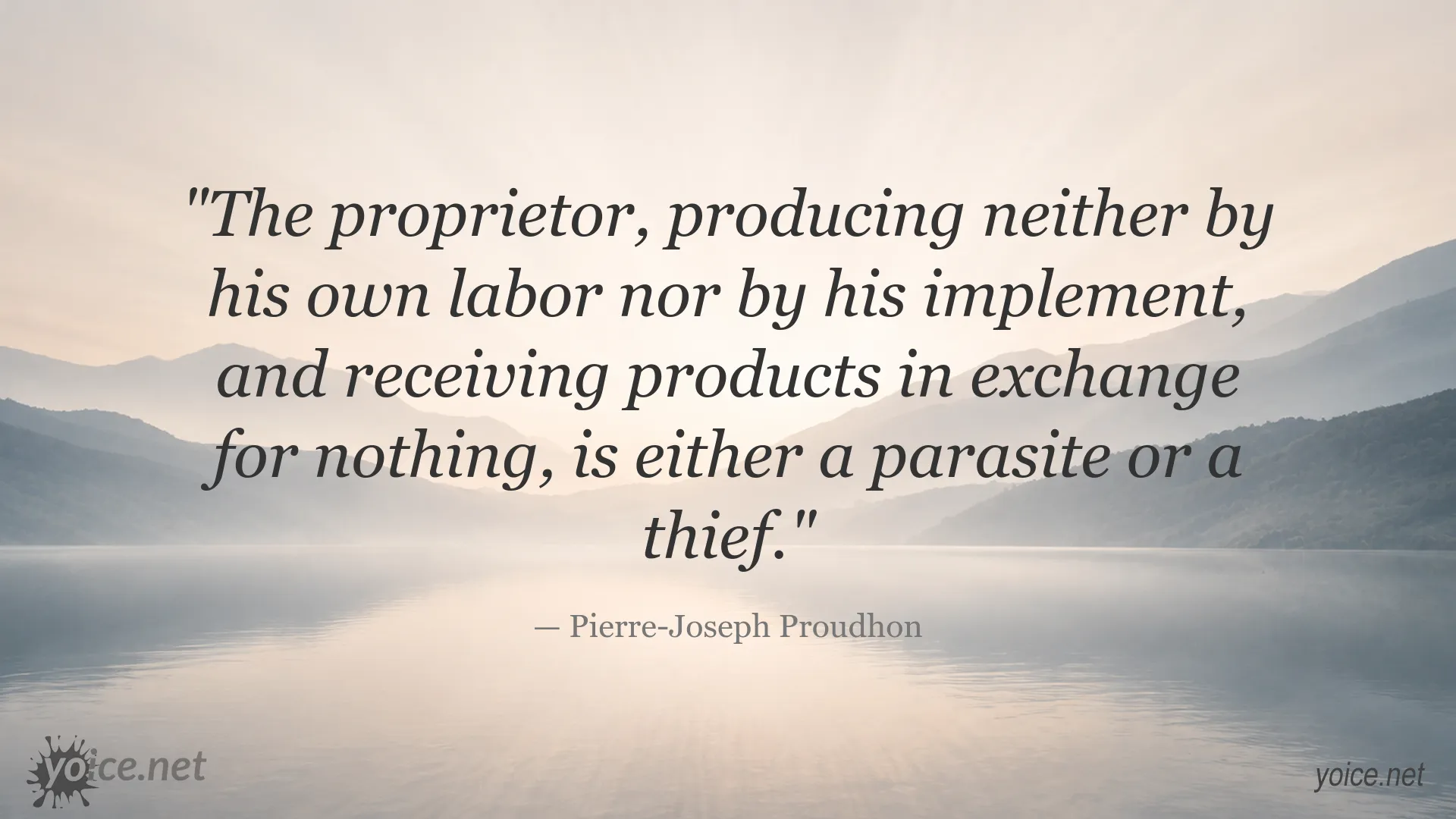
"The proprietor, producing neither by his own labor nor by his implement, and receiving products in exchange for nothing, is either a parasite or a thief."
Pierre-Joseph Proudhon
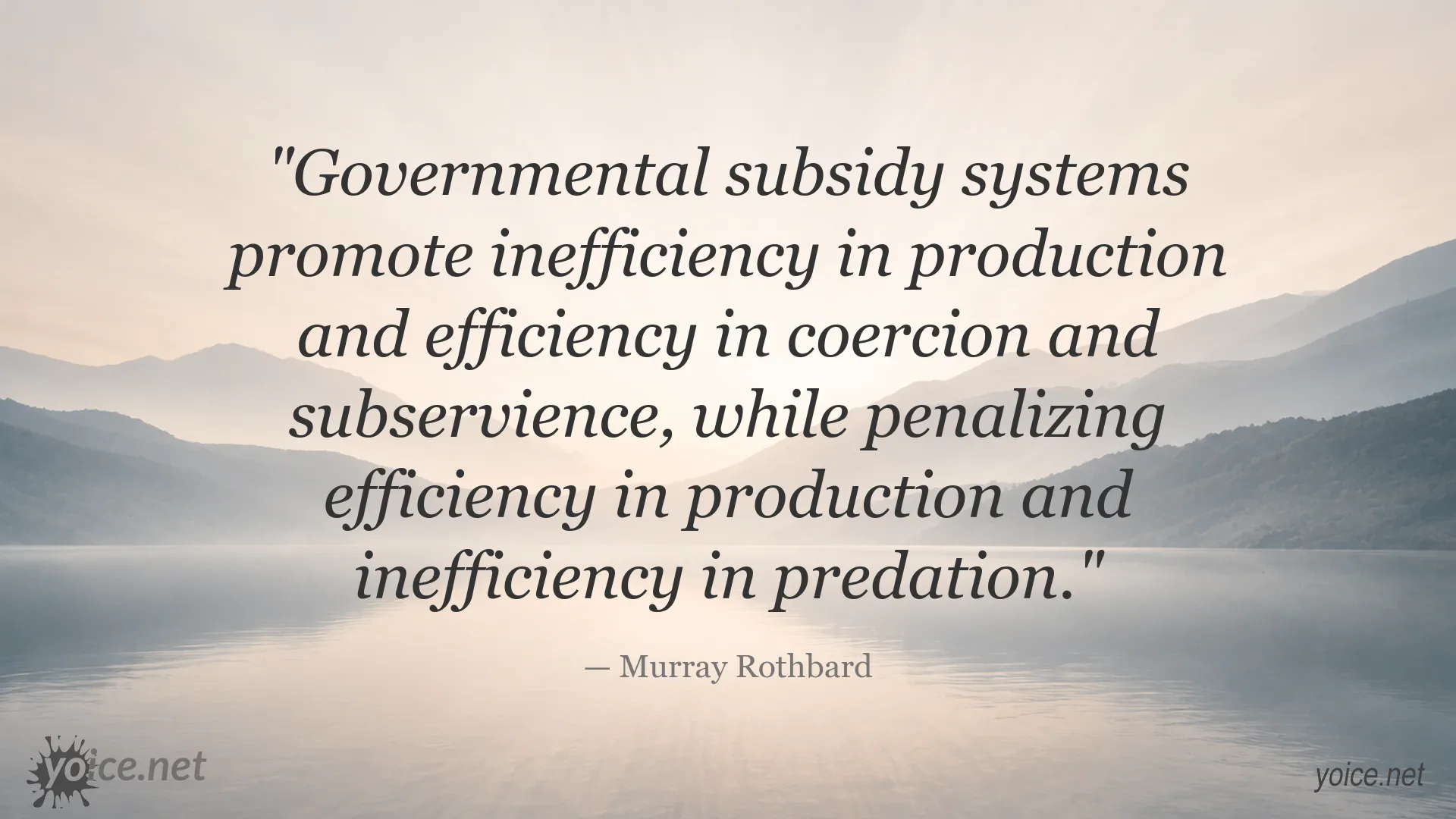
"Governmental subsidy systems promote inefficiency in production and efficiency in coercion and subservience, while penalizing efficiency in production and inefficiency in predation."
Murray Rothbard
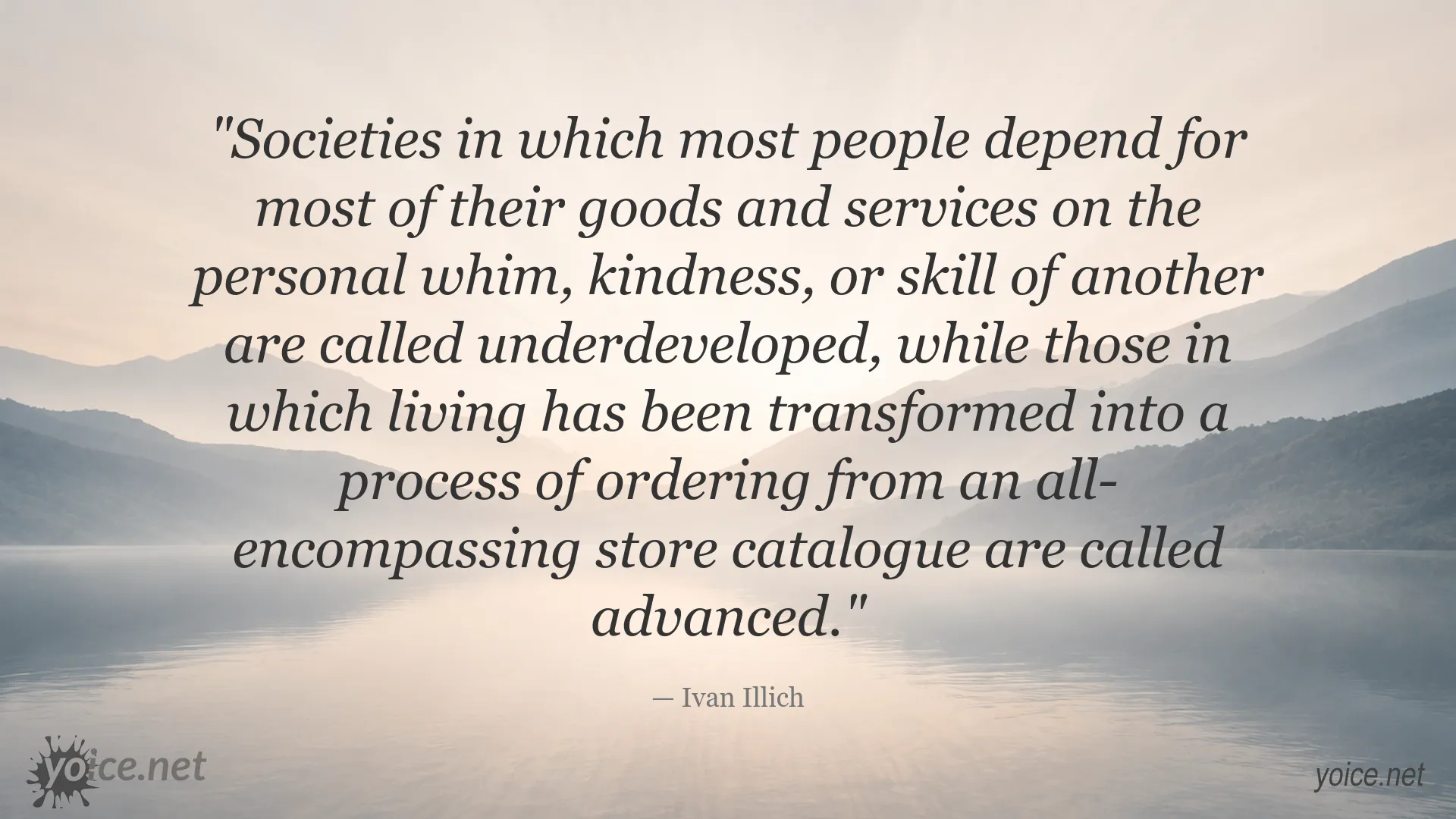
"Societies in which most people depend for most of their goods and services on the personal whim, kindness, or skill of another are called underdeveloped, while those in which living has been transformed into a process of ordering from an all-encompassing store catalogue are called advanced."
Ivan Illich
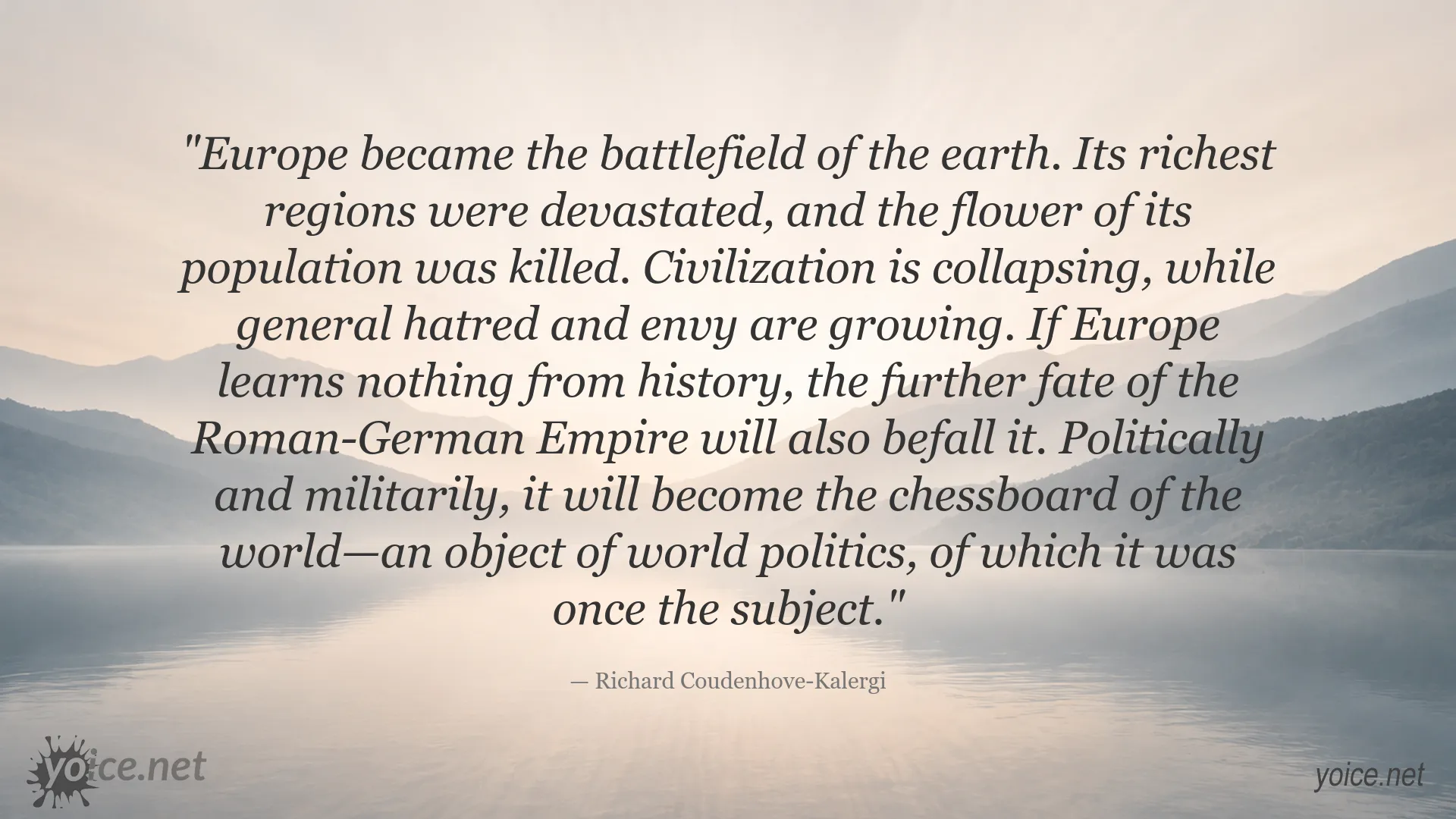
"Europe became the battlefield of the earth. Its richest regions were devastated, and the flower of its population was killed. Civilization is collapsing, while general hatred and envy are growing. If Europe learns nothing from history, the further fate of the Roman-German Empire will also befall it. Politically and militarily, it will become the chessboard of the world—an object of world politics, of which it was once the subject."
Richard Coudenhove-Kalergi
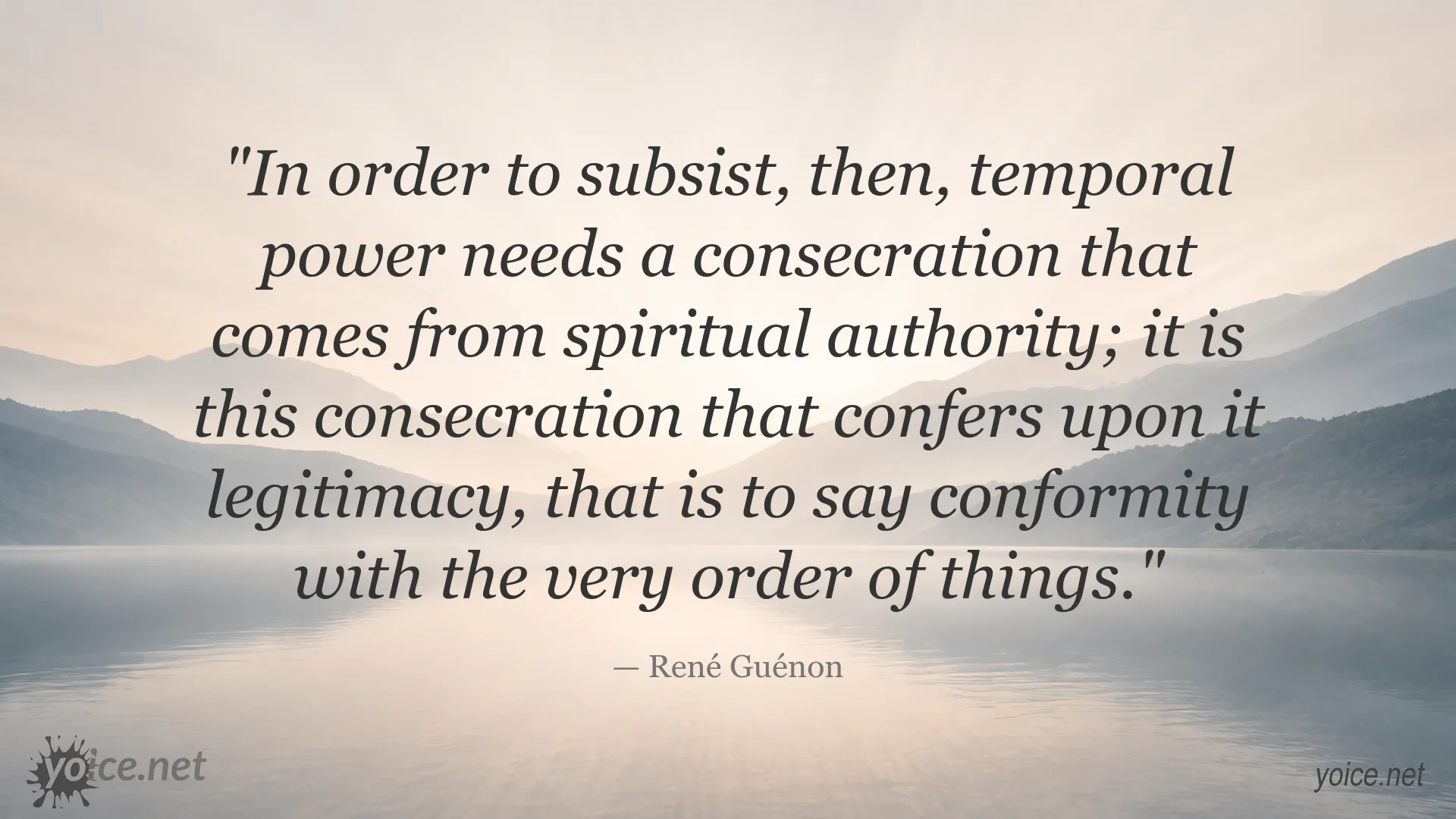
"In order to subsist, then, temporal power needs a consecration that comes from spiritual authority; it is this consecration that confers upon it legitimacy, that is to say conformity with the very order of things."
René Guénon
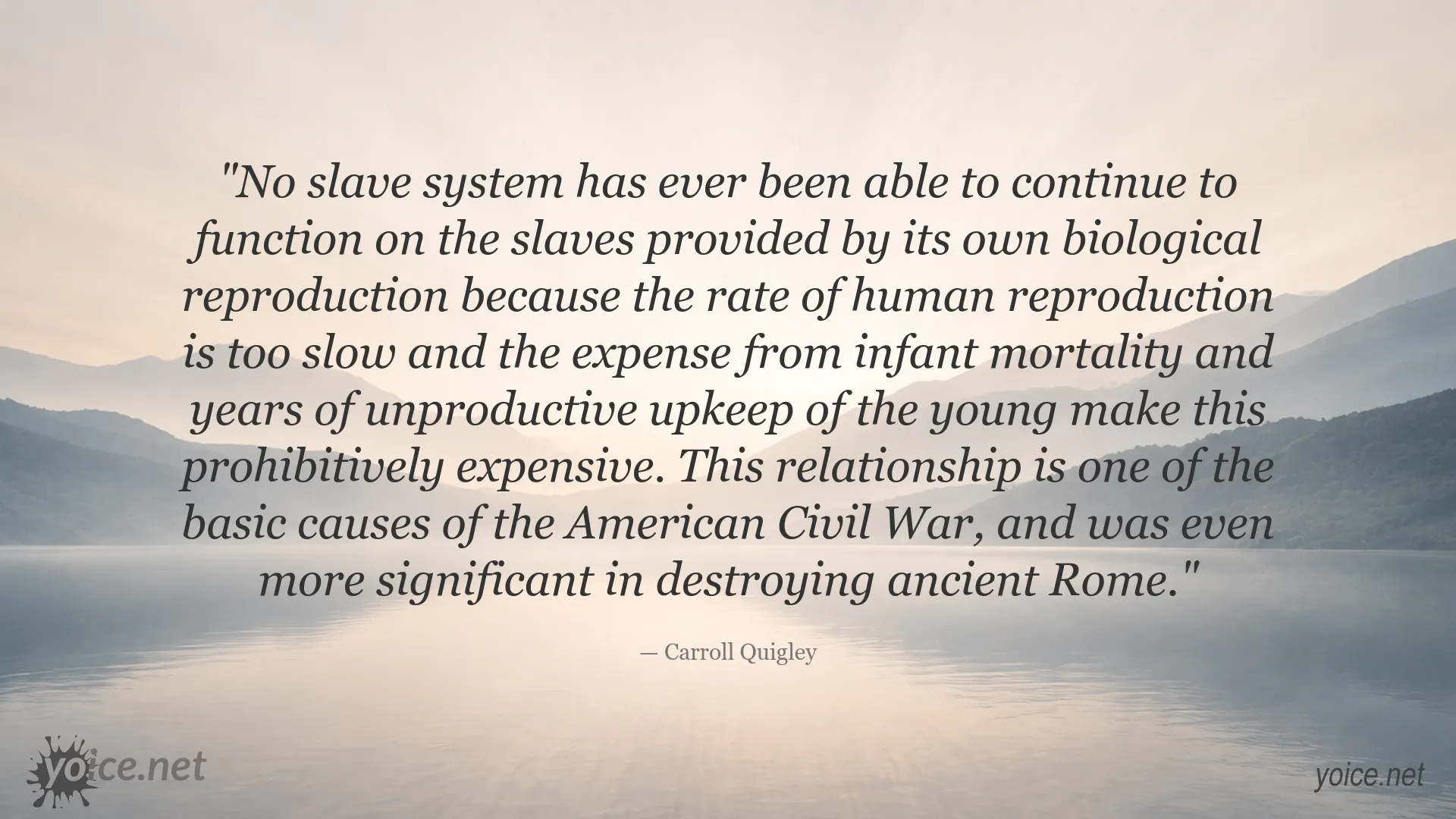
"No slave system has ever been able to continue to function on the slaves provided by its own biological reproduction because the rate of human reproduction is too slow and the expense from infant mortality and years of unproductive upkeep of the young make this prohibitively expensive. This relationship is one of the basic causes of the American Civil War, and was even more significant in destroying ancient Rome."
Carroll Quigley
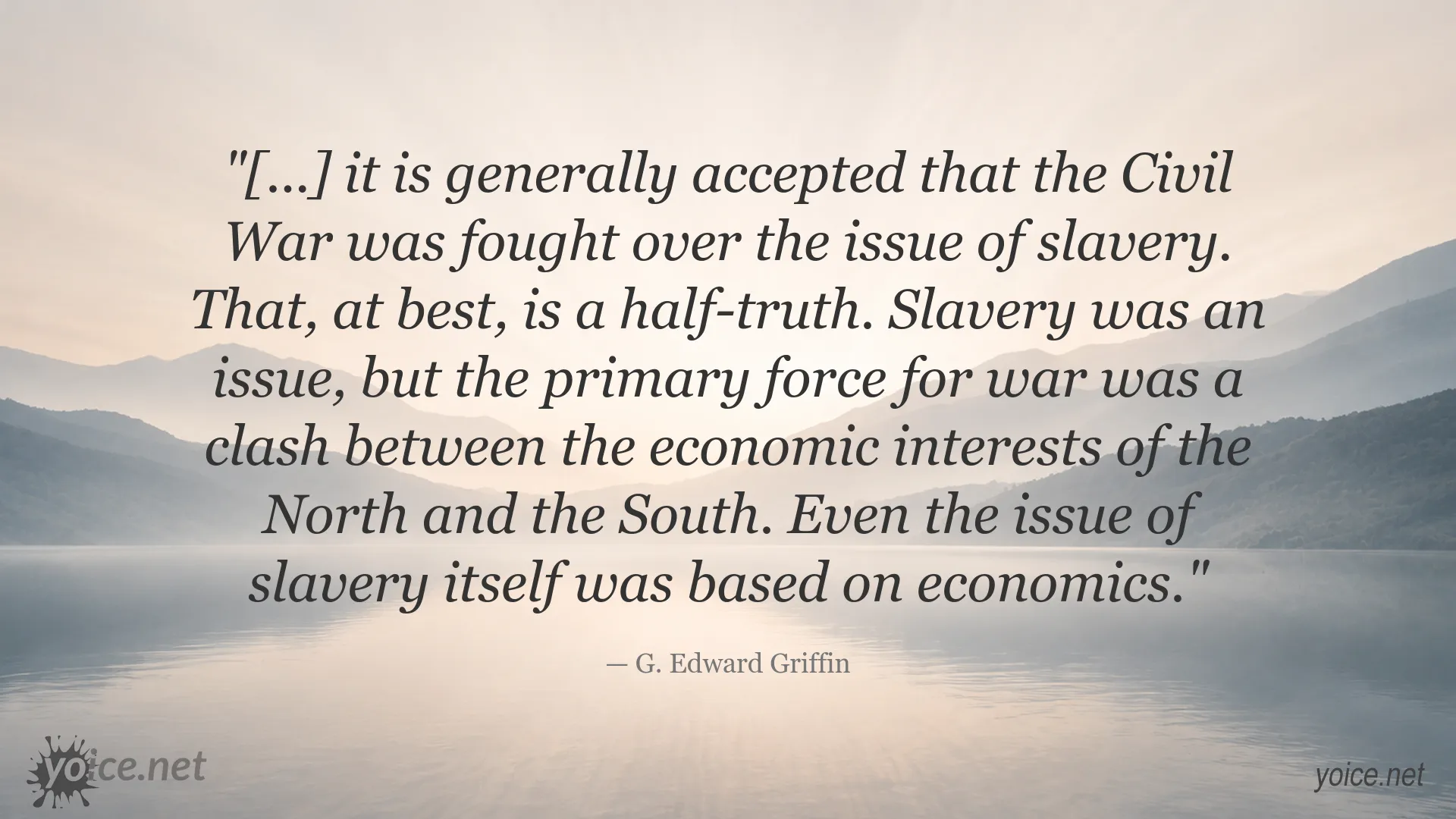
"[...] it is generally accepted that the Civil War was fought over the issue of slavery. That, at best, is a half-truth. Slavery was an issue, but the primary force for war was a clash between the economic interests of the North and the South. Even the issue of slavery itself was based on economics."
G. Edward Griffin
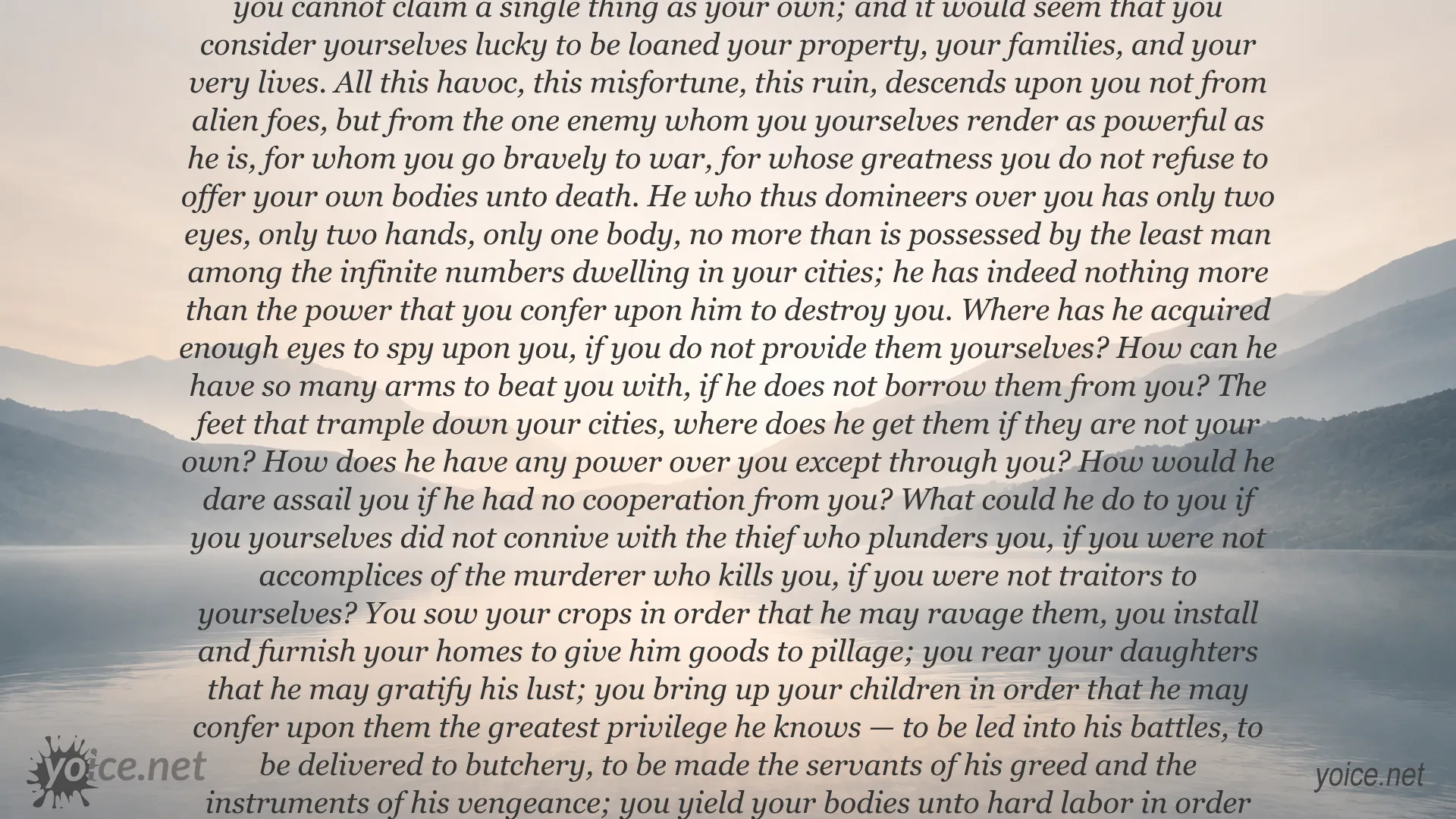
"Poor, wretched, and stupid peoples, nations determined on your own misfortune and blind to your own good! You let yourselves be deprived before your own eyes of the best part of your revenues; your fields are plundered, your homes robbed, your family heirlooms taken away. You live in such a way that you cannot claim a single thing as your own; and it would seem that you consider yourselves lucky to be loaned your property, your families, and your very lives. All this havoc, this misfortune, this ruin, descends upon you not from alien foes, but from the one enemy whom you yourselves render as powerful as he is, for whom you go bravely to war, for whose greatness you do not refuse to offer your own bodies unto death. He who thus domineers over you has only two eyes, only two hands, only one body, no more than is possessed by the least man among the infinite numbers dwelling in your cities; he has indeed nothing more than the power that you confer upon him to destroy you. Where has he acquired enough eyes to spy upon you, if you do not provide them yourselves? How can he have so many arms to beat you with, if he does not borrow them from you? The feet that trample down your cities, where does he get them if they are not your own? How does he have any power over you except through you? How would he dare assail you if he had no cooperation from you? What could he do to you if you yourselves did not connive with the thief who plunders you, if you were not accomplices of the murderer who kills you, if you were not traitors to yourselves? You sow your crops in order that he may ravage them, you install and furnish your homes to give him goods to pillage; you rear your daughters that he may gratify his lust; you bring up your children in order that he may confer upon them the greatest privilege he knows — to be led into his battles, to be delivered to butchery, to be made the servants of his greed and the instruments of his vengeance; you yield your bodies unto hard labor in order that he may indulge in his delights and wallow in his filthy pleasures; you weaken yourselves in order to make him the stronger and the mightier to hold you in check."
Étienne de La Boétie
 Copyright © yoice.net – Quote Artwork
 Copyright © yoice.net – Quote Artwork
 Copyright © yoice.net – Quote Artwork
 Copyright © yoice.net – Quote Artwork
 Copyright © yoice.net – Quote Artwork
 Copyright © yoice.net – Quote Artwork
 Copyright © yoice.net – Quote Artwork
 Copyright © yoice.net – Quote Artwork
 Copyright © yoice.net – Quote Artwork
 Copyright © yoice.net – Quote Artwork
 Copyright © yoice.net – Quote Artwork
 Copyright © yoice.net – Quote Artwork
 Copyright © yoice.net – Quote Artwork
 Copyright © yoice.net – Quote Artwork
 Copyright © yoice.net – Quote Artwork
 Copyright © yoice.net – Quote Artwork
 Copyright © yoice.net – Quote Artwork