 Copyright © yoice.net – Quote Artwork
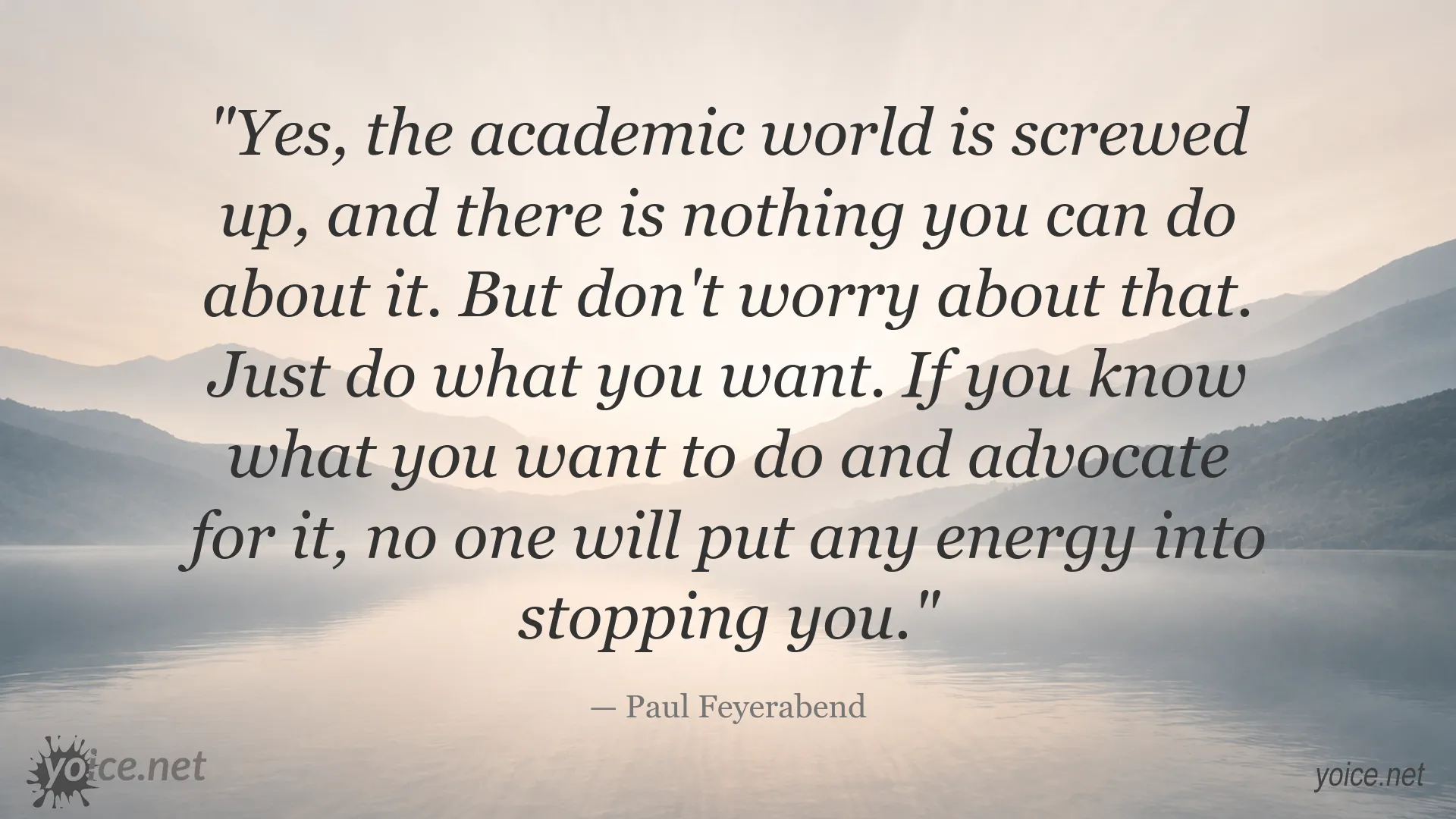
"Yes, the academic world is screwed up, and there is nothing you can do about it. But don't worry about that. Just do what you want. If you know what you want to do and advocate for it, no one will put any energy into stopping you."
Paul Feyerabend

Science Quotes – Thoughtful Perspectives
A collection of science quotes providing insight and inspiration relating to research, knowledge, and progress.
This compilation of science quotes presents diverse perspectives on the importance of research, discovery, and innovation. The quotes invite contemplation about the role of science in human life and society. They reflect on progress, curiosity, and the pursuit of truth. This collection is ideal for those seeking inspiration through thoughtful and meaningful words related to the field of science.
"Yes, the academic world is screwed up, and there is nothing you can do about it. But don't worry about that. Just do what you want. If you know what you want to do and advocate for it, no one will put any energy into stopping you."
Paul Feyerabend
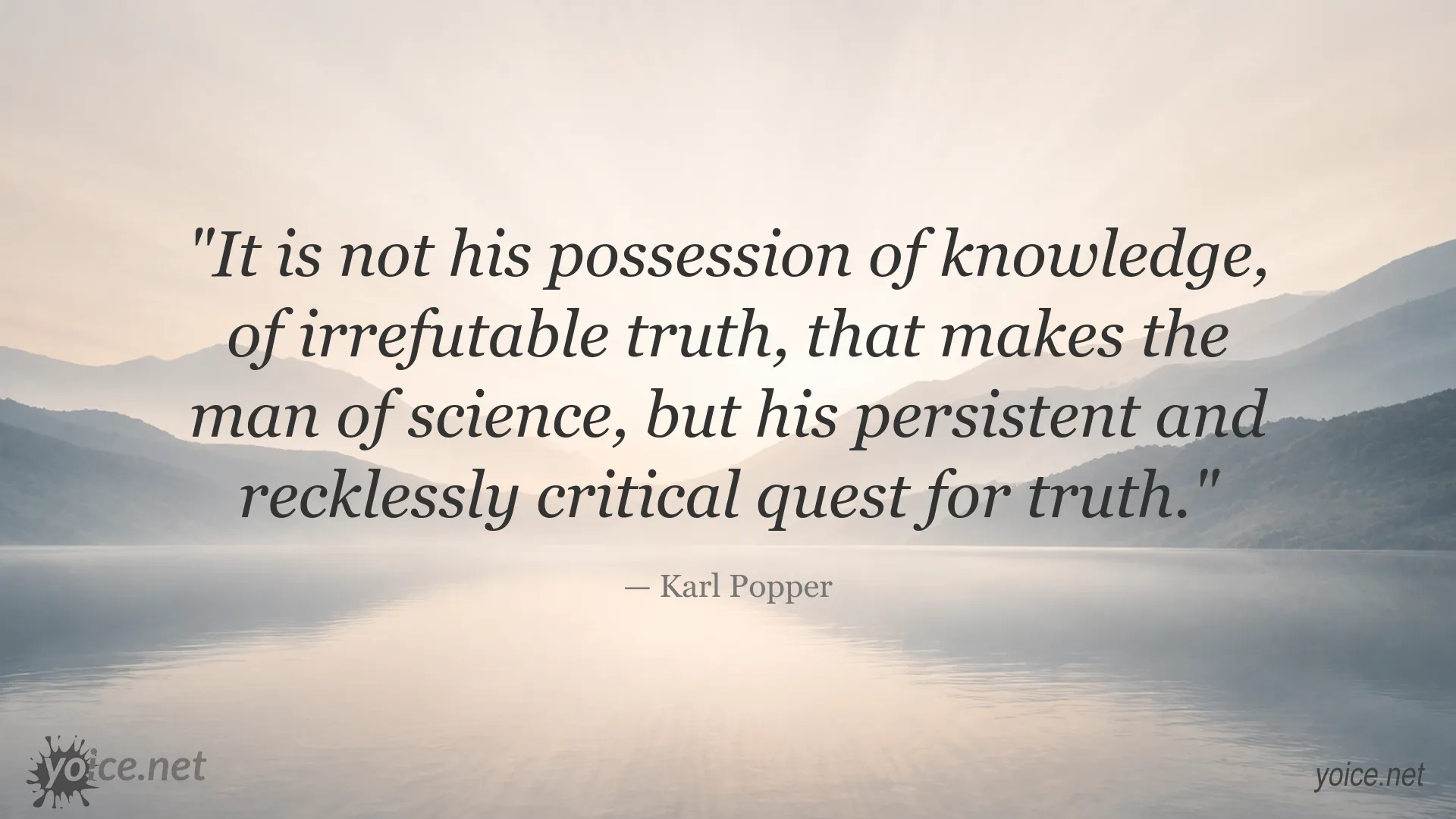
"It is not his possession of knowledge, of irrefutable truth, that makes the man of science, but his persistent and recklessly critical quest for truth."
Karl Popper
"I will return to my forest to die in peace. The whole of science and all its appendages are just a bunch of thieves hanging like marionettes on strings and having to dance to whatever tune their well-hidden slave masters deem necessary."
Viktor Schauberger
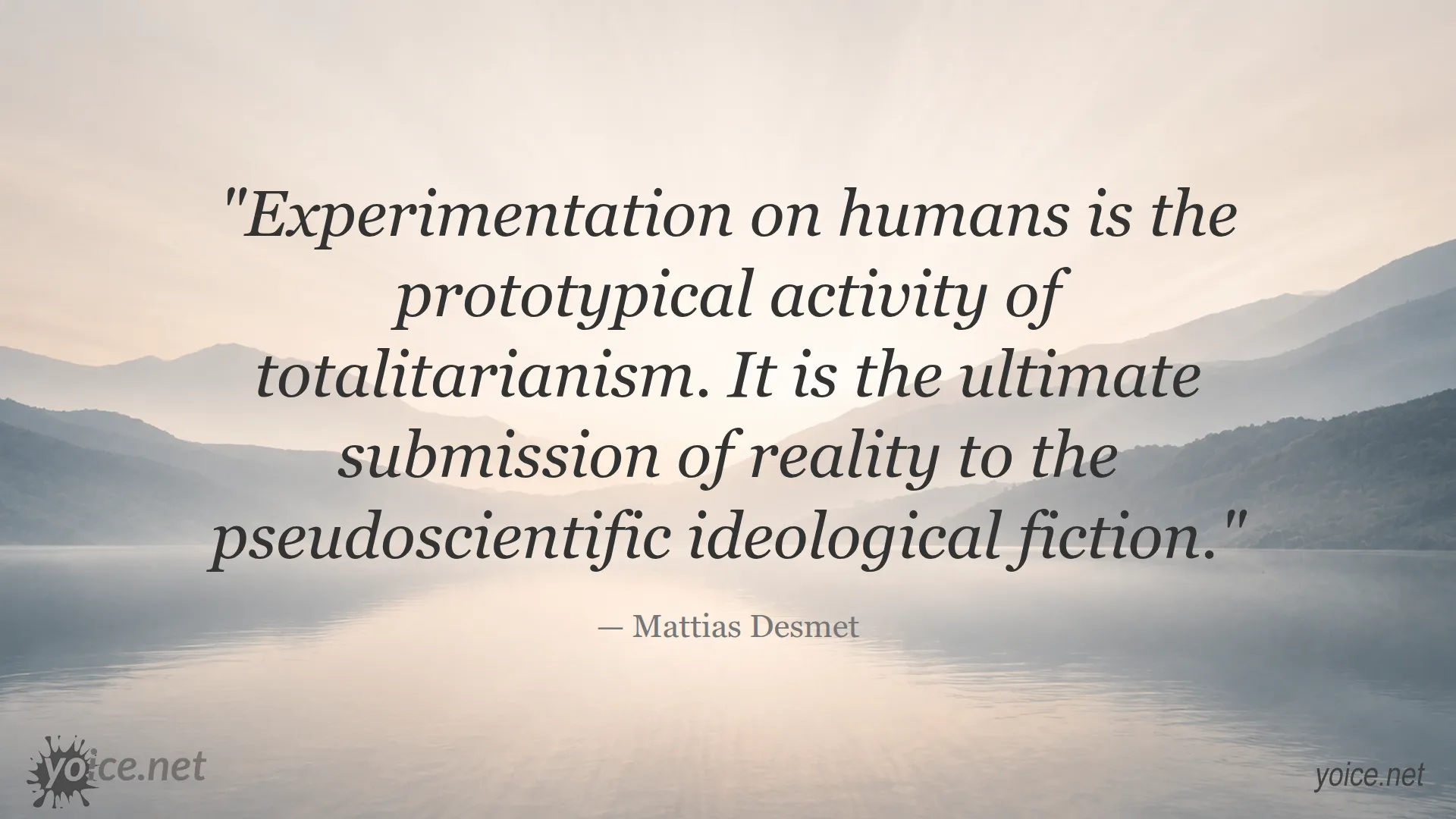
"Experimentation on humans is the prototypical activity of totalitarianism. It is the ultimate submission of reality to the pseudoscientific ideological fiction."
Mattias Desmet
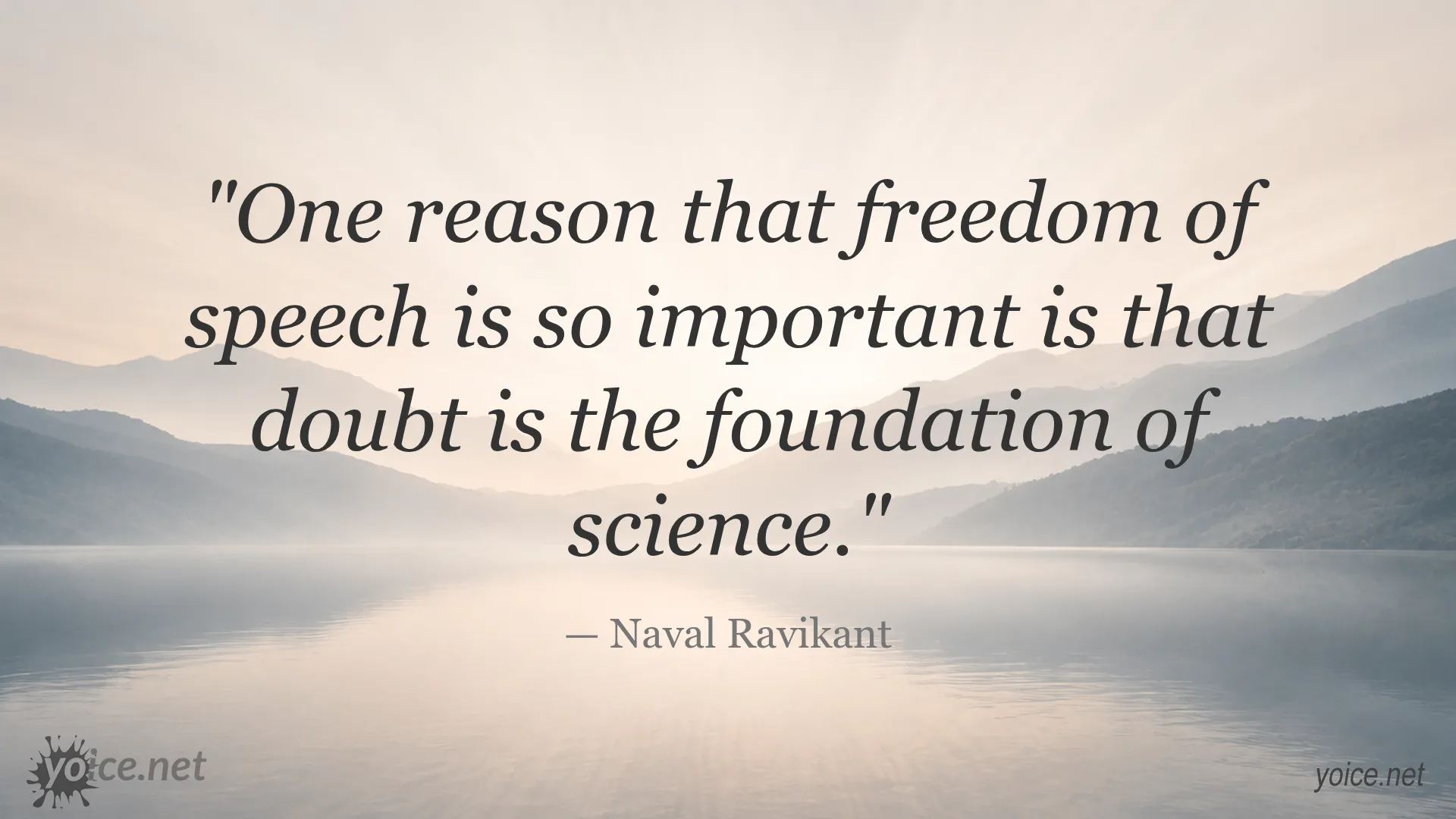
"One reason that freedom of speech is so important is that doubt is the foundation of science."
Naval Ravikant
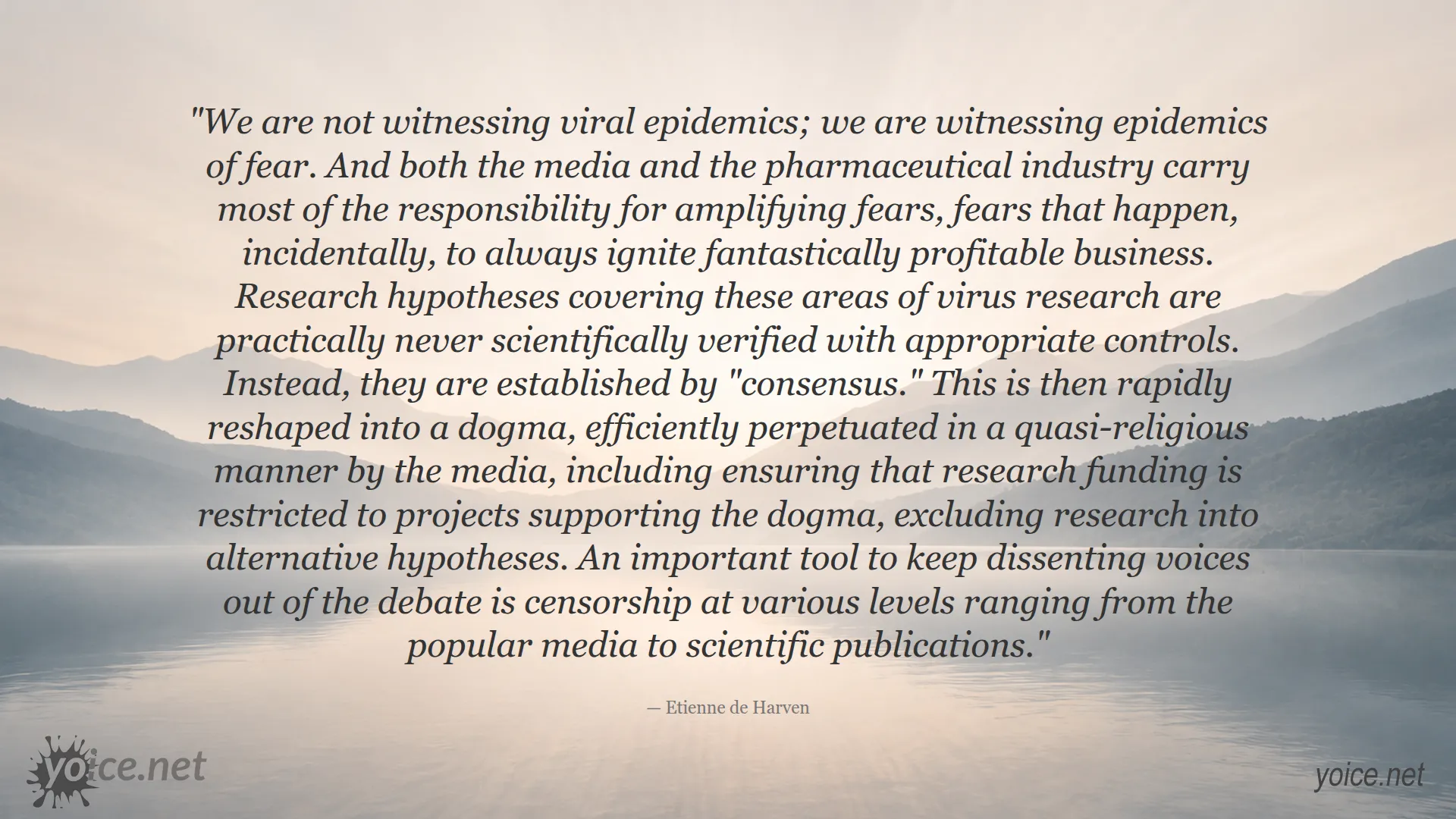
"We are not witnessing viral epidemics; we are witnessing epidemics of fear. And both the media and the pharmaceutical industry carry most of the responsibility for amplifying fears, fears that happen, incidentally, to always ignite fantastically profitable business. Research hypotheses covering these areas of virus research are practically never scientifically verified with appropriate controls. Instead, they are established by "consensus." This is then rapidly reshaped into a dogma, efficiently perpetuated in a quasi-religious manner by the media, including ensuring that research funding is restricted to projects supporting the dogma, excluding research into alternative hypotheses. An important tool to keep dissenting voices out of the debate is censorship at various levels ranging from the popular media to scientific publications."
Etienne de Harven
"Technology feeds on itself. Technology makes more technology possible."
Alvin Toffler
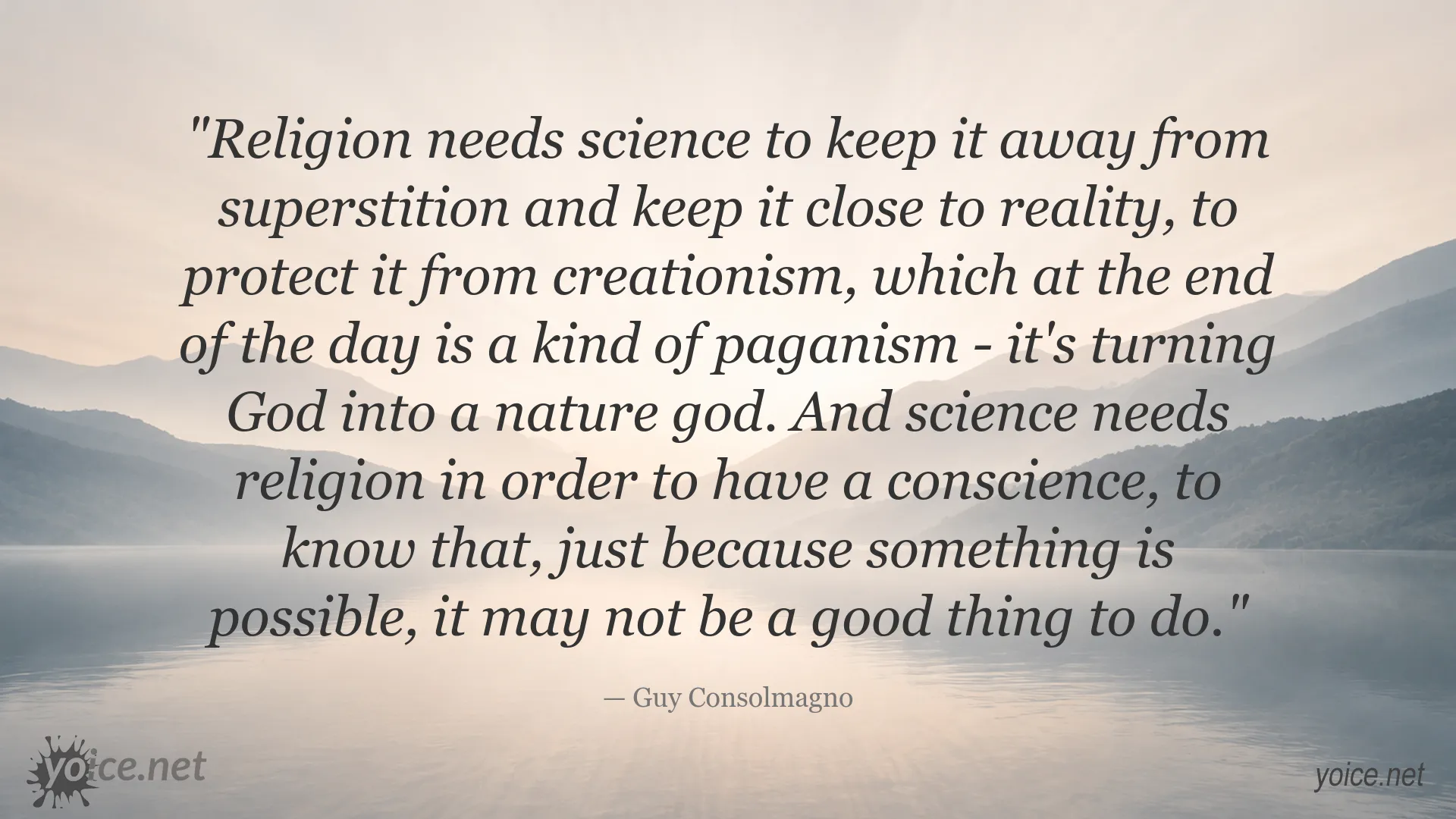
"Religion needs science to keep it away from superstition and keep it close to reality, to protect it from creationism, which at the end of the day is a kind of paganism - it's turning God into a nature god. And science needs religion in order to have a conscience, to know that, just because something is possible, it may not be a good thing to do."
Guy Consolmagno
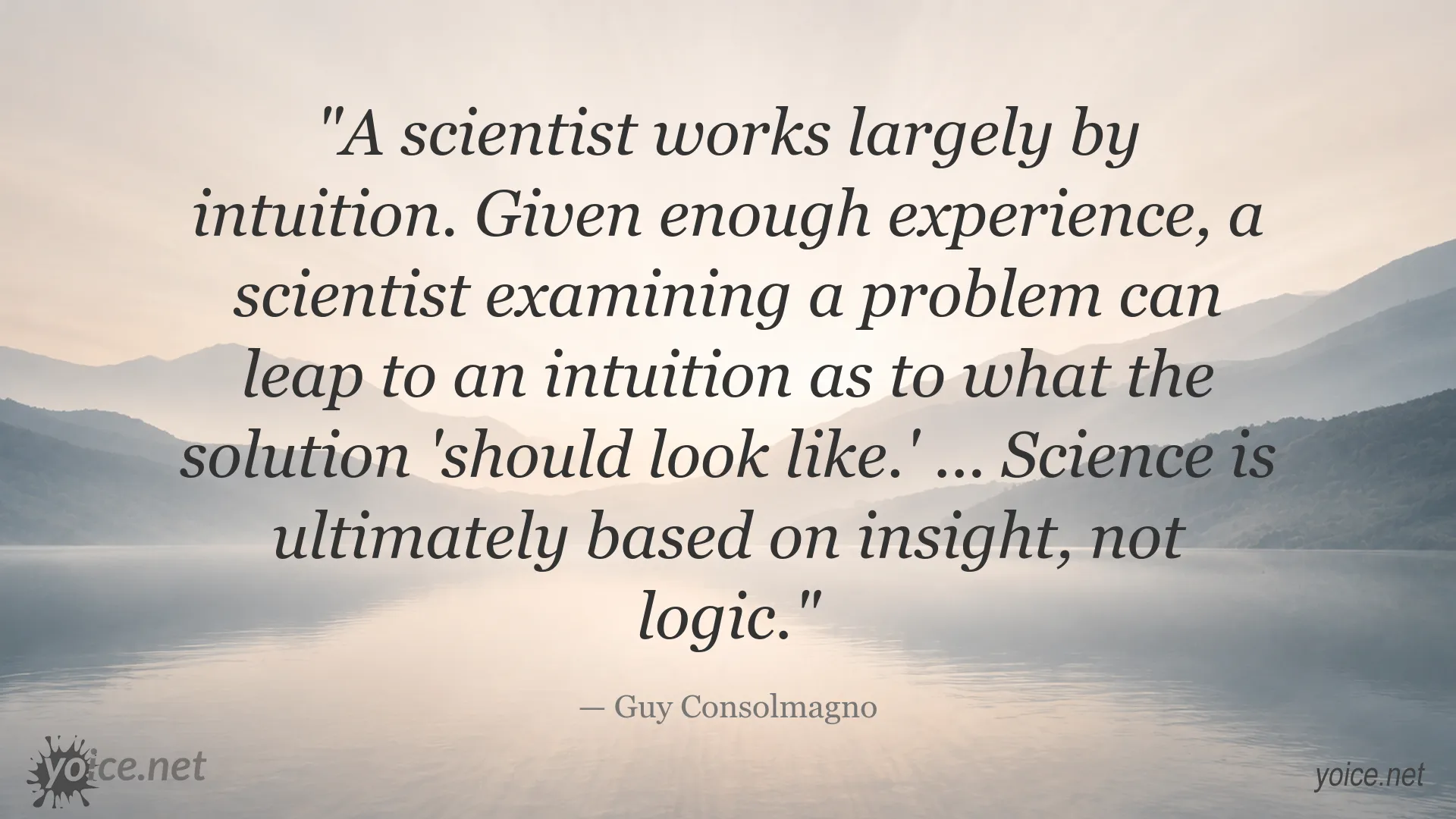
"A scientist works largely by intuition. Given enough experience, a scientist examining a problem can leap to an intuition as to what the solution 'should look like.' ... Science is ultimately based on insight, not logic."
Guy Consolmagno
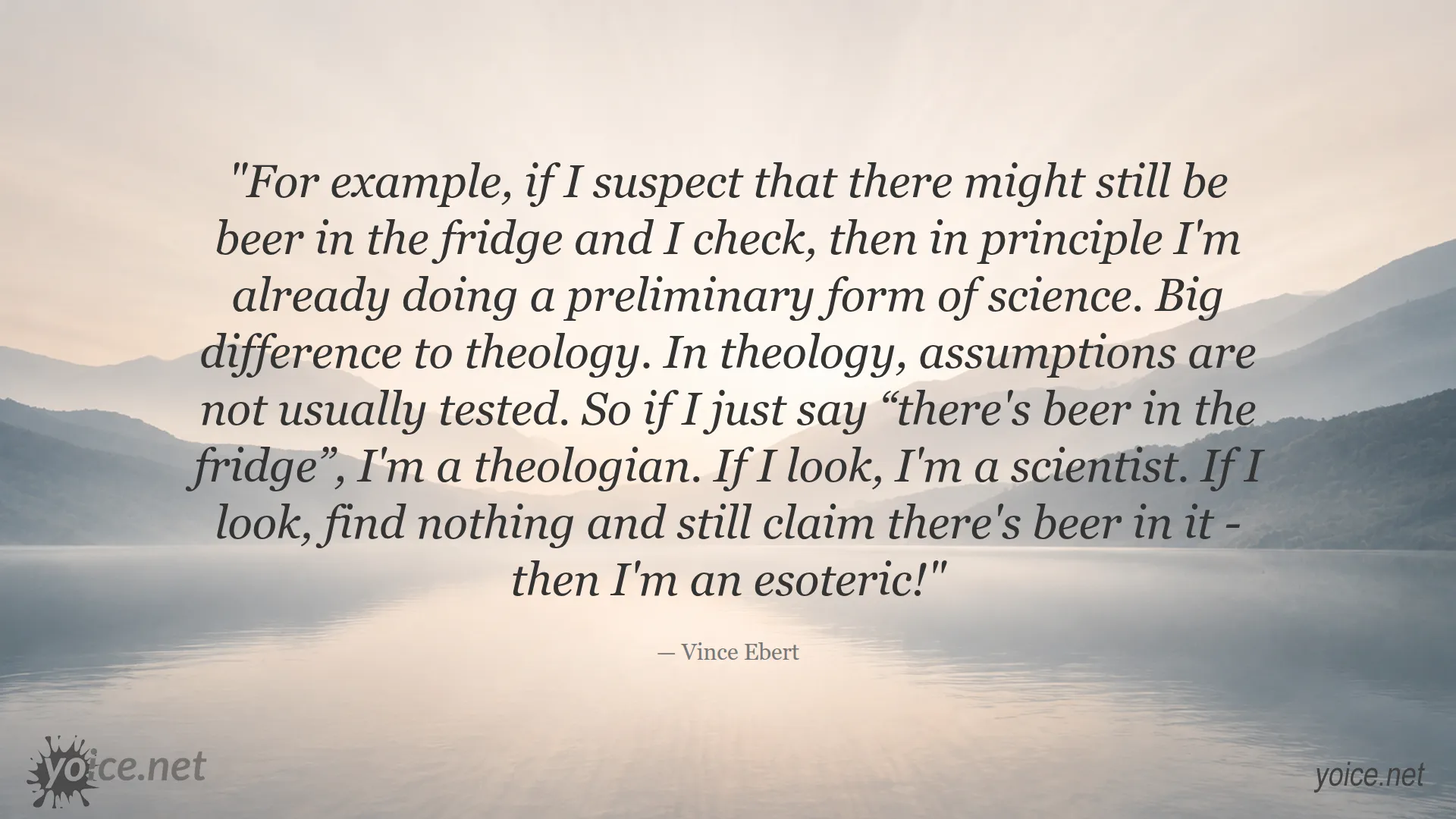
"For example, if I suspect that there might still be beer in the fridge and I check, then in principle I'm already doing a preliminary form of science. Big difference to theology. In theology, assumptions are not usually tested. So if I just say “there's beer in the fridge”, I'm a theologian. If I look, I'm a scientist. If I look, find nothing and still claim there's beer in it - then I'm an esoteric!"
Vince Ebert
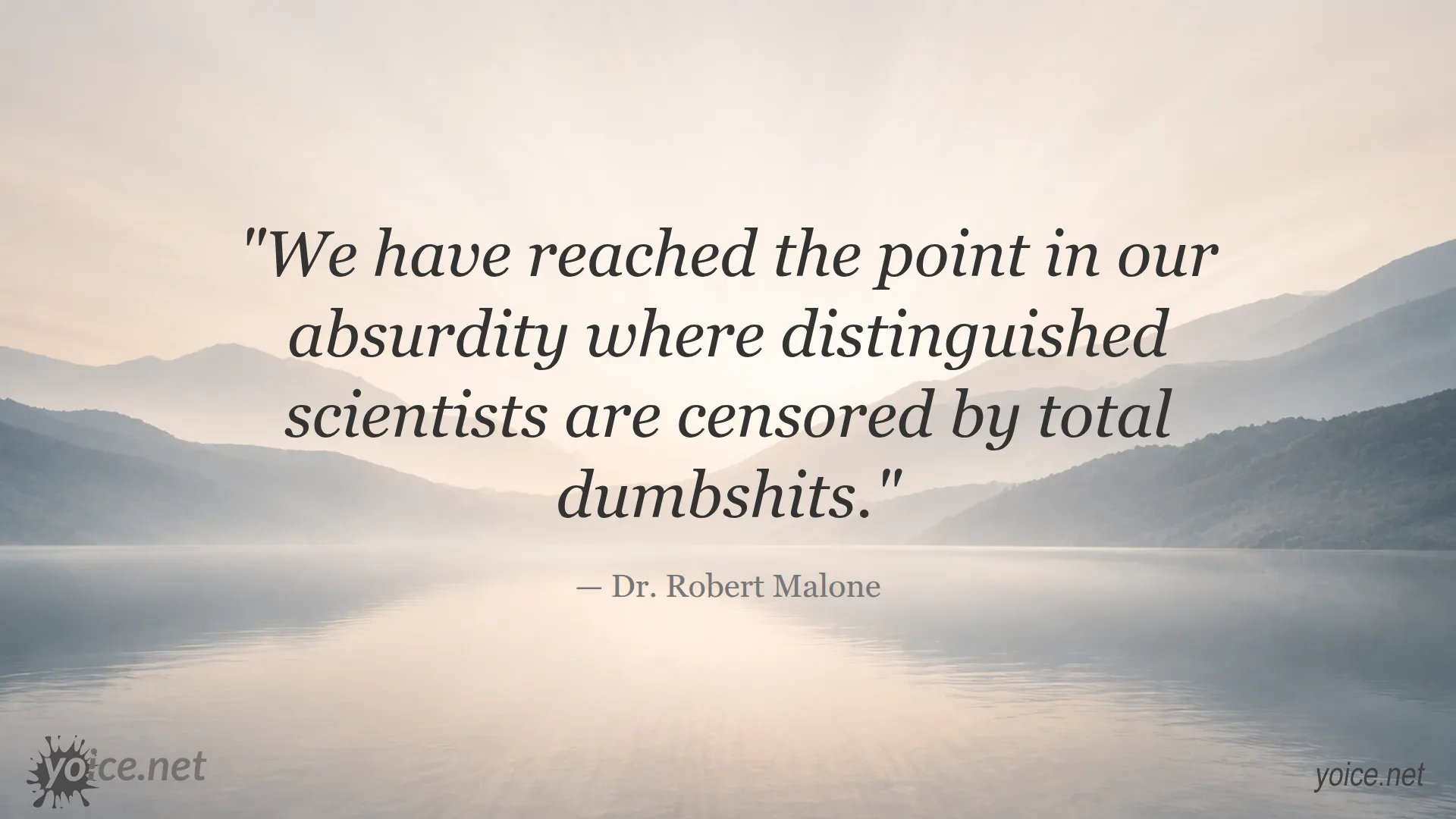
"We have reached the point in our absurdity where distinguished scientists are censored by total dumbshits."
Dr. Robert Malone
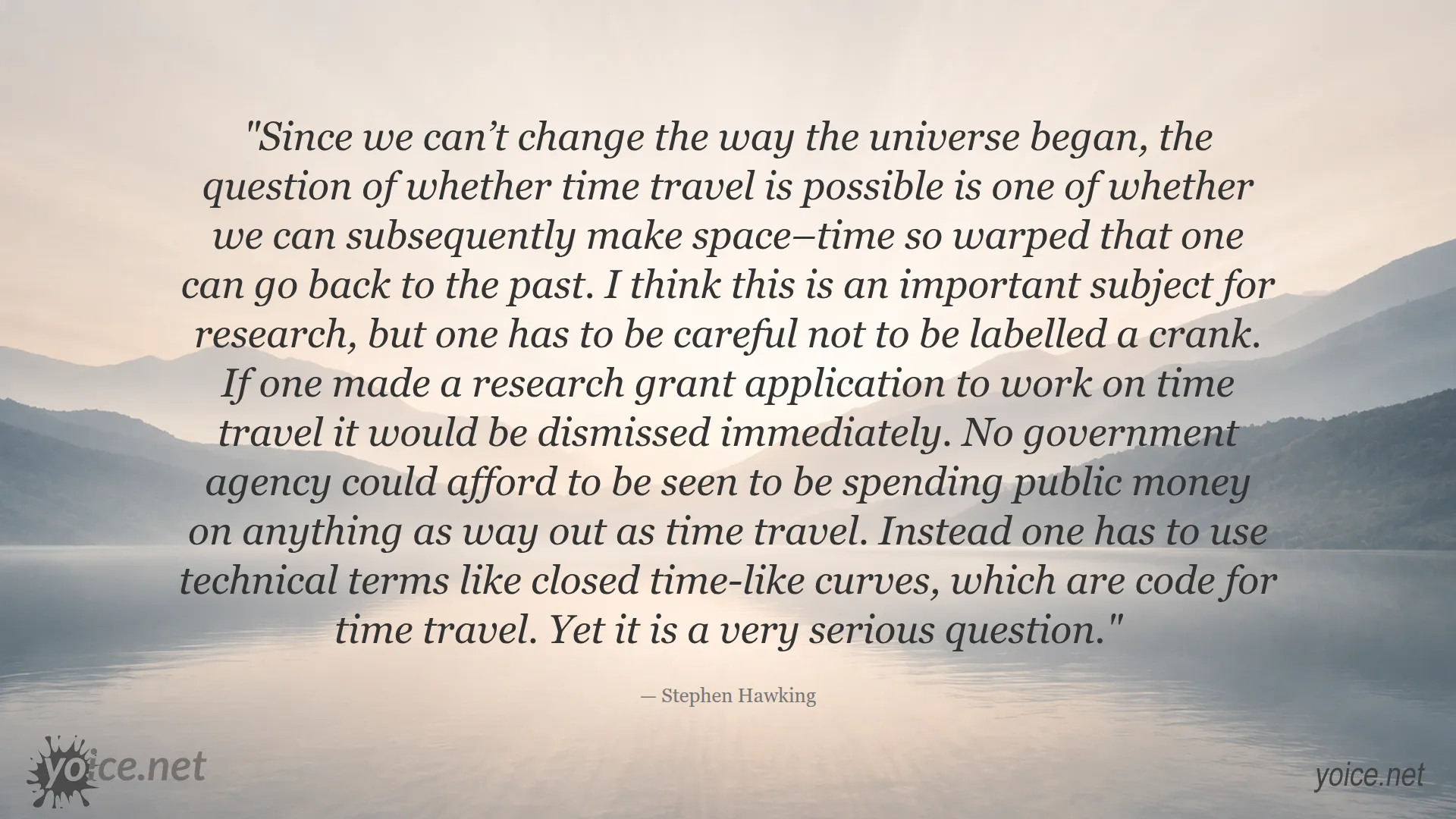
"Since we can’t change the way the universe began, the question of whether time travel is possible is one of whether we can subsequently make space–time so warped that one can go back to the past. I think this is an important subject for research, but one has to be careful not to be labelled a crank. If one made a research grant application to work on time travel it would be dismissed immediately. No government agency could afford to be seen to be spending public money on anything as way out as time travel. Instead one has to use technical terms like closed time-like curves, which are code for time travel. Yet it is a very serious question."
Stephen Hawking
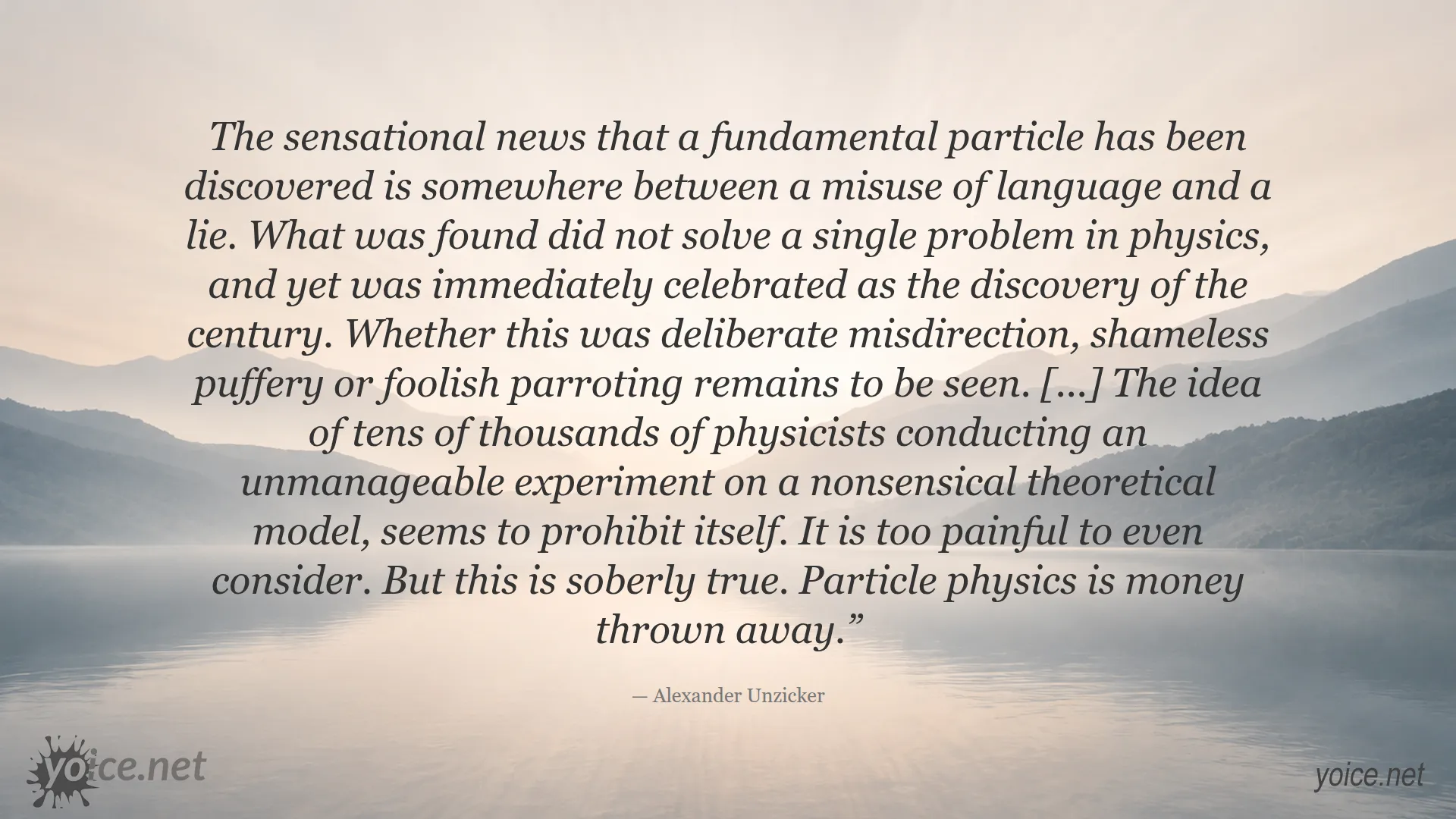
The sensational news that a fundamental particle has been discovered is somewhere between a misuse of language and a lie. What was found did not solve a single problem in physics, and yet was immediately celebrated as the discovery of the century. Whether this was deliberate misdirection, shameless puffery or foolish parroting remains to be seen. [...] The idea of tens of thousands of physicists conducting an unmanageable experiment on a nonsensical theoretical model, seems to prohibit itself. It is too painful to even consider. But this is soberly true. Particle physics is money thrown away.”
Alexander Unzicker
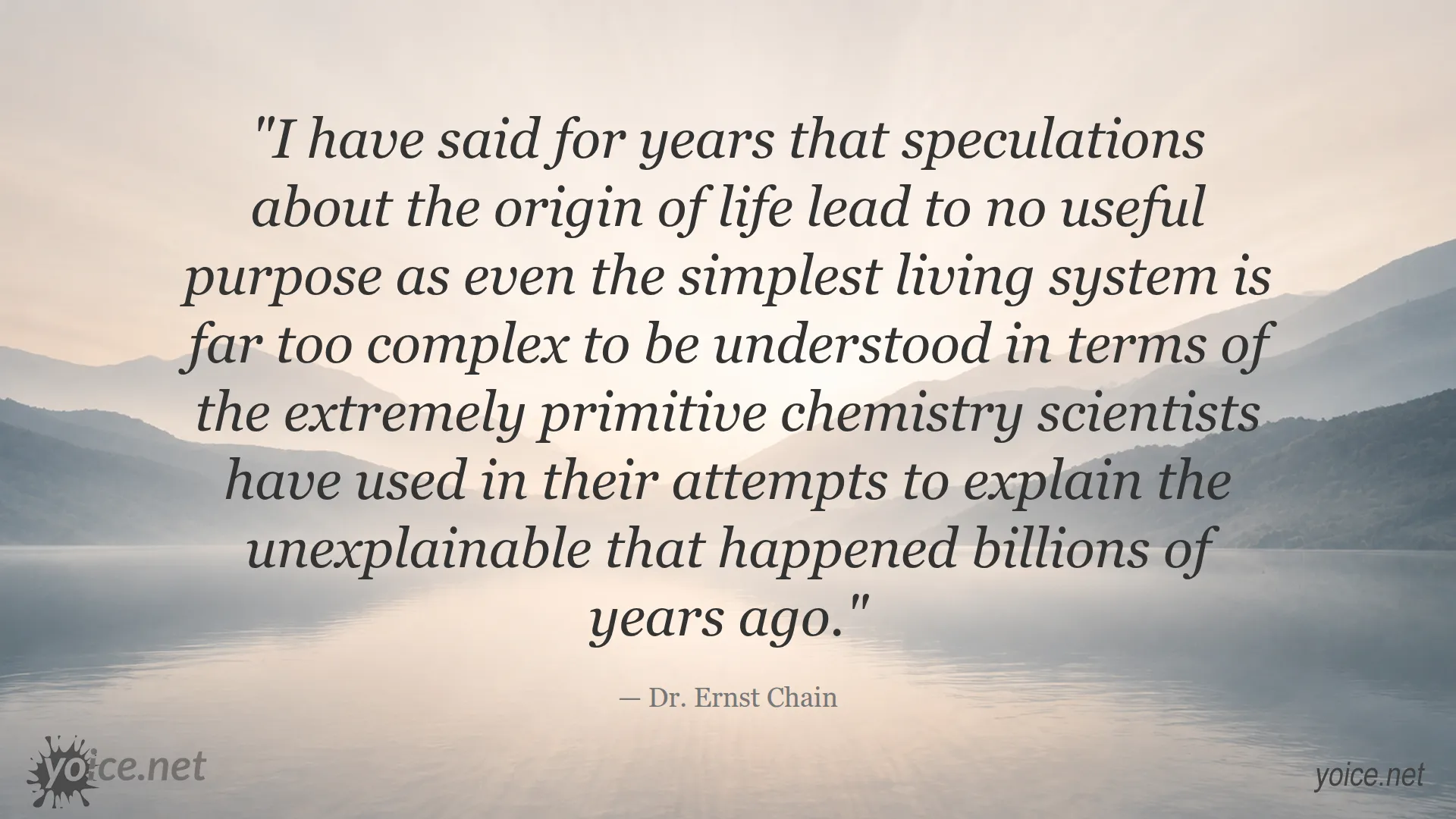
"I have said for years that speculations about the origin of life lead to no useful purpose as even the simplest living system is far too complex to be understood in terms of the extremely primitive chemistry scientists have used in their attempts to explain the unexplainable that happened billions of years ago."
Dr. Ernst Chain
""scientism is where people turn science into a kind of religion. It becomes a kind of dogmatic belief system. The irony is that a lot of people think that religion is dogmatic and science is free-thinking, but actually, in my experience, some of the most dogmatic people I know are people who've made science into a kind of religion. We still have flat earthers, we have people that don't believe in vaccinations, and what do we do about it?""
Rupert Sheldrake
"Science today is locked into paradigms. Every avenue is blocked by beliefs that are wrong, and if you try to get anything published by a journal today, you will run against a paradigm and the editors will turn it down."
Sir Fred Hoyle
"Everything we know has its origins in questions. Questions, we might say, are the principal intellectual instruments available to human beings."
Neil Postman
"So, what you learn when you study science in general, but astrophysics especially, is that you no longer invoke your senses to judge what makes sense, or you no longer invoke your personal philosophies to judge what should be true. The universe is what it is, and it really doesn't care about your senses."
Neil deGrasse Tyson
 Copyright © yoice.net – Quote Artwork
 Copyright © yoice.net – Quote Artwork
 Copyright © yoice.net – Quote Artwork
 Copyright © yoice.net – Quote Artwork
 Copyright © yoice.net – Quote Artwork
 Copyright © yoice.net – Quote Artwork
 Copyright © yoice.net – Quote Artwork
 Copyright © yoice.net – Quote Artwork
 Copyright © yoice.net – Quote Artwork
 Copyright © yoice.net – Quote Artwork
 Copyright © yoice.net – Quote Artwork
 Copyright © yoice.net – Quote Artwork
 Copyright © yoice.net – Quote Artwork
 Copyright © yoice.net – Quote Artwork
 Copyright © yoice.net – Quote Artwork
 Copyright © yoice.net – Quote Artwork
 Copyright © yoice.net – Quote Artwork