 Copyright © yoice.net – Quote Artwork
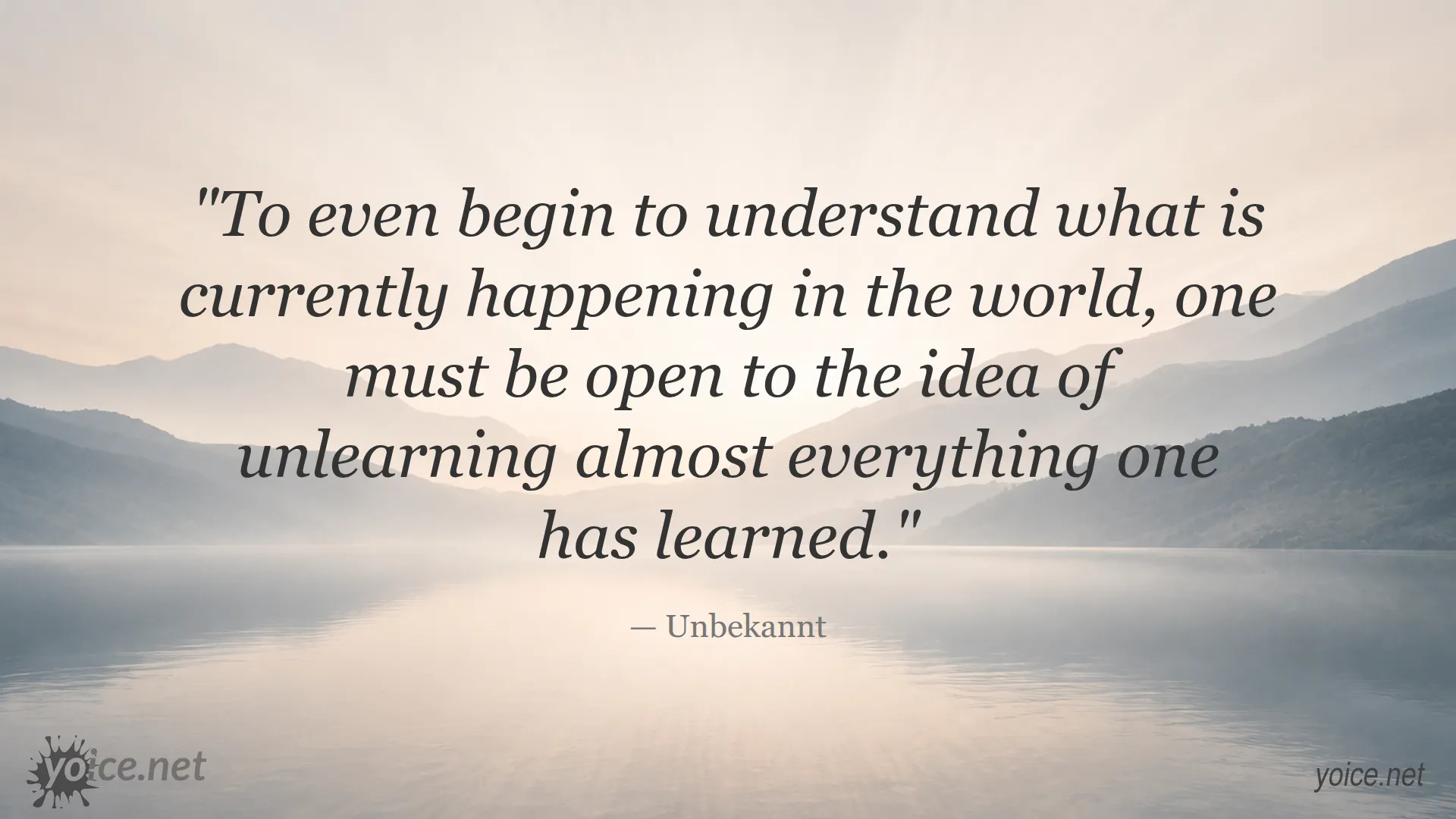
"To even begin to understand what is currently happening in the world, one must be open to the idea of unlearning almost everything one has learned."
Unbekannt

Globalization Quotes – Reflections on Worldwide Connectivity
A curated collection of quotes on globalization, highlighting cultural, social, and economic connections across the world.
This selection of globalization quotes offers insights into the multifaceted nature of worldwide connectivity. The quotes touch on cultural, social, and economic viewpoints shaping globalization. They invite contemplation of the changes and challenges arising from increased interaction among nations. The diversity of perspectives showcases different understandings of the opportunities and limitations within a connected world. This collection encourages a nuanced appreciation of globalization as a complex and evolving phenomenon.
"To even begin to understand what is currently happening in the world, one must be open to the idea of unlearning almost everything one has learned."
Unbekannt
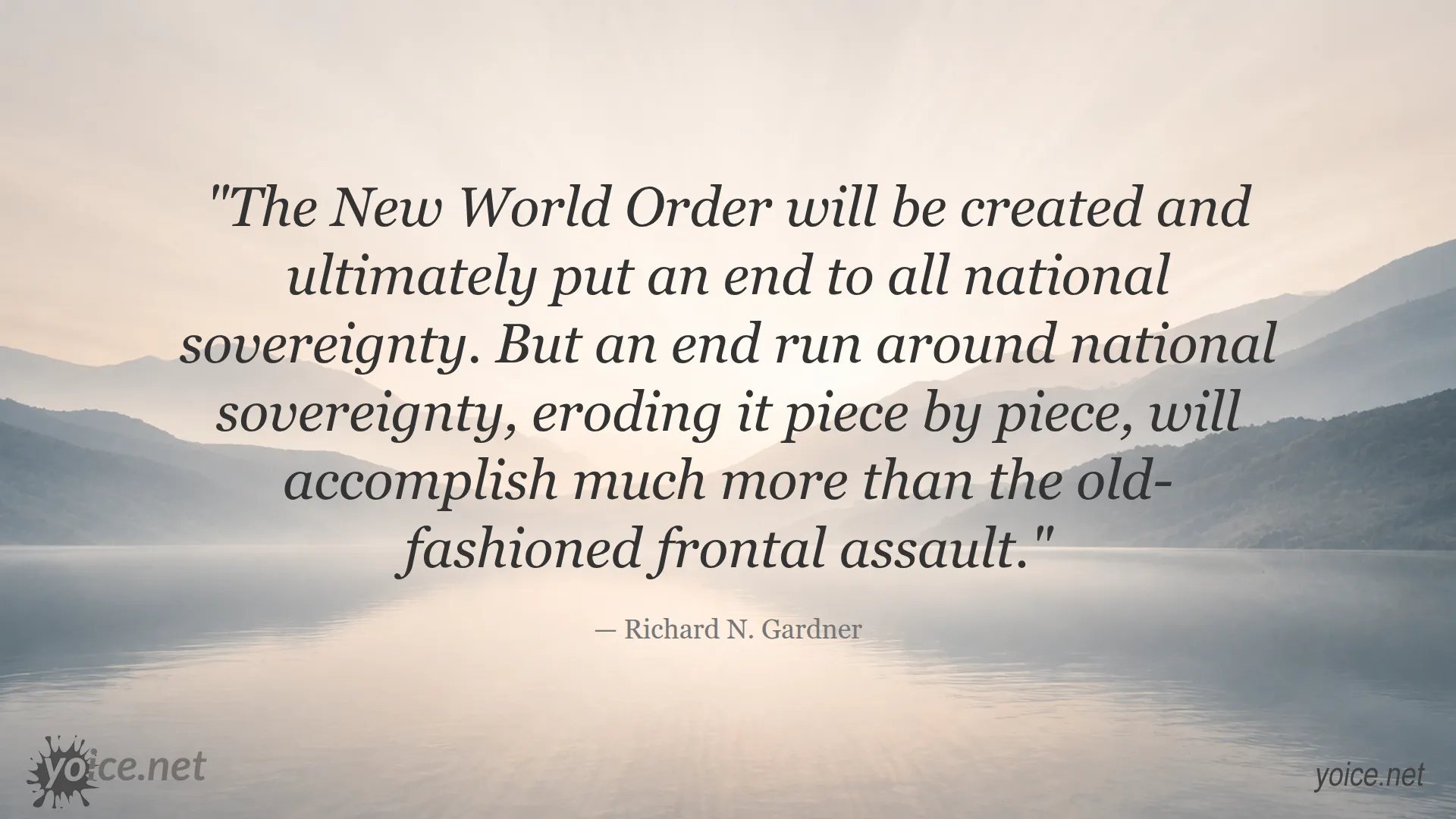
"The New World Order will be created and ultimately put an end to all national sovereignty. But an end run around national sovereignty, eroding it piece by piece, will accomplish much more than the old-fashioned frontal assault."
Richard N. Gardner
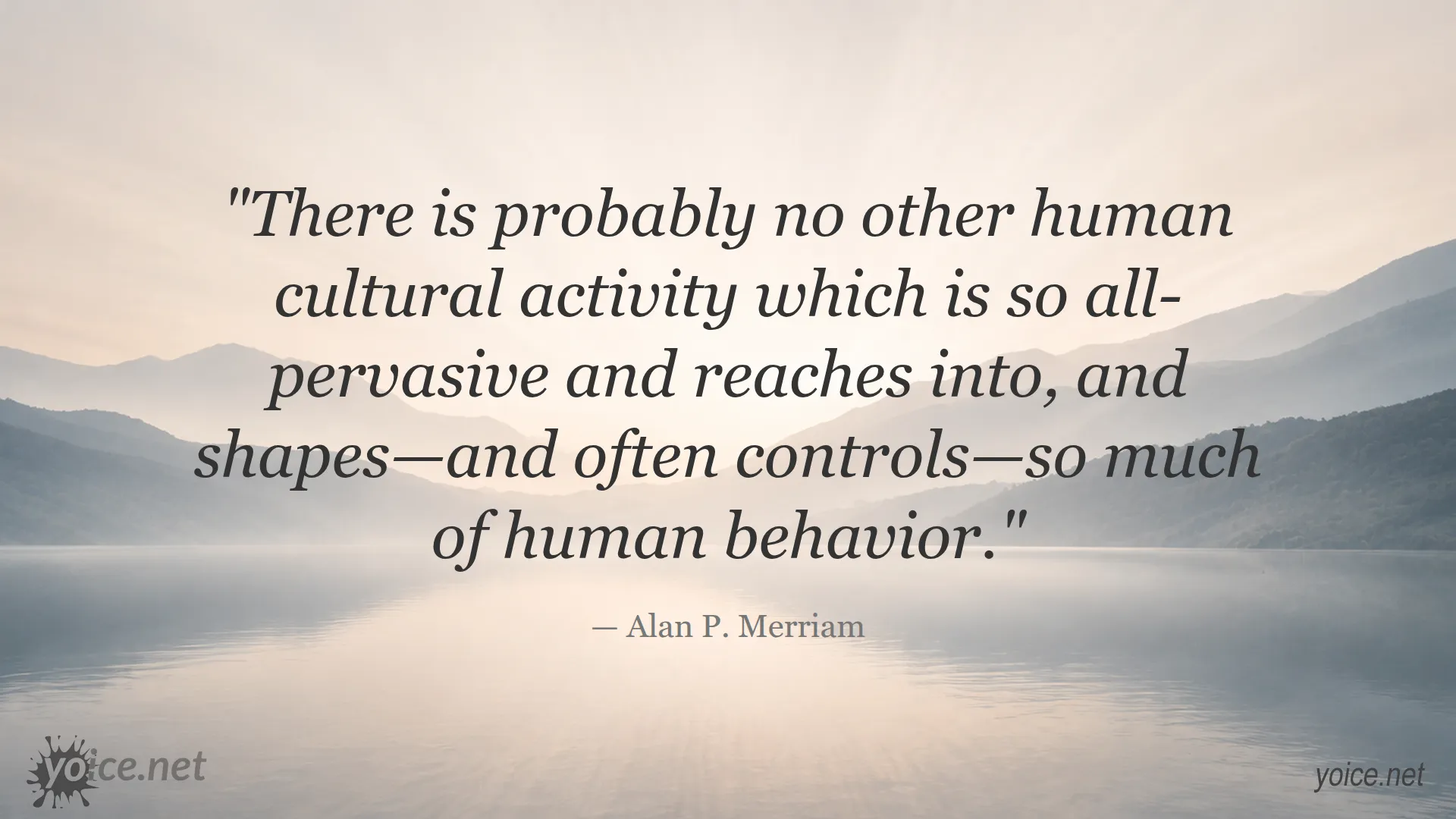
"There is probably no other human cultural activity which is so all-pervasive and reaches into, and shapes—and often controls—so much of human behavior."
Alan P. Merriam
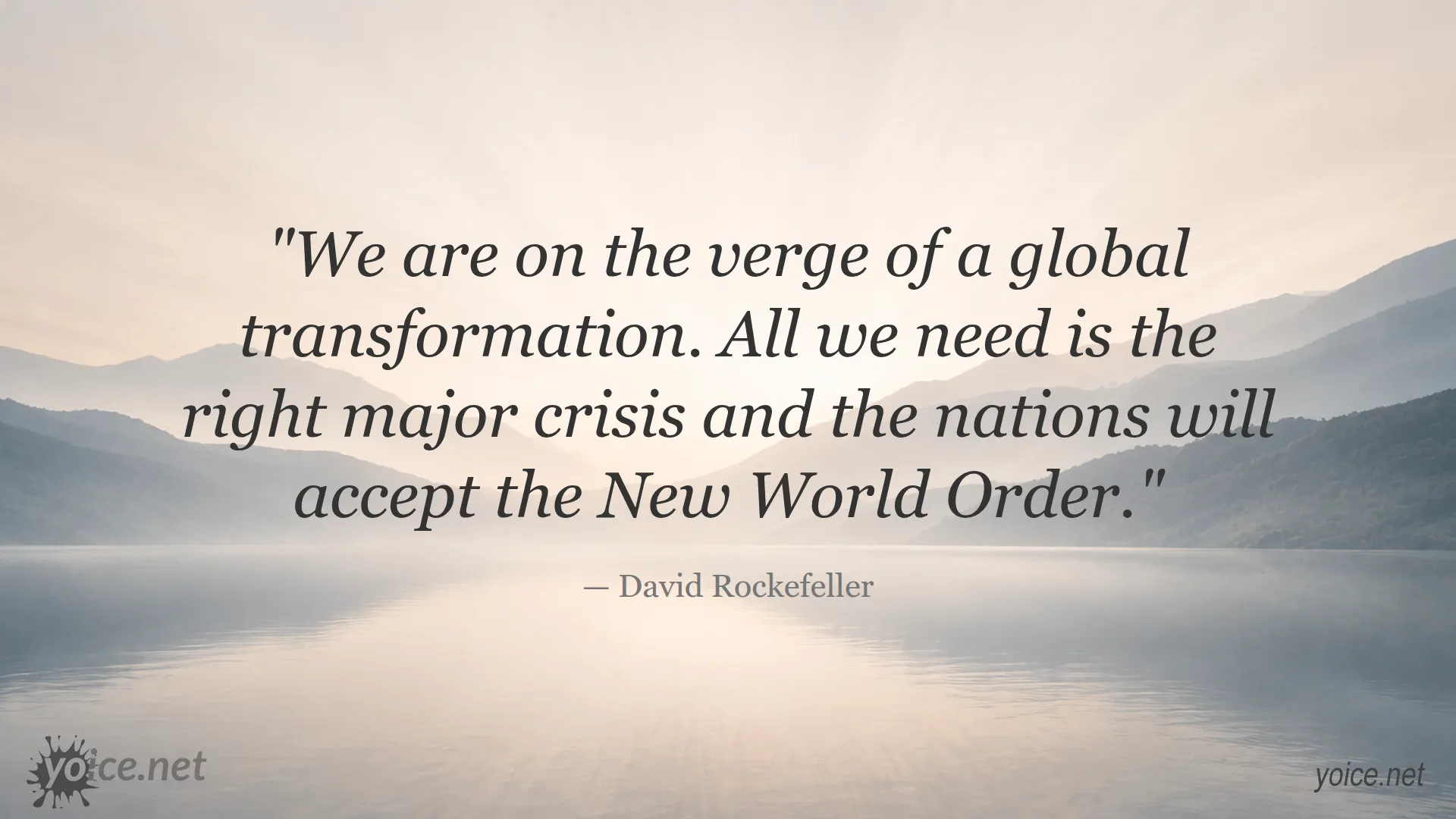
"We are on the verge of a global transformation. All we need is the right major crisis and the nations will accept the New World Order."
David Rockefeller
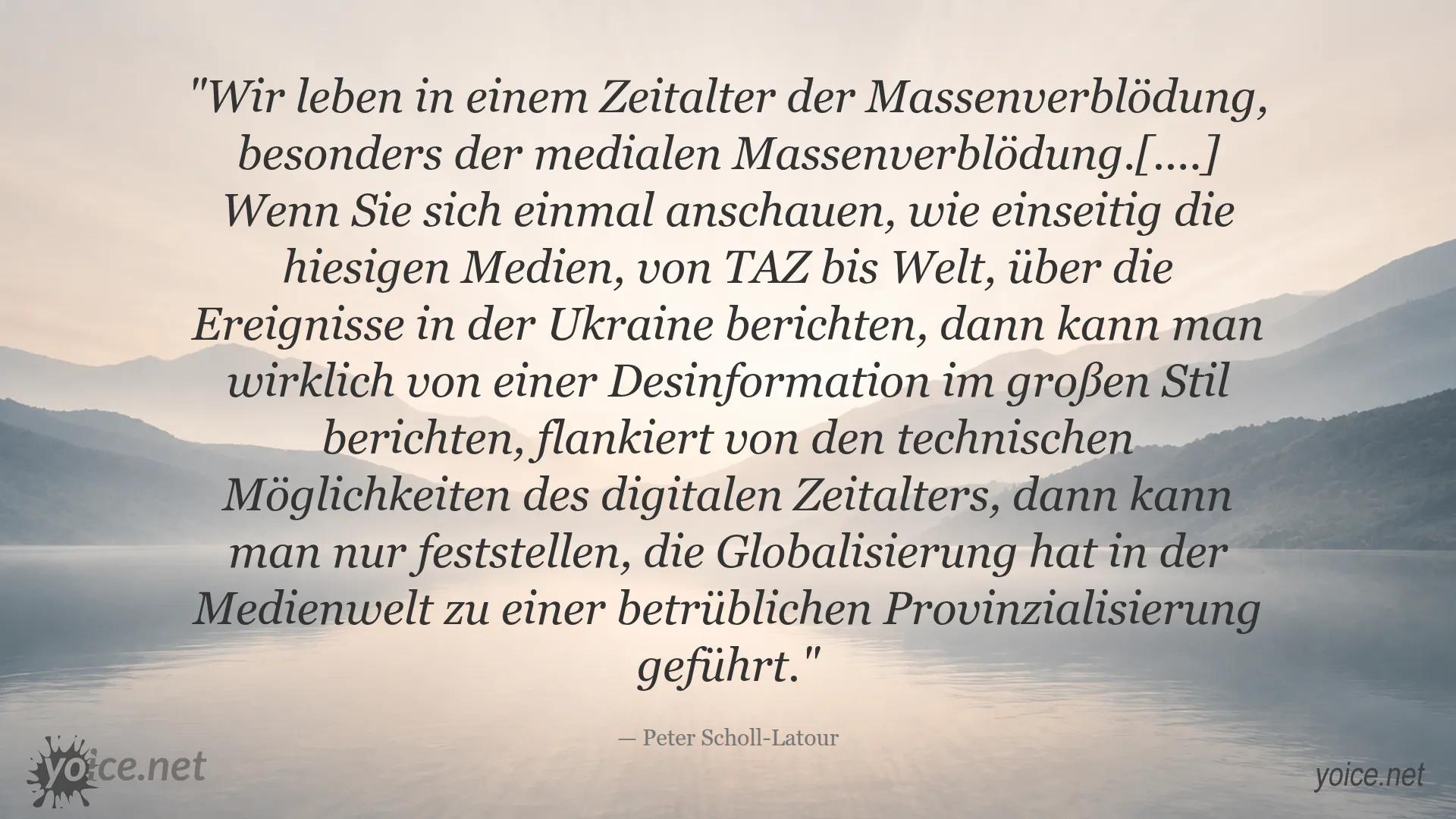
"Wir leben in einem Zeitalter der Massenverblödung, besonders der medialen Massenverblödung.[....] Wenn Sie sich einmal anschauen, wie einseitig die hiesigen Medien, von TAZ bis Welt, über die Ereignisse in der Ukraine berichten, dann kann man wirklich von einer Desinformation im großen Stil berichten, flankiert von den technischen Möglichkeiten des digitalen Zeitalters, dann kann man nur feststellen, die Globalisierung hat in der Medienwelt zu einer betrüblichen Provinzialisierung geführt."
Peter Scholl-Latour
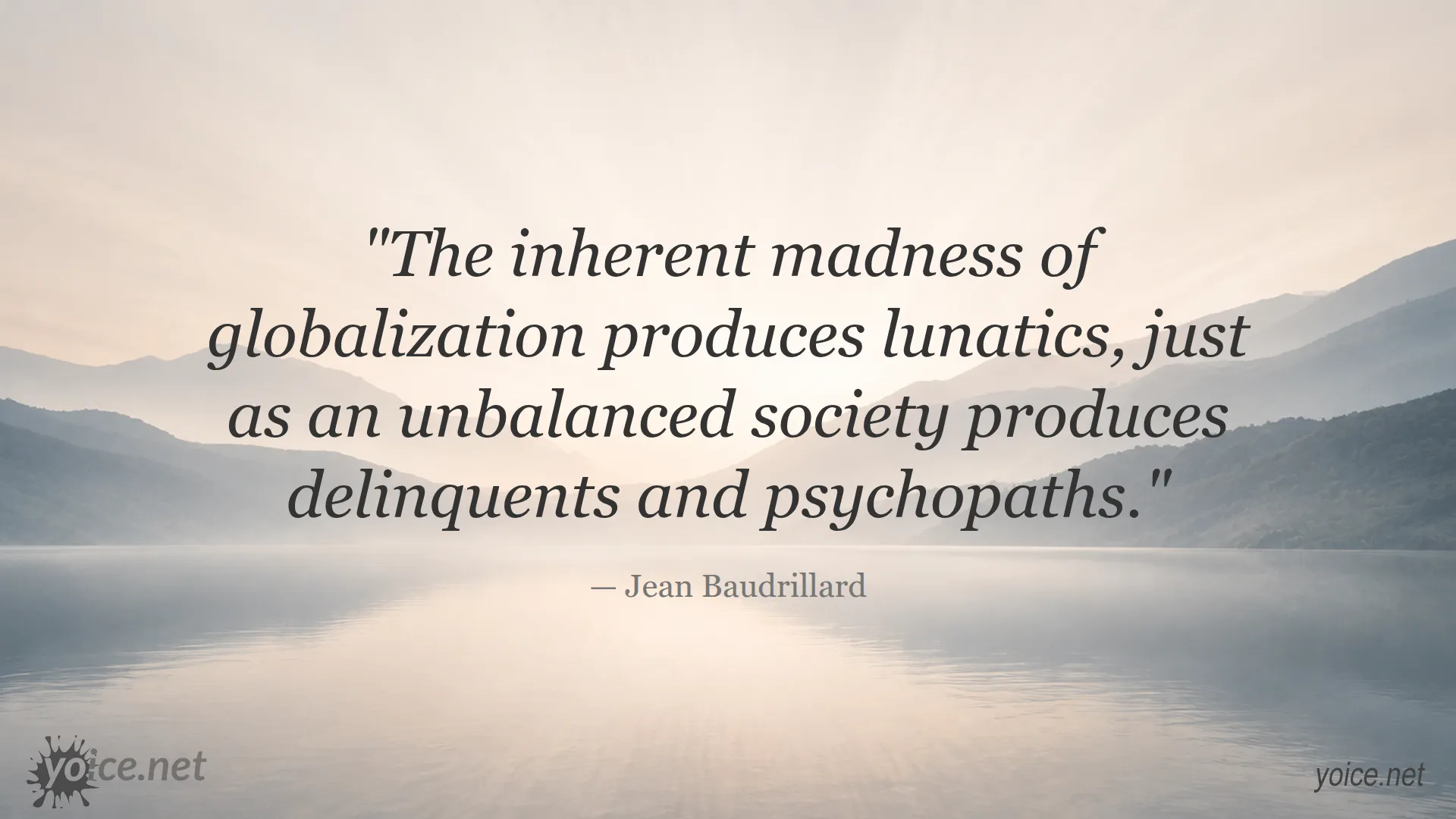
"The inherent madness of globalization produces lunatics, just as an unbalanced society produces delinquents and psychopaths."
Jean Baudrillard
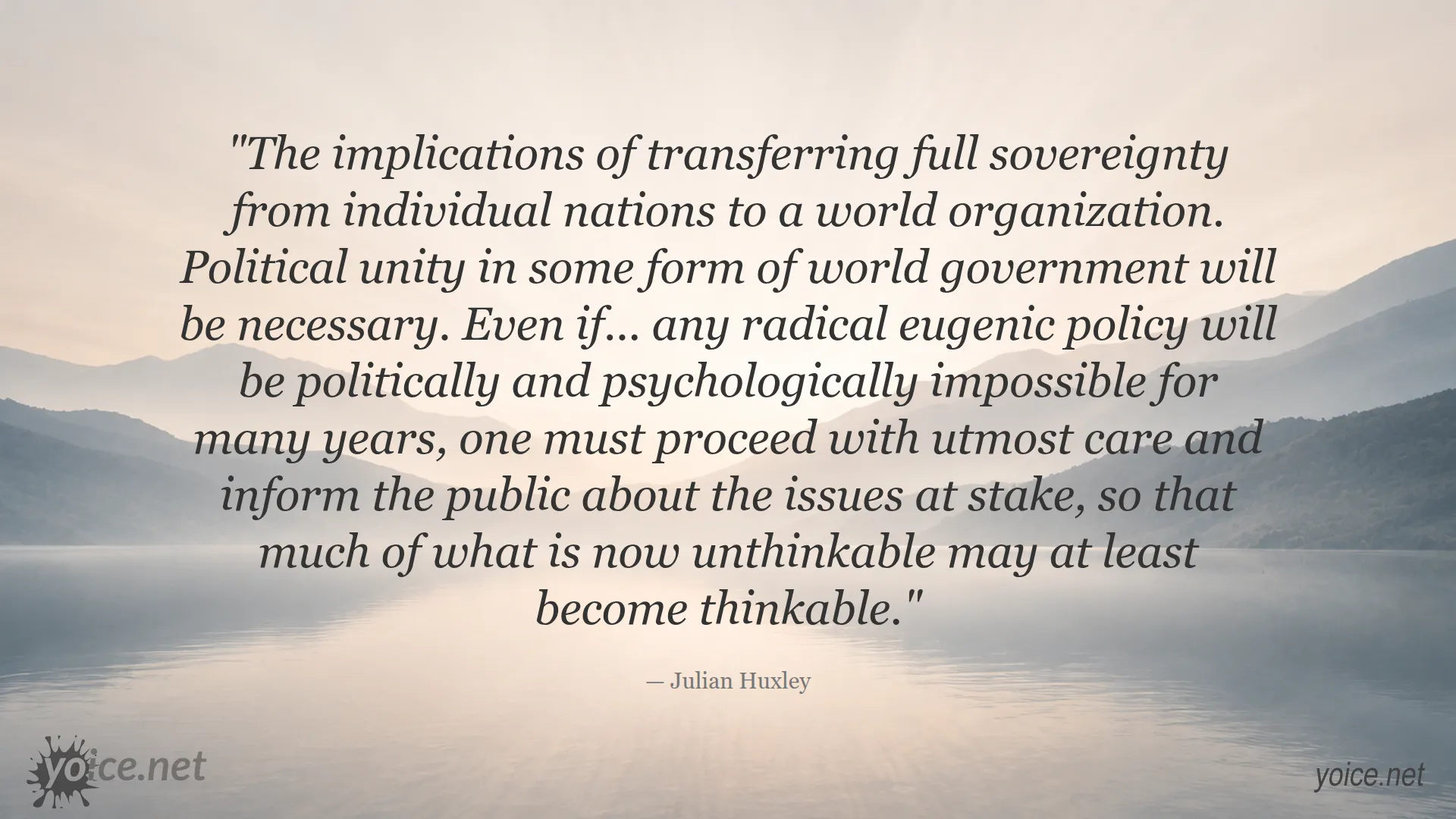
"The implications of transferring full sovereignty from individual nations to a world organization. Political unity in some form of world government will be necessary. Even if... any radical eugenic policy will be politically and psychologically impossible for many years, one must proceed with utmost care and inform the public about the issues at stake, so that much of what is now unthinkable may at least become thinkable."
Julian Huxley
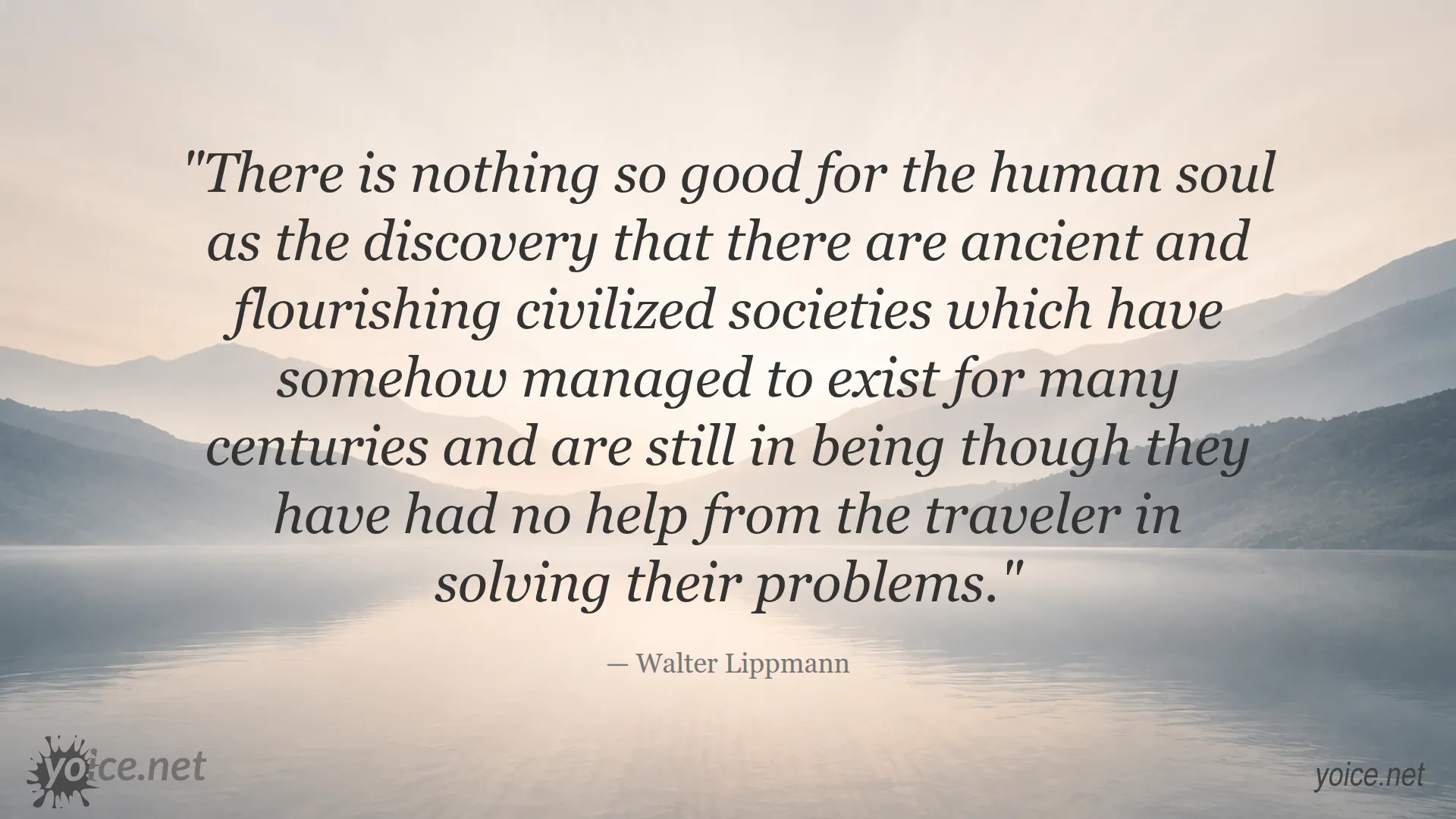
"There is nothing so good for the human soul as the discovery that there are ancient and flourishing civilized societies which have somehow managed to exist for many centuries and are still in being though they have had no help from the traveler in solving their problems."
Walter Lippmann
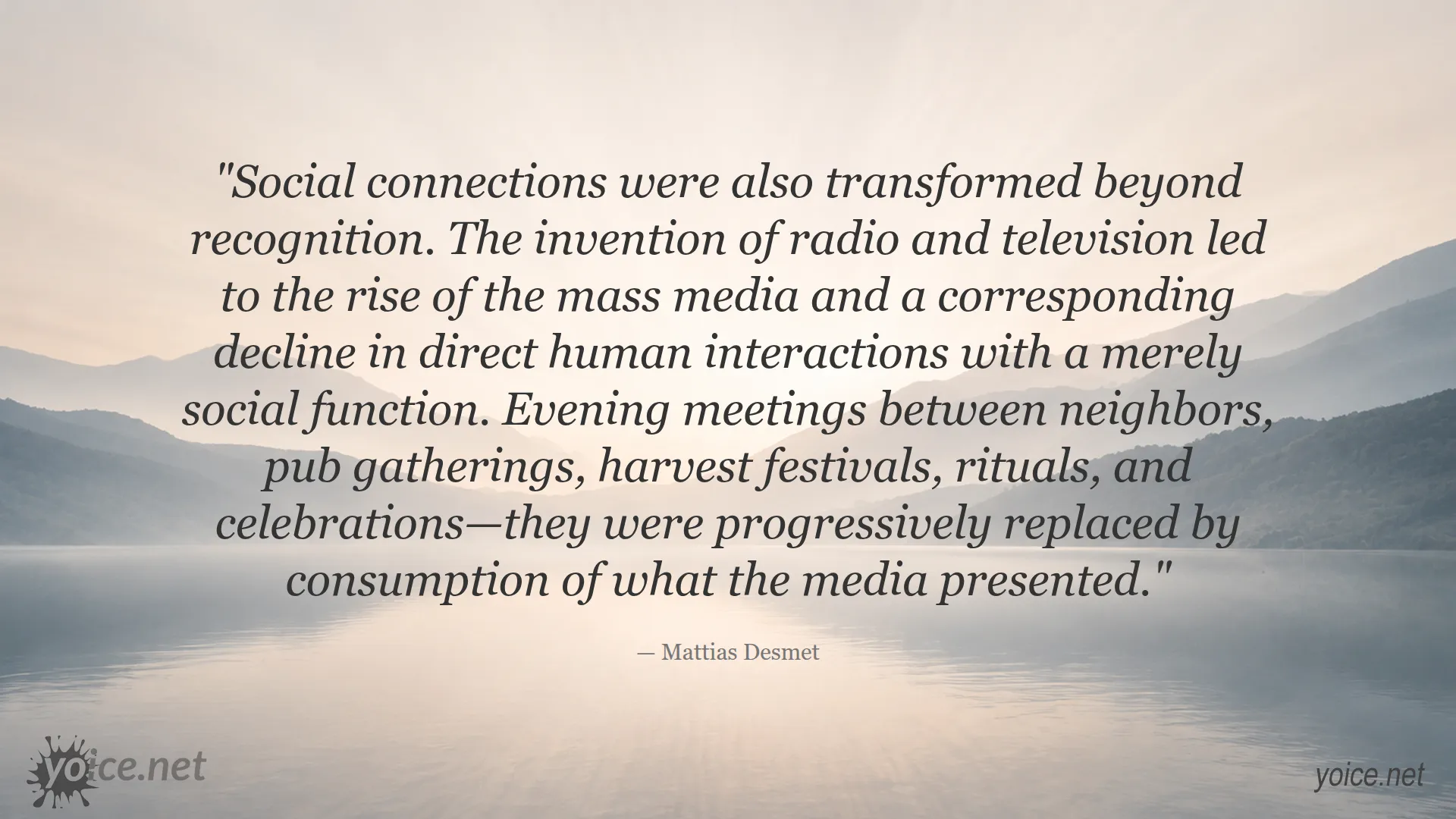
"Social connections were also transformed beyond recognition. The invention of radio and television led to the rise of the mass media and a corresponding decline in direct human interactions with a merely social function. Evening meetings between neighbors, pub gatherings, harvest festivals, rituals, and celebrations—they were progressively replaced by consumption of what the media presented."
Mattias Desmet
"Technology feeds on itself. Technology makes more technology possible."
Alvin Toffler
"The Internet gives us everything and forces us to filter it not by the workings of culture, but with our own brains. This risks creating six billion separate encyclopedias, which would prevent any common understanding whatsoever."
Umberto Eco
"The most important history is the history we make today."
Henry Ford
"In the next century, nations as we know it will be obsolete; all states will recognize a single, global authority. National sovereignty wasn’t such a great idea after all."
Strobe Talbott
"You're going to be a homogenized consumer class of worker drones in order for them to establish Elysium, and this is also where ... the metaverse comes in. Transhumanism, this is your bread and circuses now. It's virtual bread and circuses to distract you from the suffering that goes on all around you."
Jack Posobiec
"As society rapidly changes, individuals will have to be able to function comfortably in a world that is always in flux. Knowledge will continue to increase at a dizzying rate. This means that a content-based curriculum, with a set body of information to be imparted to students, is entirely inappropriate as a means of preparing children for their adult roles."
John Taylor Gatto
"I think this would be time because you really need to bring China into the creation of a new world order, a financial world order. They are kind of reluctant members of the IMF. They play along, but they don’t make much of a contribution because it’s not their institution. Their share is not commensurate …their voting rights are not commensurate to their weight, so I think you need a new world order that China has to be part of the process of creating it and they have to buy in. They have to own it the same way as, let’s say, the United States owns the Washington consensus, the current order, and I think this would be a more stable one where you would have co-ordinated policies. I think the makings of it are already there because the G20, in agreeing to peer reviews, effectively is moving in that direction."
George Soros
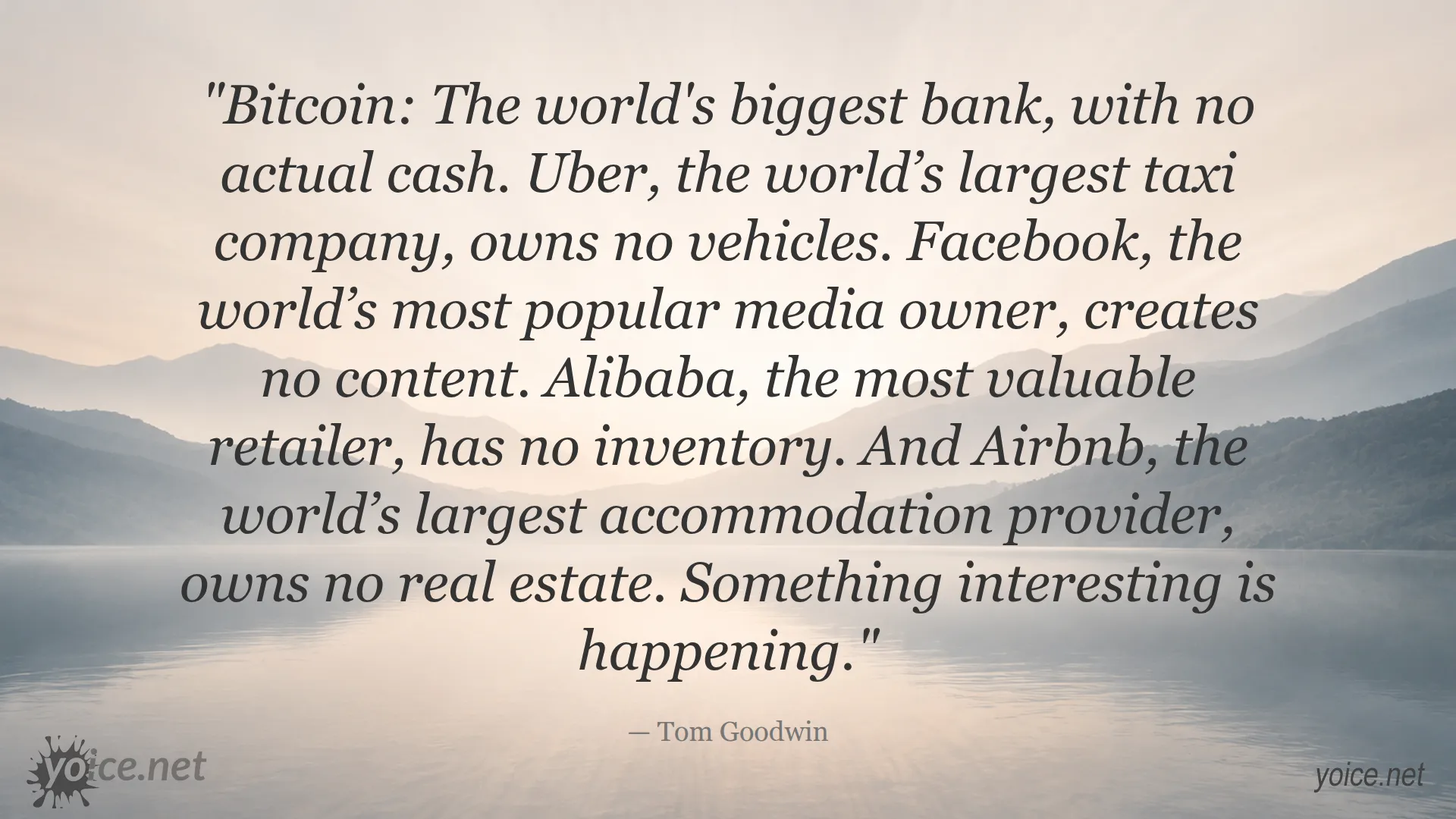
"Bitcoin: The world's biggest bank, with no actual cash.
Uber, the world’s largest taxi company, owns no vehicles. Facebook, the world’s most popular media owner, creates no content. Alibaba, the most valuable retailer, has no inventory. And Airbnb, the world’s largest accommodation provider, owns no real estate.
Something interesting is happening."
Tom Goodwin
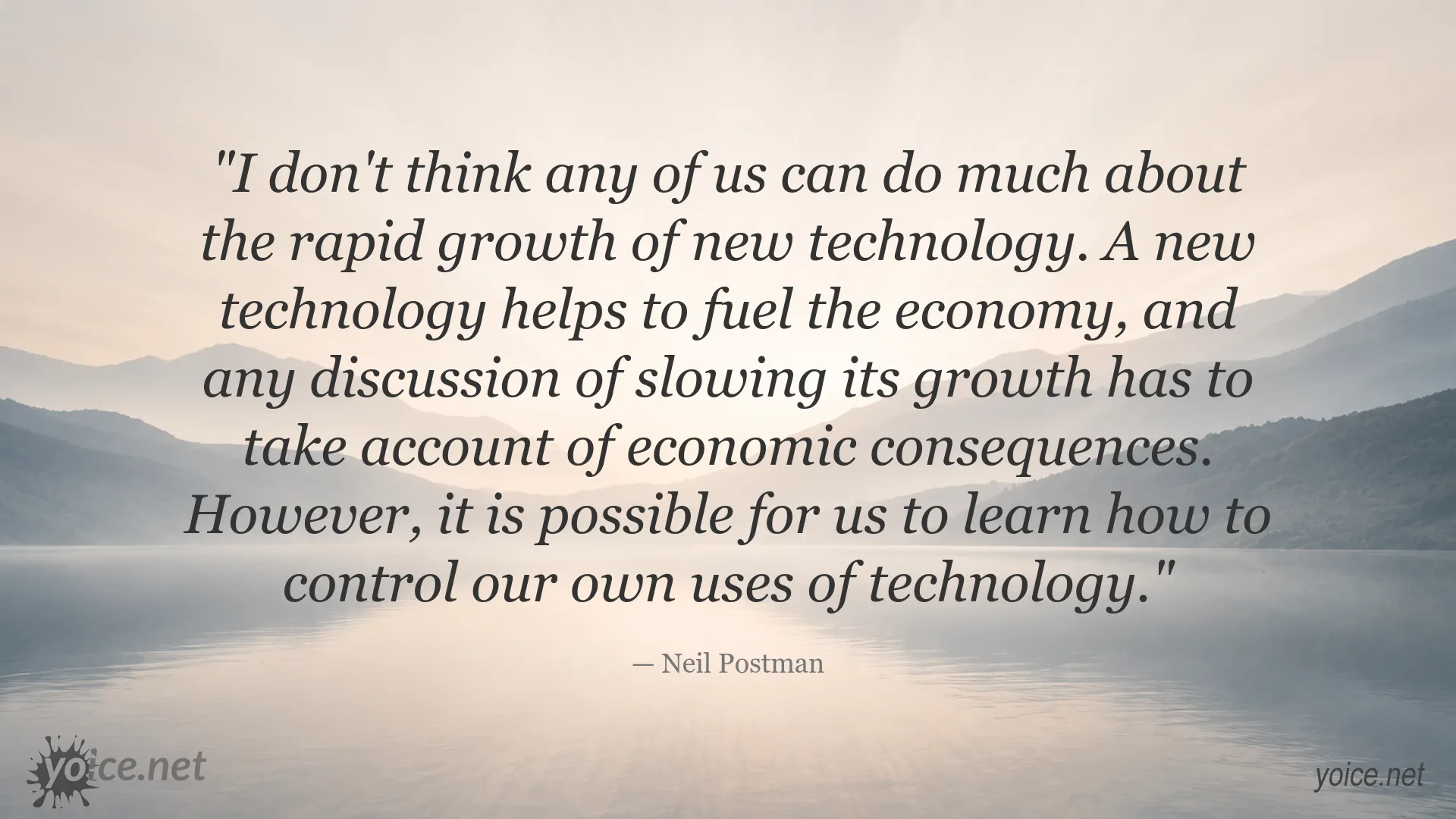
"I don't think any of us can do much about the rapid growth of new technology. A new technology helps to fuel the economy, and any discussion of slowing its growth has to take account of economic consequences. However, it is possible for us to learn how to control our own uses of technology."
Neil Postman
 Copyright © yoice.net – Quote Artwork
 Copyright © yoice.net – Quote Artwork
 Copyright © yoice.net – Quote Artwork
 Copyright © yoice.net – Quote Artwork
 Copyright © yoice.net – Quote Artwork
 Copyright © yoice.net – Quote Artwork
 Copyright © yoice.net – Quote Artwork
 Copyright © yoice.net – Quote Artwork
 Copyright © yoice.net – Quote Artwork
 Copyright © yoice.net – Quote Artwork
 Copyright © yoice.net – Quote Artwork
 Copyright © yoice.net – Quote Artwork
 Copyright © yoice.net – Quote Artwork
 Copyright © yoice.net – Quote Artwork
 Copyright © yoice.net – Quote Artwork
 Copyright © yoice.net – Quote Artwork
 Copyright © yoice.net – Quote Artwork