 Copyright © yoice.net – Quote Artwork
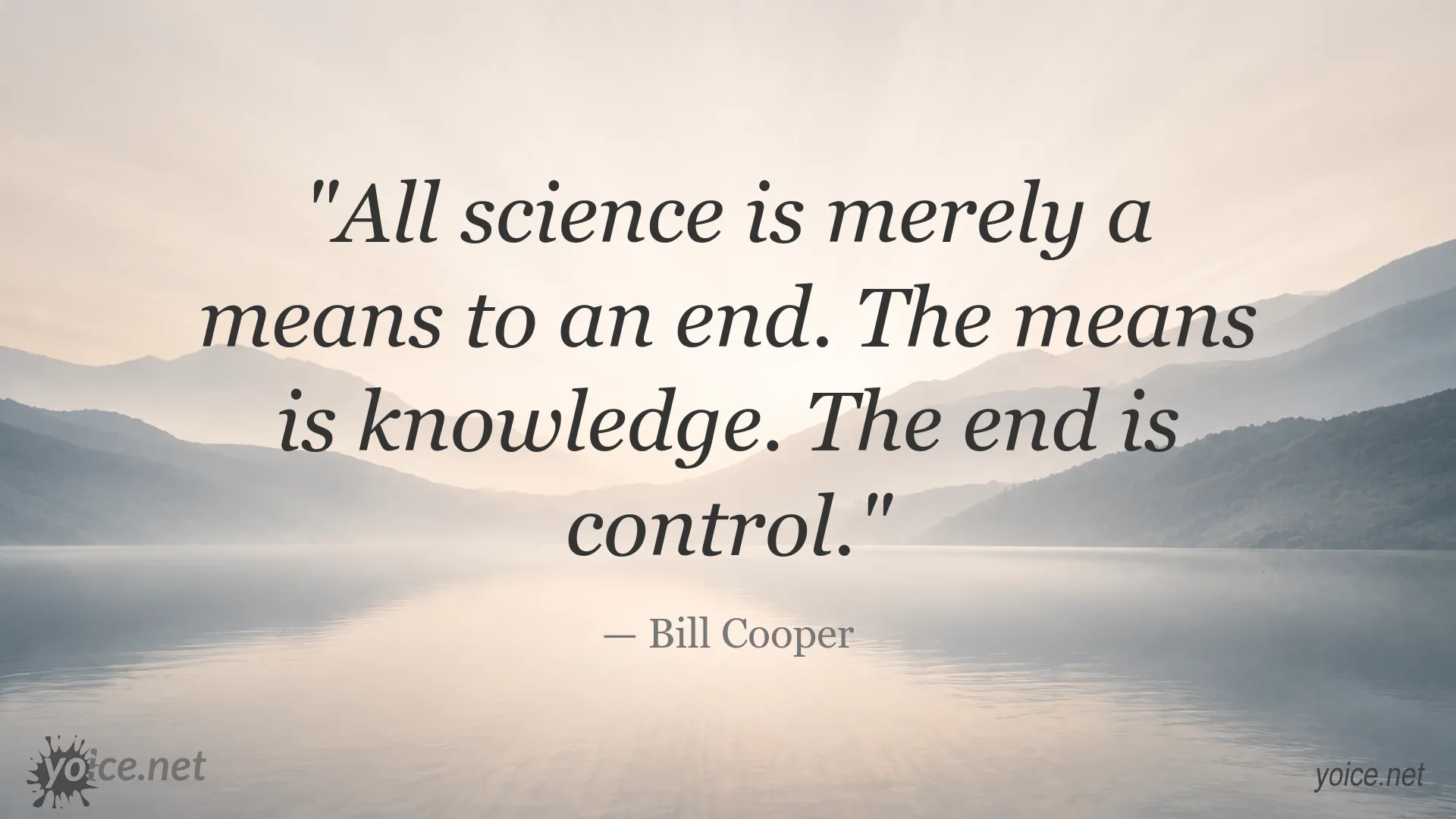
"All science is merely a means to an end. The means is knowledge. The end is control."
Bill Cooper

Philosophy Quotes – Insights and Reflections
A collection of 248 philosophy quotes offering profound insights and thoughtful reflections from various philosophers.
This collection of philosophy quotes features 248 insightful and contemplative statements from notable thinkers. The quotes address fundamental questions of thought, ethics, and life. They provide meaningful reflections that invite deeper understanding and personal contemplation. These timeless words encourage thoughtful engagement with human experience.
"All science is merely a means to an end. The means is knowledge. The end is control."
Bill Cooper
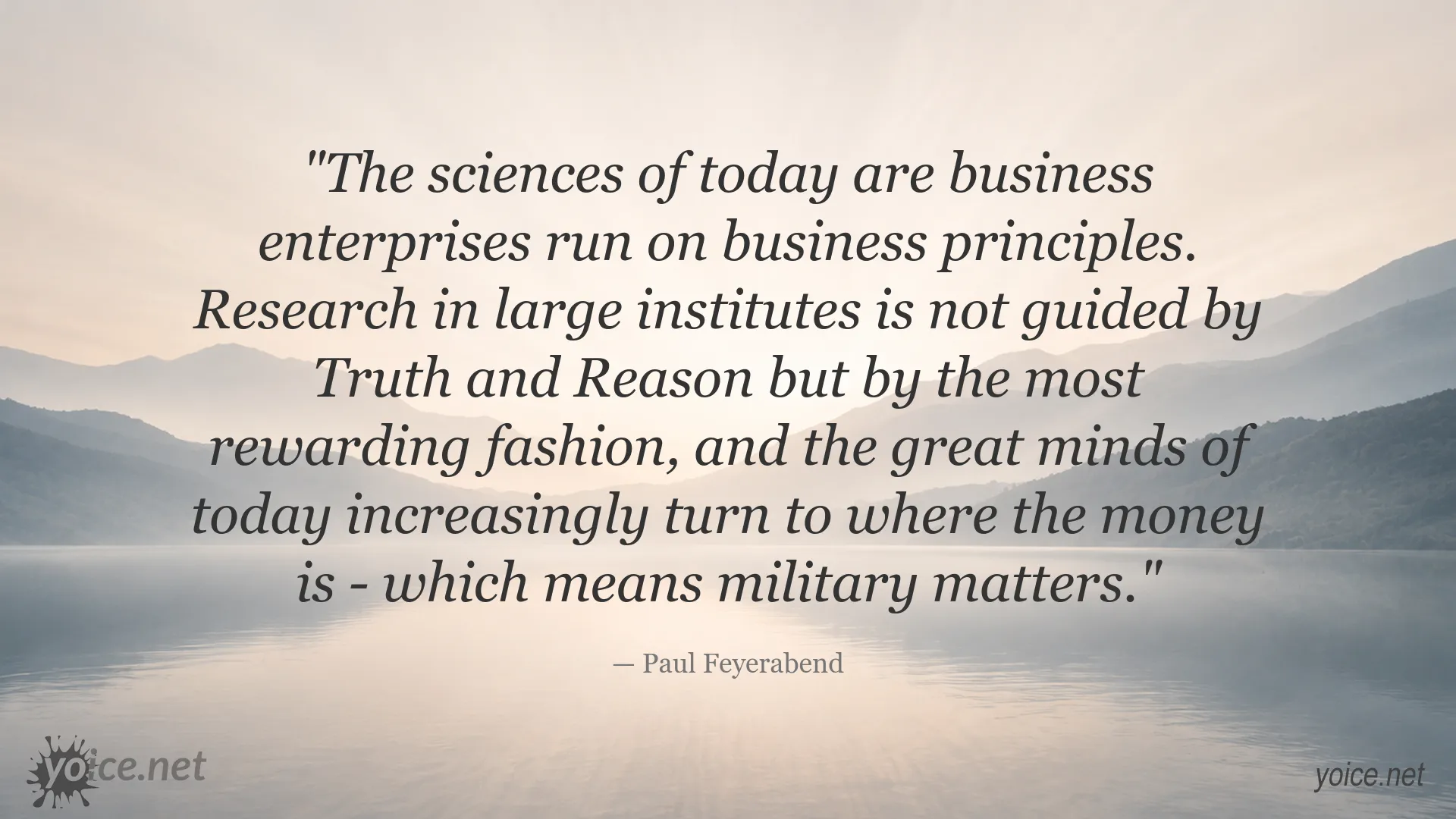
"The sciences of today are business enterprises run on business principles. Research in large institutes is not guided by Truth and Reason but by the most rewarding fashion, and the great minds of today increasingly turn to where the money is - which means military matters."
Paul Feyerabend
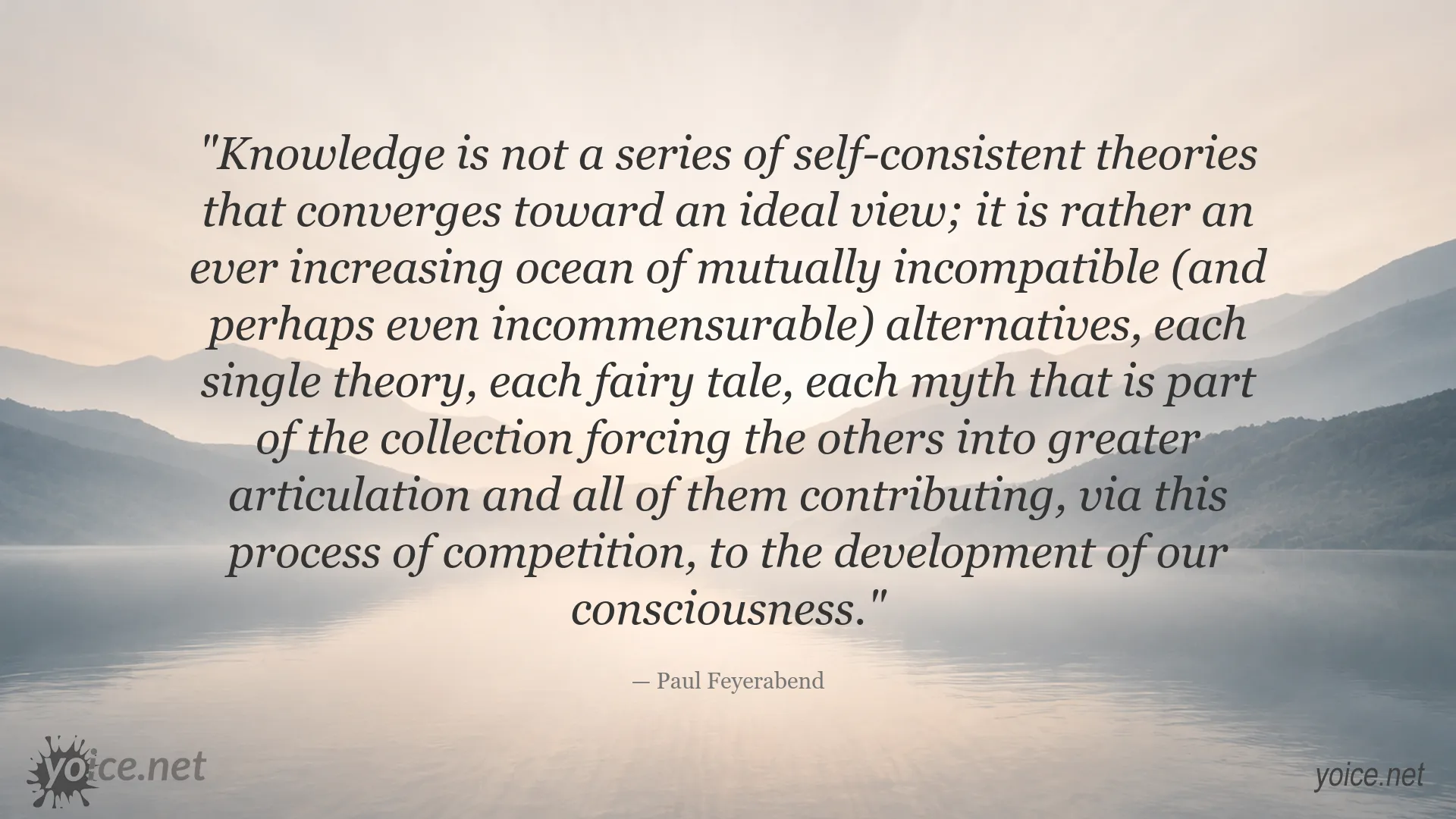
"Knowledge is not a series of self-consistent theories that converges toward an ideal view; it is rather an ever increasing ocean of mutually incompatible (and perhaps even incommensurable) alternatives, each single theory, each fairy tale, each myth that is part of the collection forcing the others into greater articulation and all of them contributing, via this process of competition, to the development of our consciousness."
Paul Feyerabend
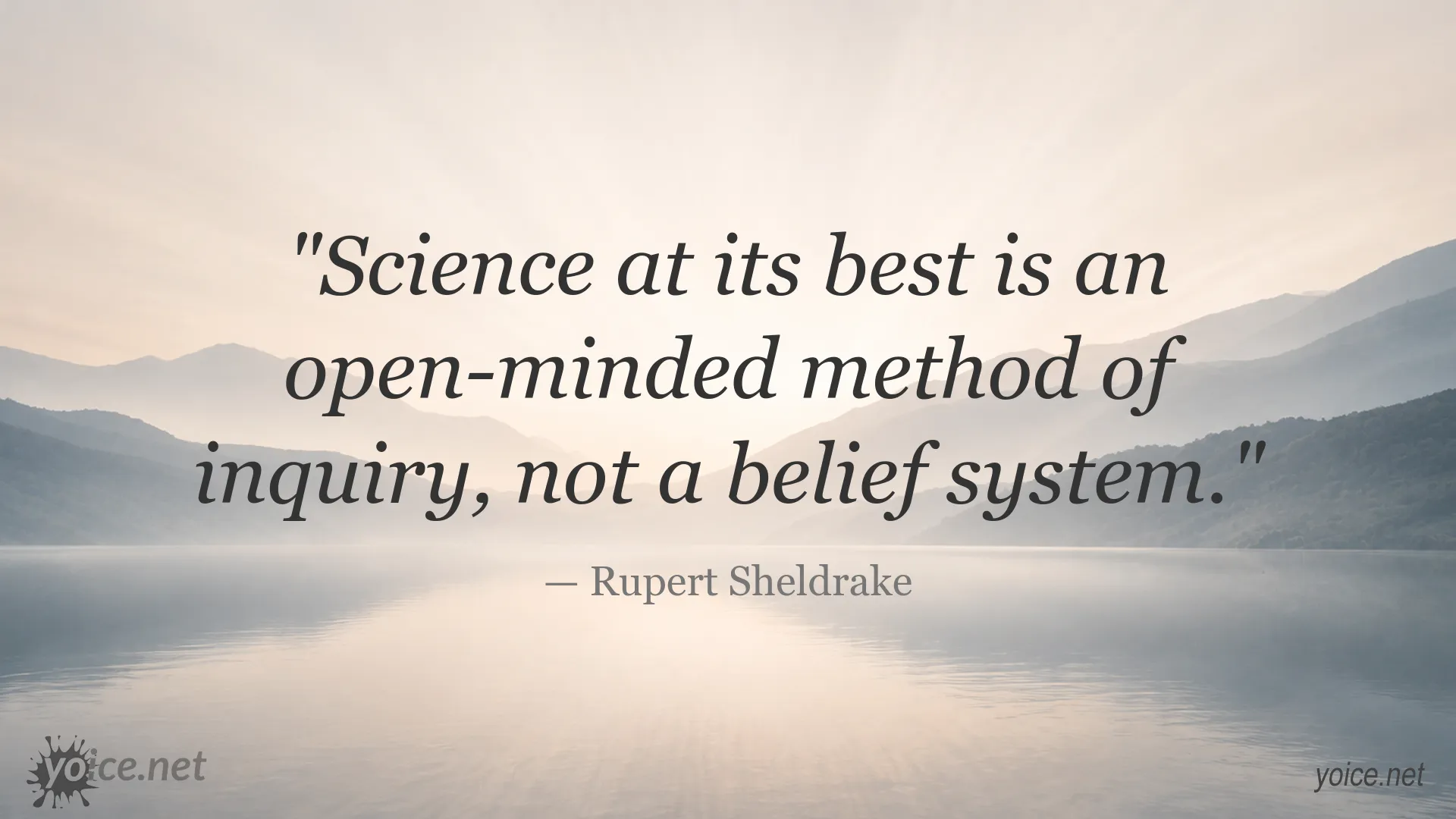
"Science at its best is an open-minded method of inquiry, not a belief system."
Rupert Sheldrake
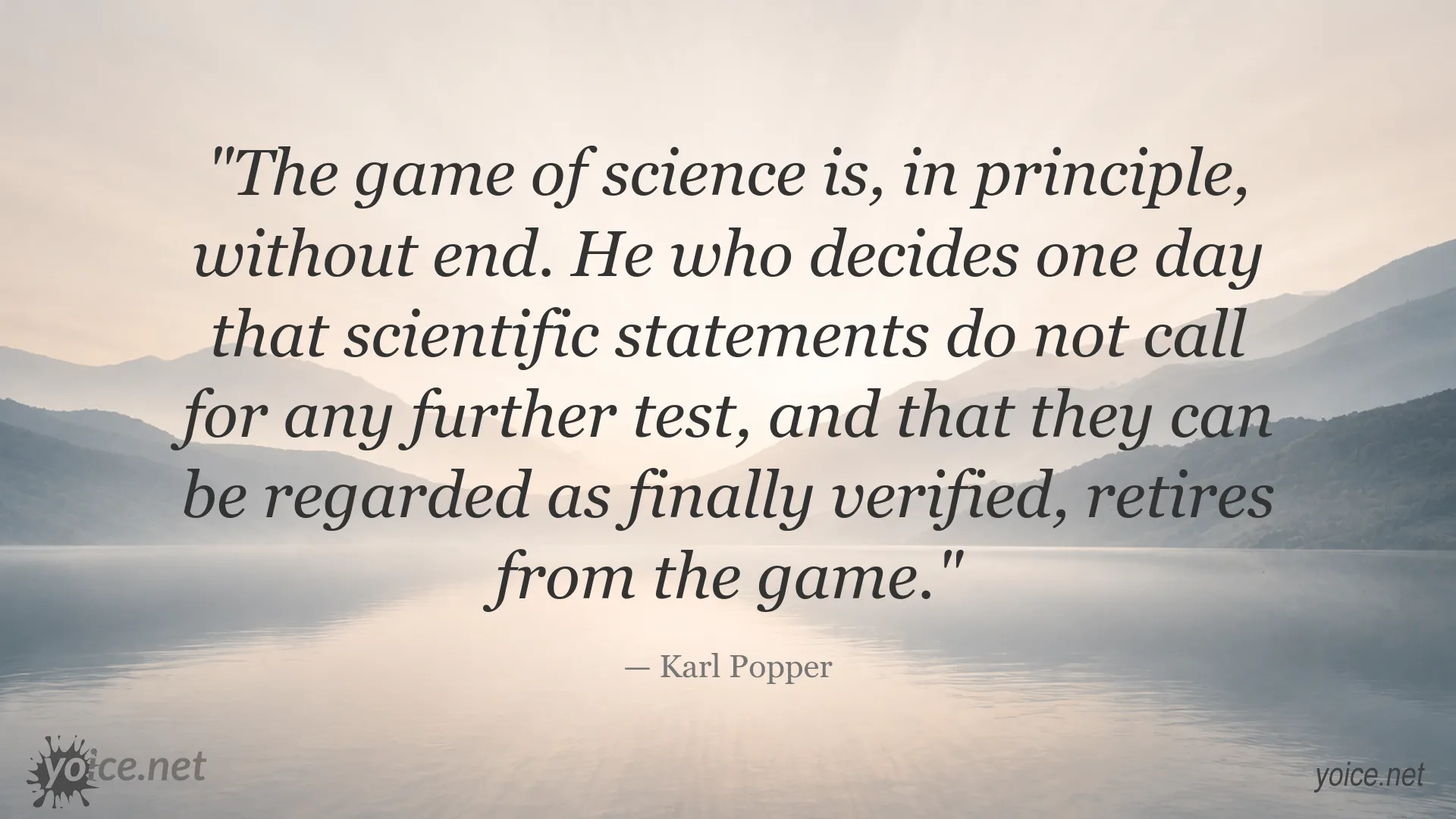
"The game of science is, in principle, without end. He who decides one day that scientific statements do not call for any further test, and that they can be regarded as finally verified, retires from the game."
Karl Popper
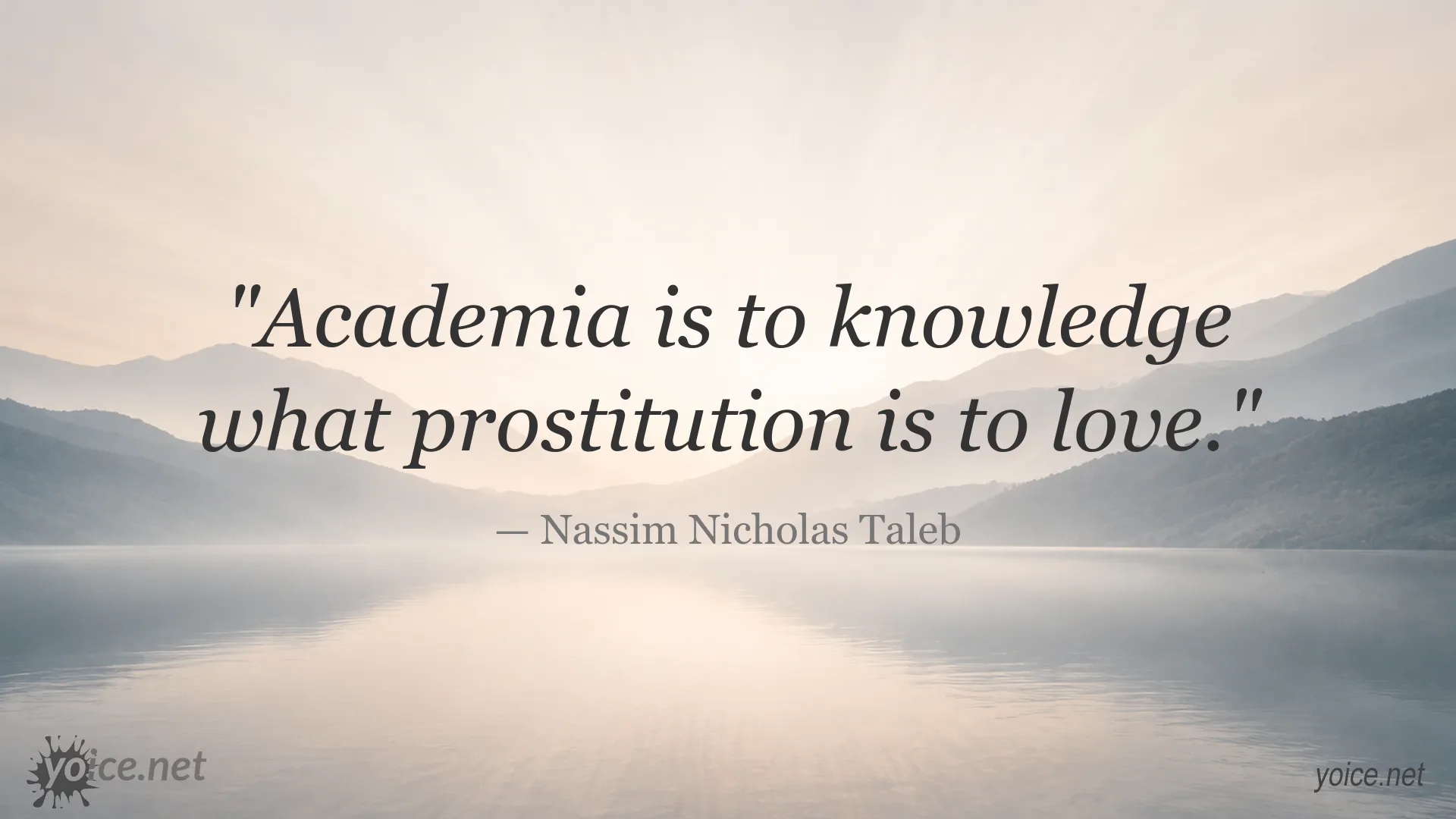
"Academia is to knowledge what prostitution is to love."
Nassim Nicholas Taleb
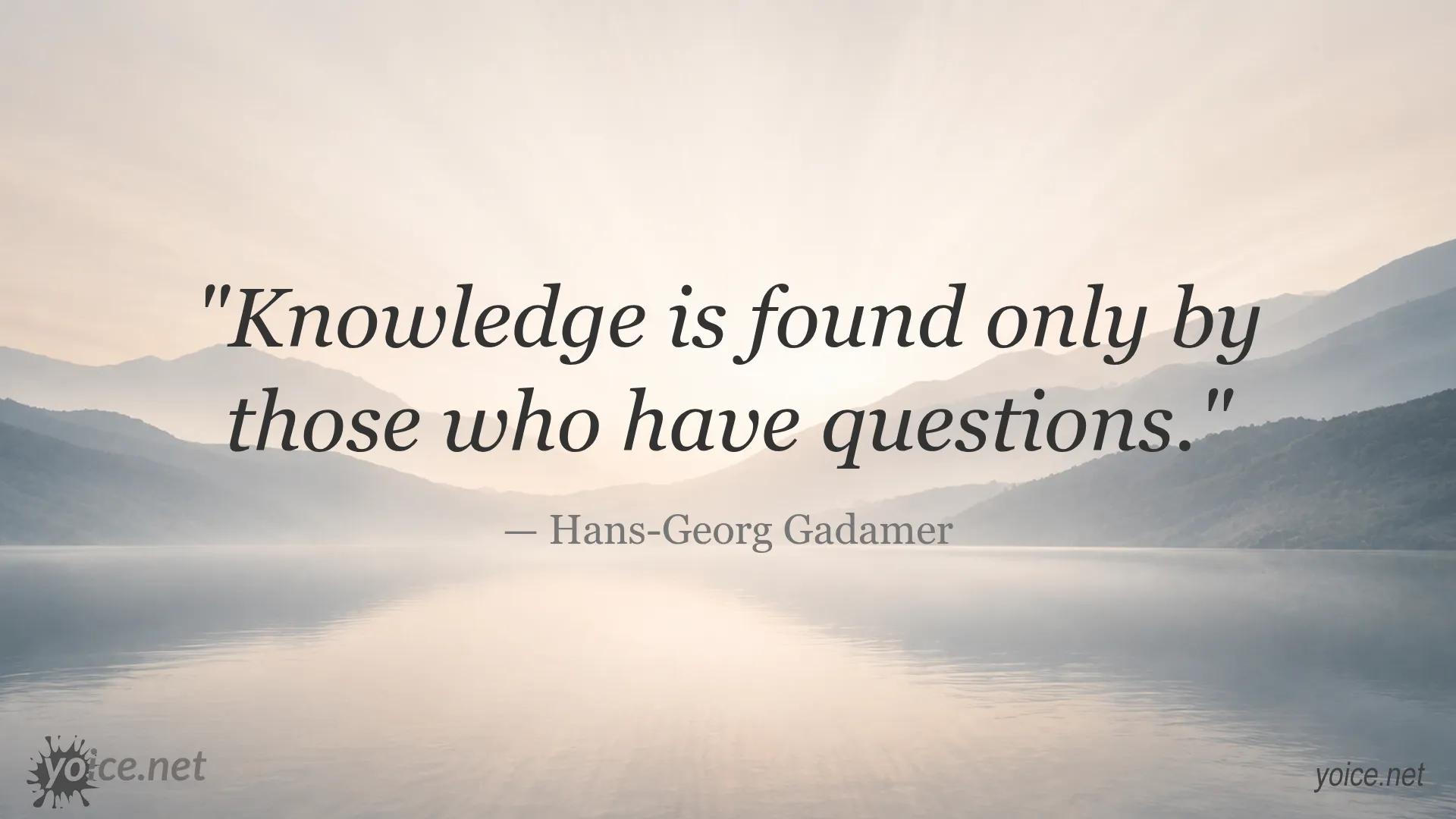
"Knowledge is found only by those who have questions."
Hans-Georg Gadamer
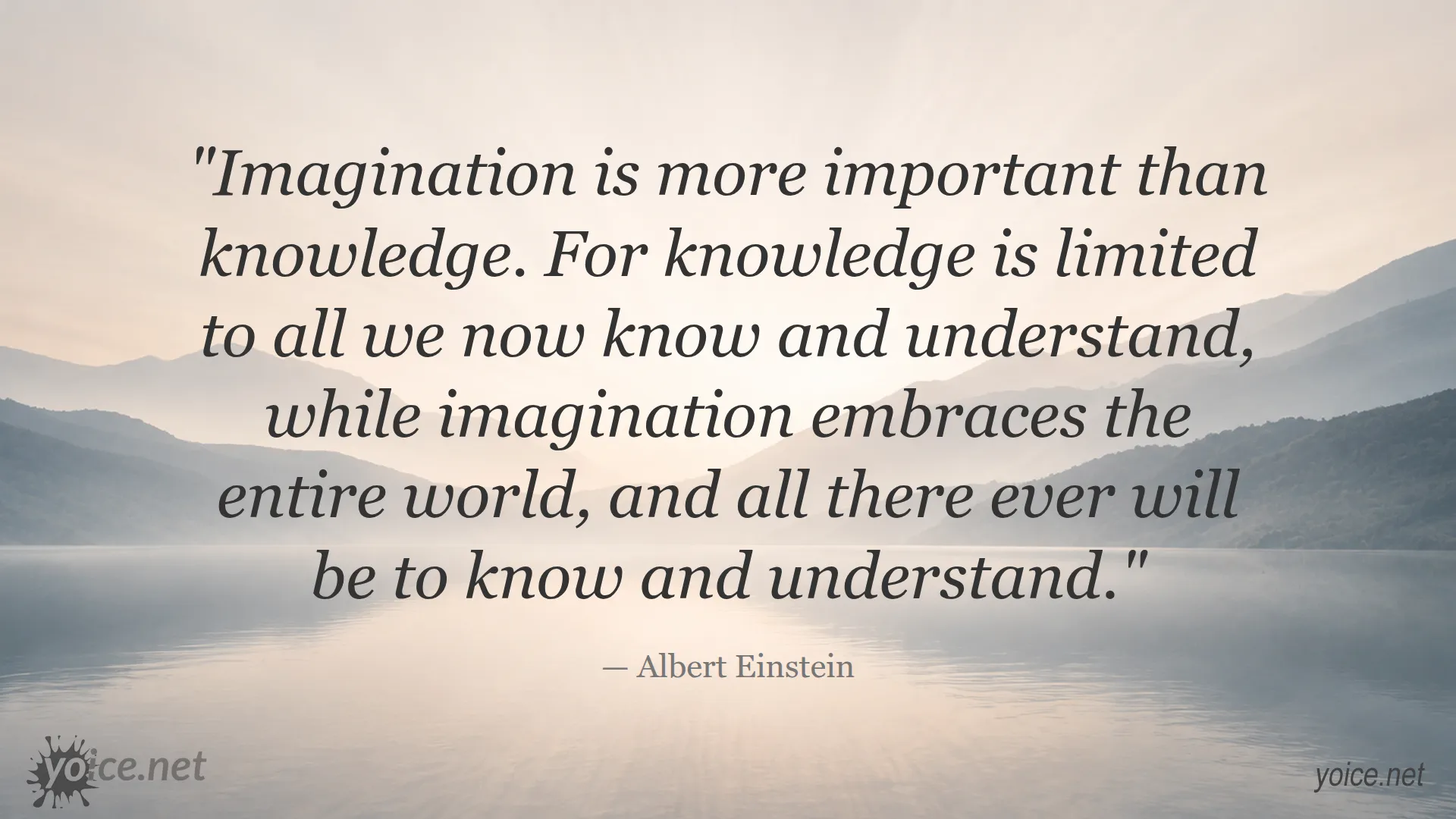
"Imagination is more important than knowledge. For knowledge is limited to all we now know and understand, while imagination embraces the entire world, and all there ever will be to know and understand."
Albert Einstein
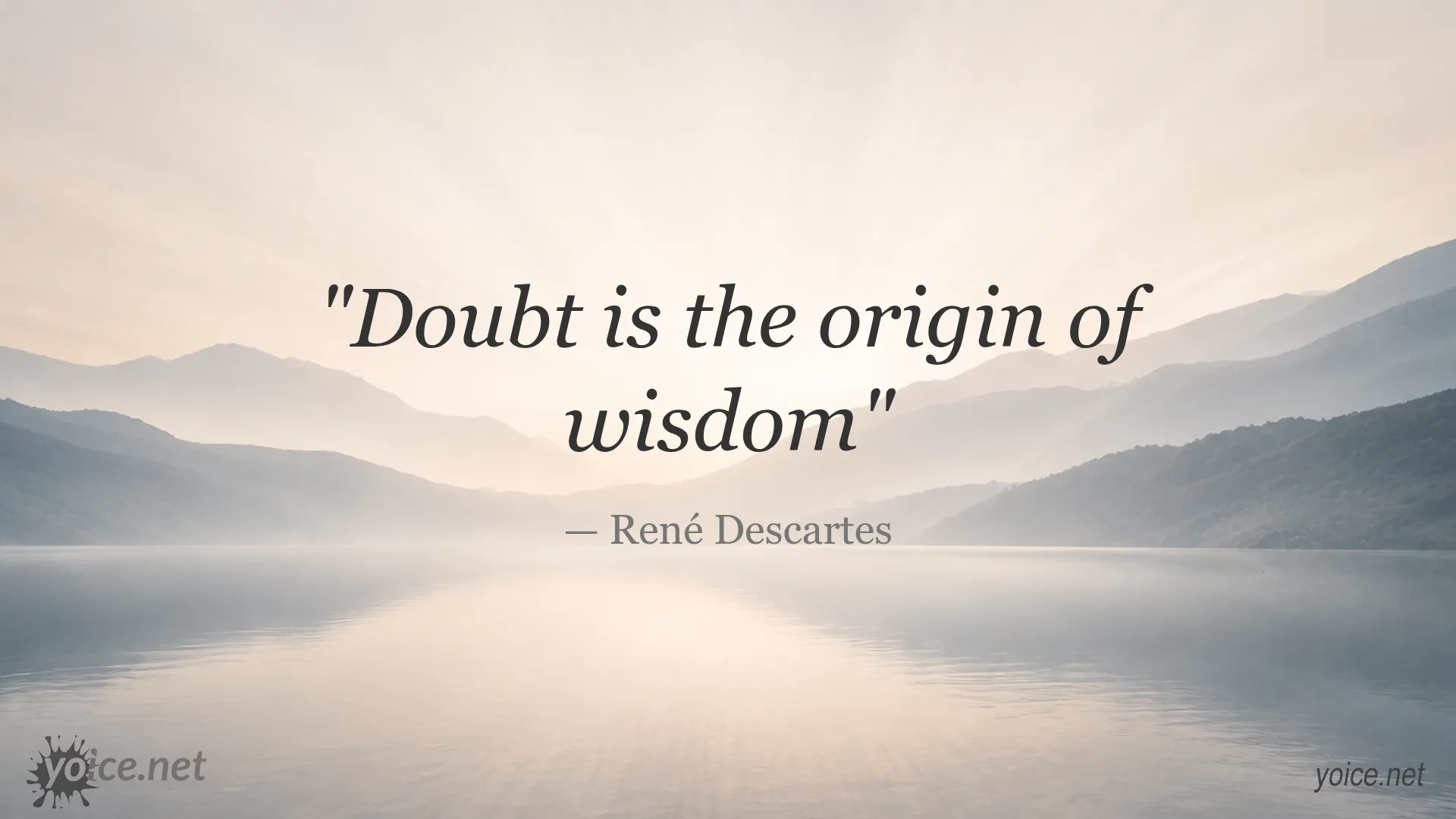
"Doubt is the origin of wisdom"
René Descartes
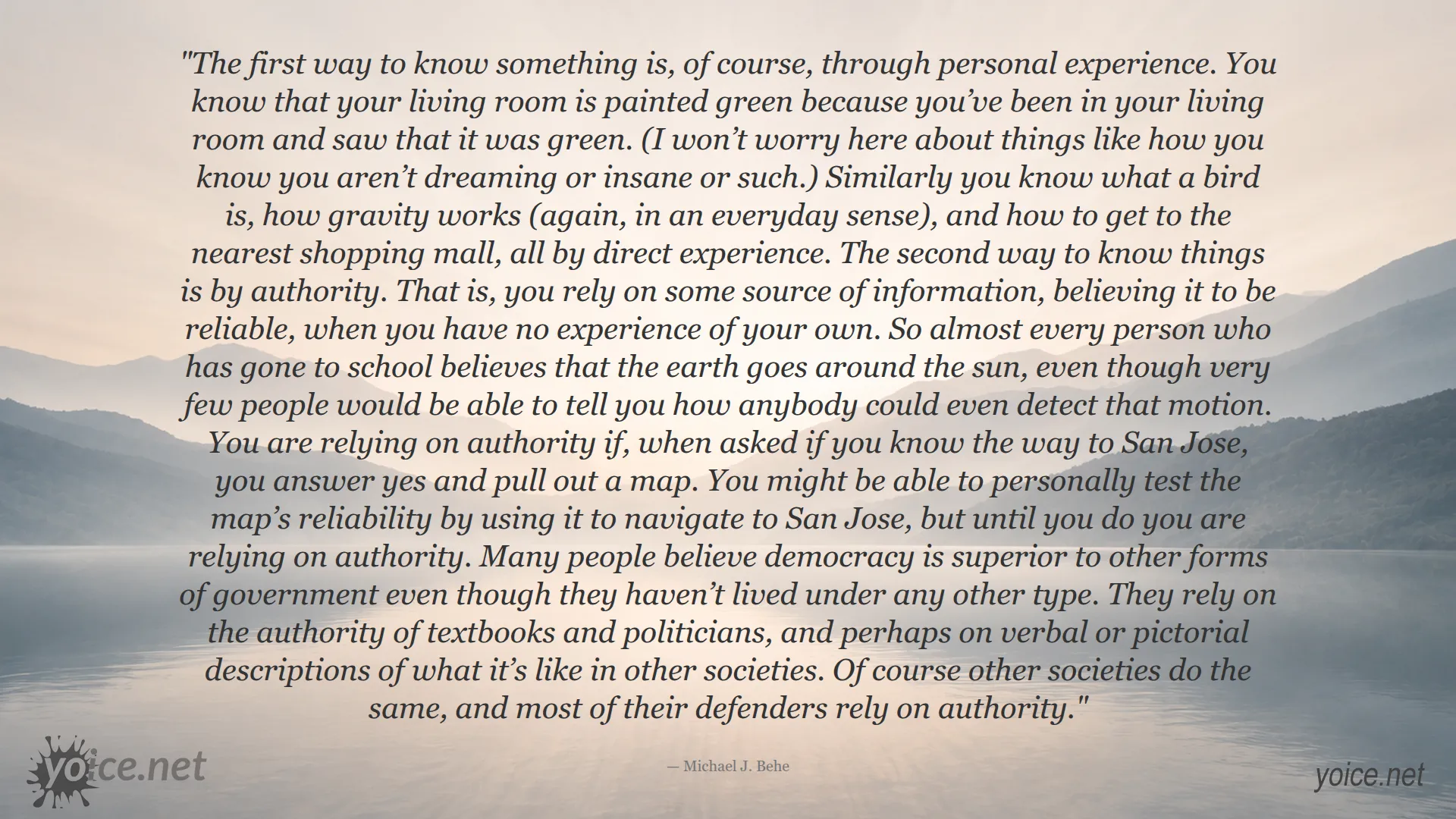
"The first way to know something is, of course, through personal experience. You know that your living room is painted green because you’ve been in your living room and saw that it was green. (I won’t worry here about things like how you know you aren’t dreaming or insane or such.) Similarly you know what a bird is, how gravity works (again, in an everyday sense), and how to get to the nearest shopping mall, all by direct experience.
The second way to know things is by authority. That is, you rely on some source of information, believing it to be reliable, when you have no experience of your own. So almost every person who has gone to school believes that the earth goes around the sun, even though very few people would be able to tell you how anybody could even detect that motion. You are relying on authority if, when asked if you know the way to San Jose, you answer yes and pull out a map. You might be able to personally test the map’s reliability by using it to navigate to San Jose, but until you do you are relying on authority. Many people believe democracy is superior to other forms of government even though they haven’t lived under any other type. They rely on the authority of textbooks and politicians, and perhaps on verbal or pictorial descriptions of what it’s like in other societies. Of course other societies do the same, and most of their defenders rely on authority."
Michael J. Behe
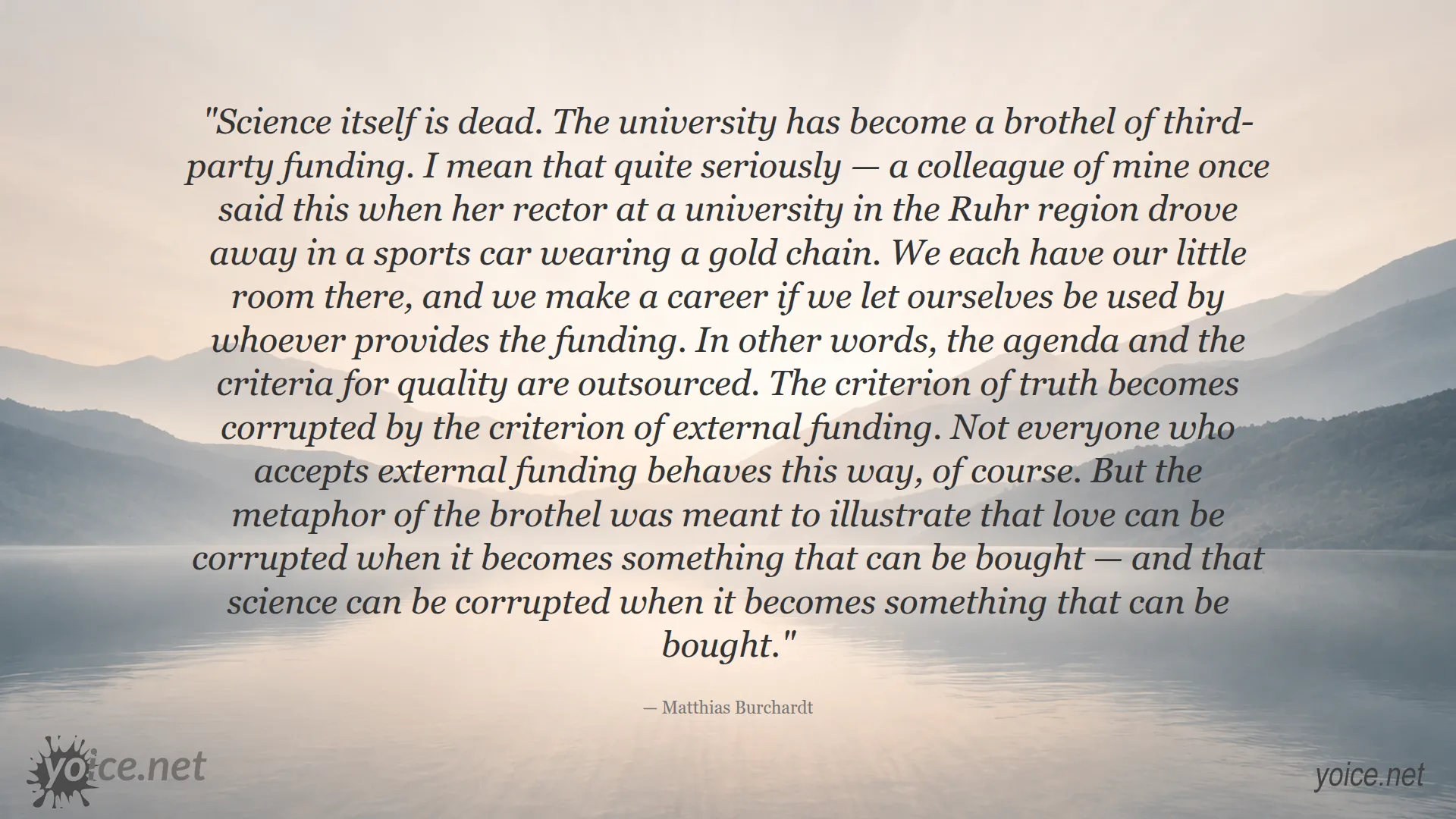
"Science itself is dead. The university has become a brothel of third-party funding.
I mean that quite seriously — a colleague of mine once said this when her rector at a university in the Ruhr region drove away in a sports car wearing a gold chain.
We each have our little room there, and we make a career if we let ourselves be used by whoever provides the funding.
In other words, the agenda and the criteria for quality are outsourced. The criterion of truth becomes corrupted by the criterion of external funding.
Not everyone who accepts external funding behaves this way, of course. But the metaphor of the brothel was meant to illustrate that love can be corrupted when it becomes something that can be bought — and that science can be corrupted when it becomes something that can be bought."
Matthias Burchardt
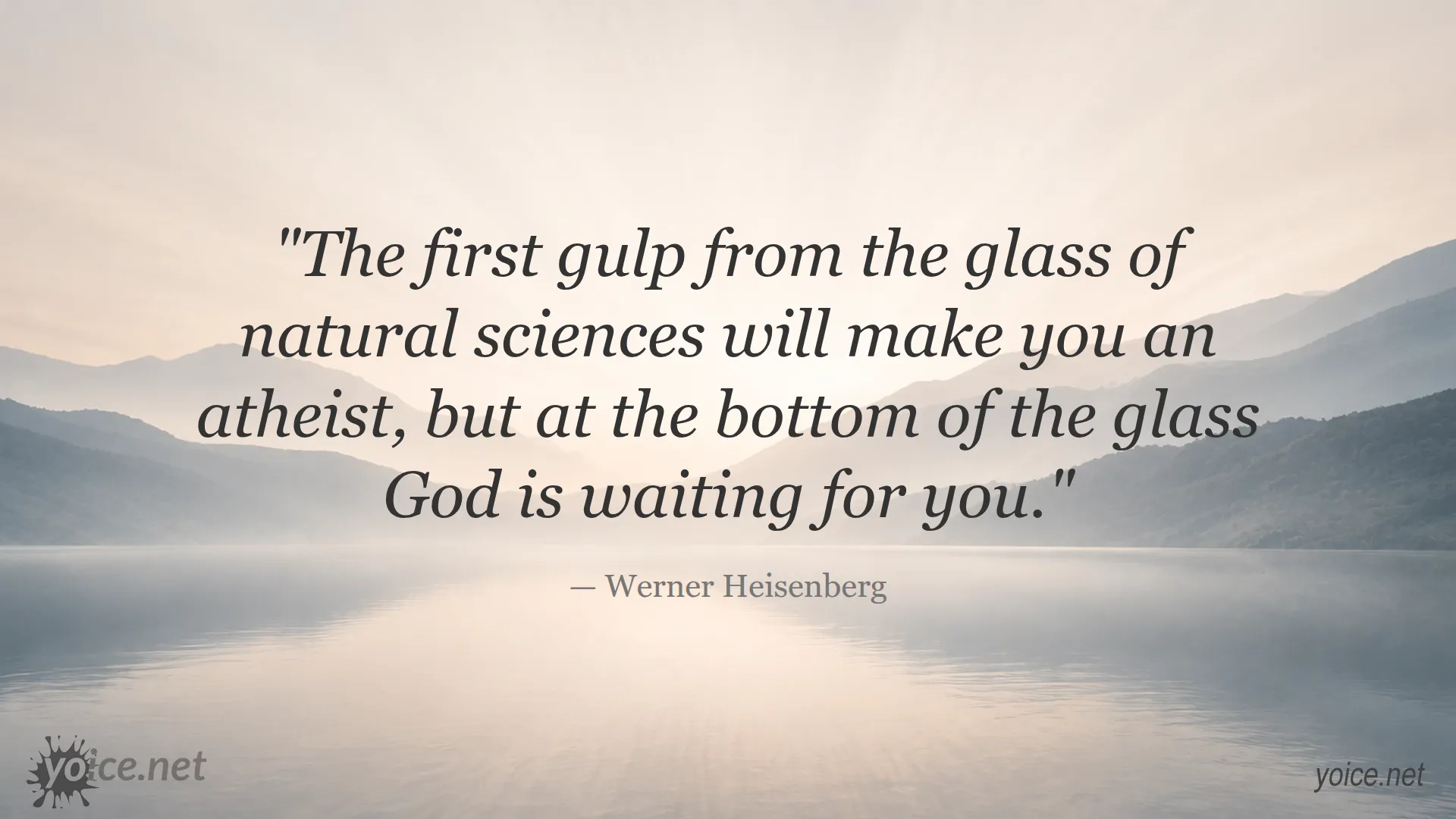
"The first gulp from the glass of natural sciences will make you an atheist, but at the bottom of the glass God is waiting for you."
Werner Heisenberg
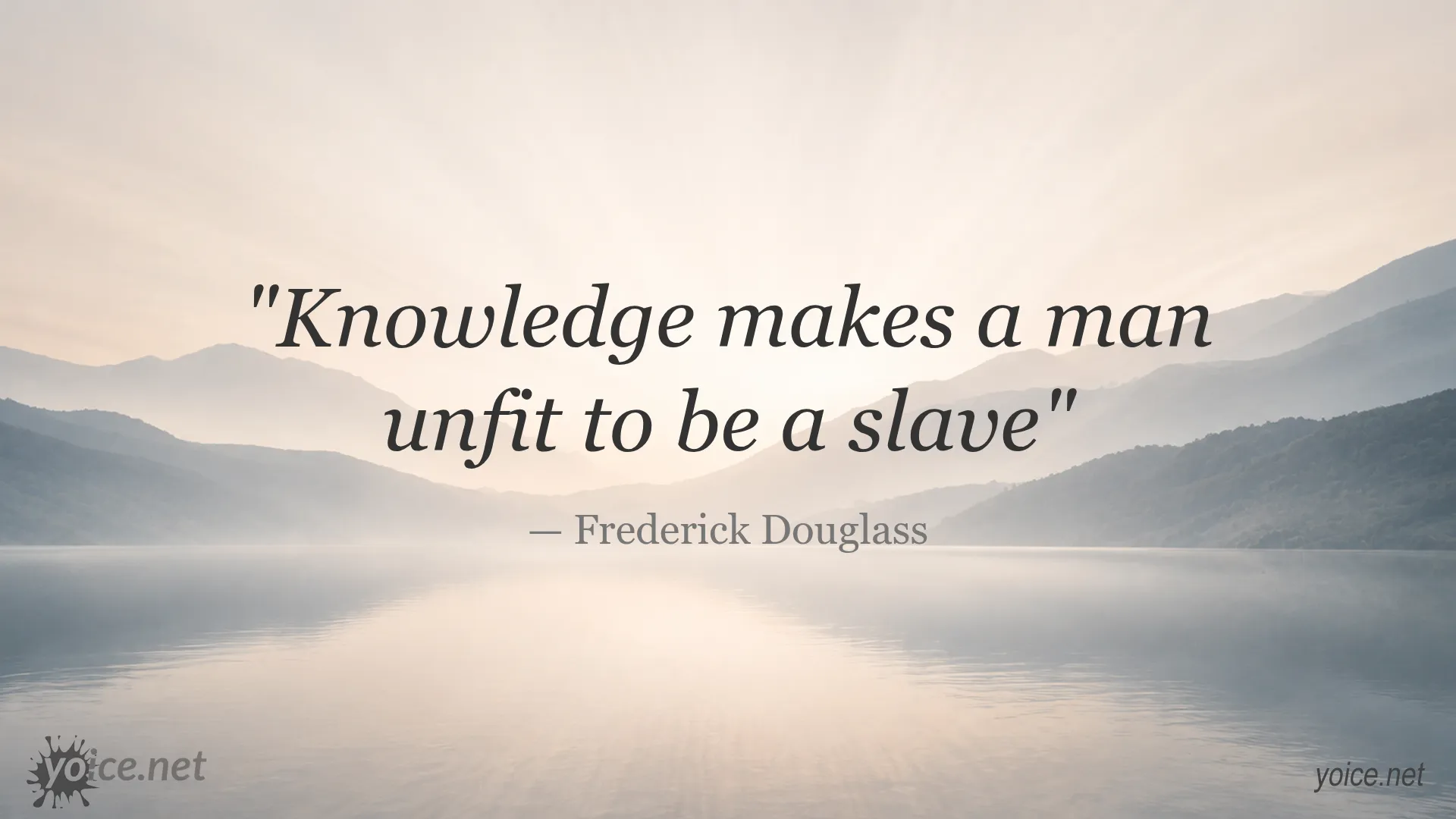
"Knowledge makes a man unfit to be a slave"
Frederick Douglass
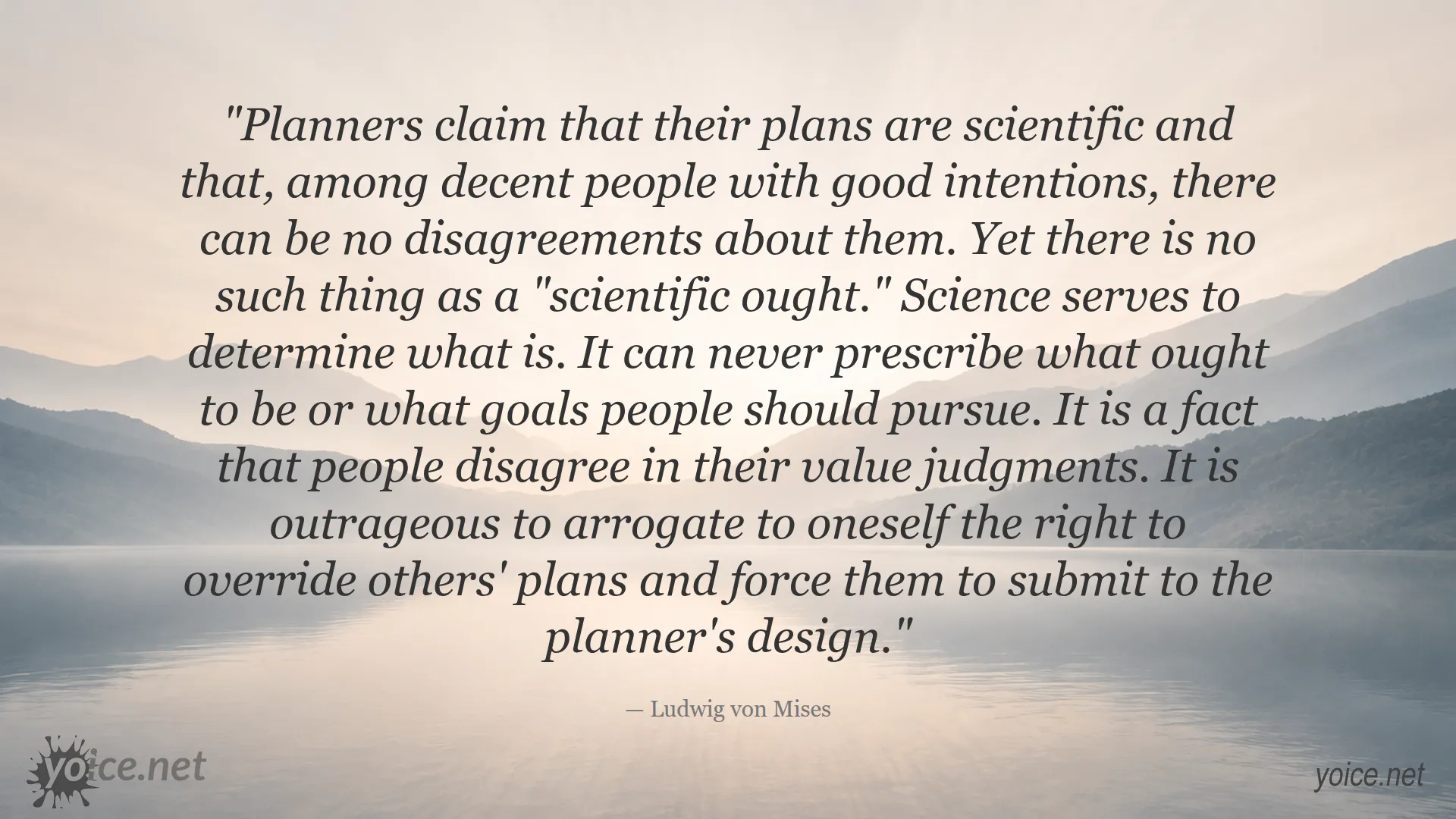
"Planners claim that their plans are scientific and that, among decent people with good intentions, there can be no disagreements about them. Yet there is no such thing as a "scientific ought." Science serves to determine what is. It can never prescribe what ought to be or what goals people should pursue. It is a fact that people disagree in their value judgments. It is outrageous to arrogate to oneself the right to override others' plans and force them to submit to the planner's design."
Ludwig von Mises
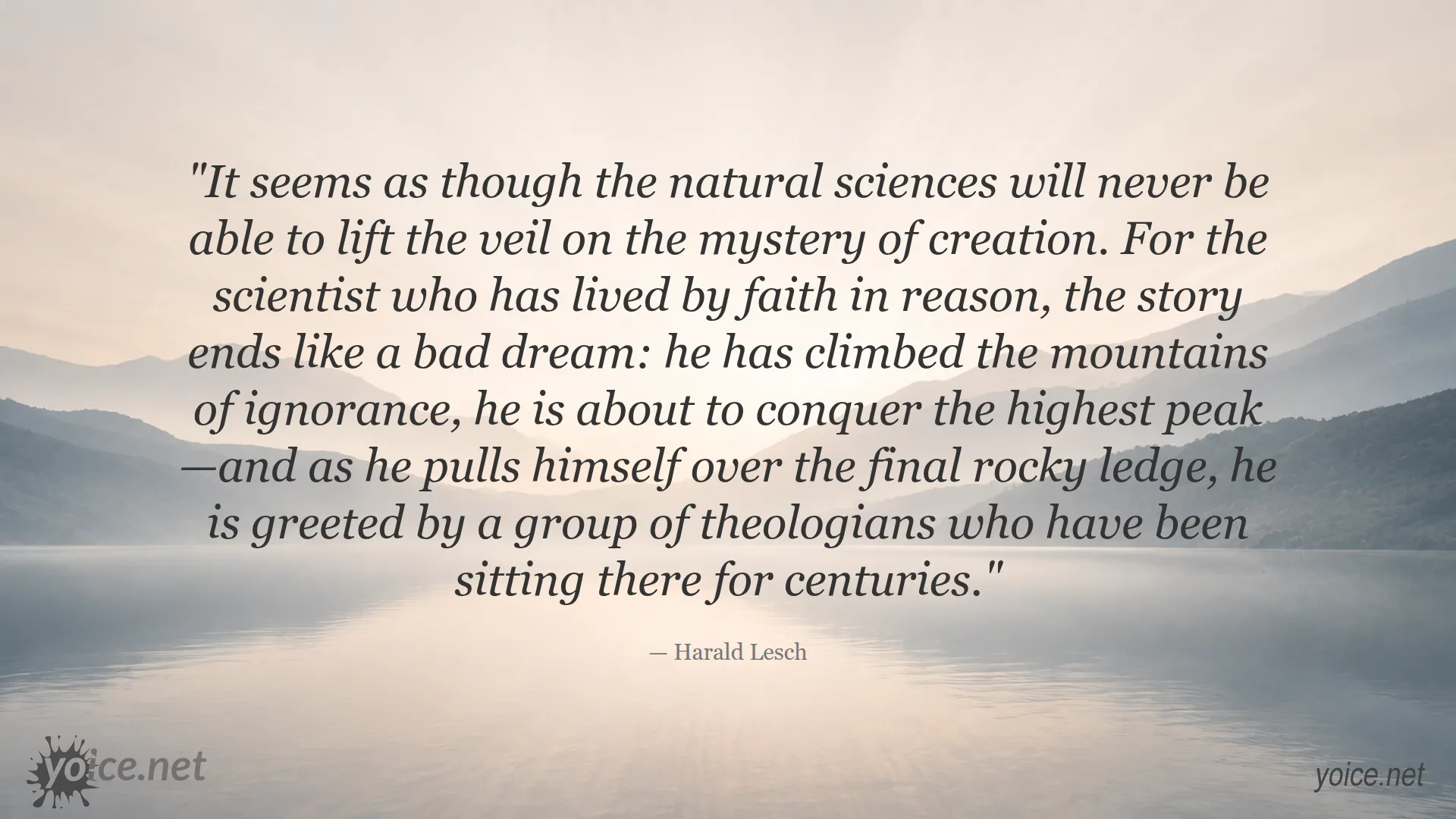
"It seems as though the natural sciences will never be able to lift the veil on the mystery of creation. For the scientist who has lived by faith in reason, the story ends like a bad dream: he has climbed the mountains of ignorance, he is about to conquer the highest peak—and as he pulls himself over the final rocky ledge, he is greeted by a group of theologians who have been sitting there for centuries."
Harald Lesch
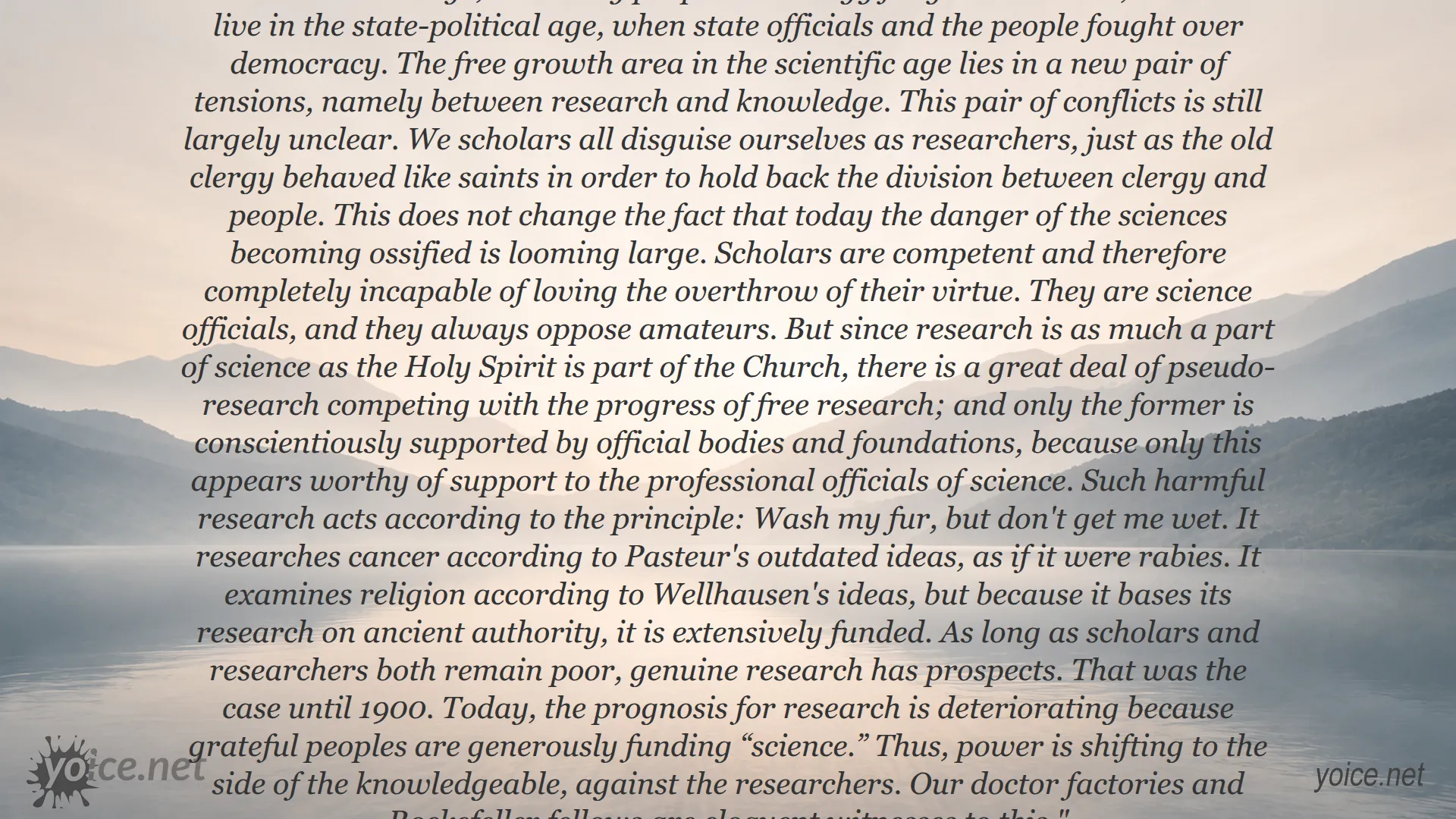
"Perhaps the following current example can best illustrate this point. We do not live in the clerical age, where lay people and clergy fought each other; nor do we live in the state-political age, when state officials and the people fought over democracy. The free growth area in the scientific age lies in a new pair of tensions, namely between research and knowledge. This pair of conflicts is still largely unclear.
We scholars all disguise ourselves as researchers, just as the old clergy behaved like saints in order to hold back the division between clergy and people. This does not change the fact that today the danger of the sciences becoming ossified is looming large.
Scholars are competent and therefore completely incapable of loving the overthrow of their virtue. They are science officials, and they always oppose amateurs. But since research is as much a part of science as the Holy Spirit is part of the Church, there is a great deal of pseudo-research competing with the progress of free research; and only the former is conscientiously supported by official bodies and foundations, because only this appears worthy of support to the professional officials of science.
Such harmful research acts according to the principle: Wash my fur, but don't get me wet.
It researches cancer according to Pasteur's outdated ideas, as if it were rabies.
It examines religion according to Wellhausen's ideas, but because it bases its research on ancient authority, it is extensively funded.
As long as scholars and researchers both remain poor, genuine research has prospects. That was the case until 1900. Today, the prognosis for research is deteriorating because grateful peoples are generously funding “science.” Thus, power is shifting to the side of the knowledgeable, against the researchers.
Our doctor factories and Rockefeller fellows are eloquent witnesses to this."
Eugen Rosenstock
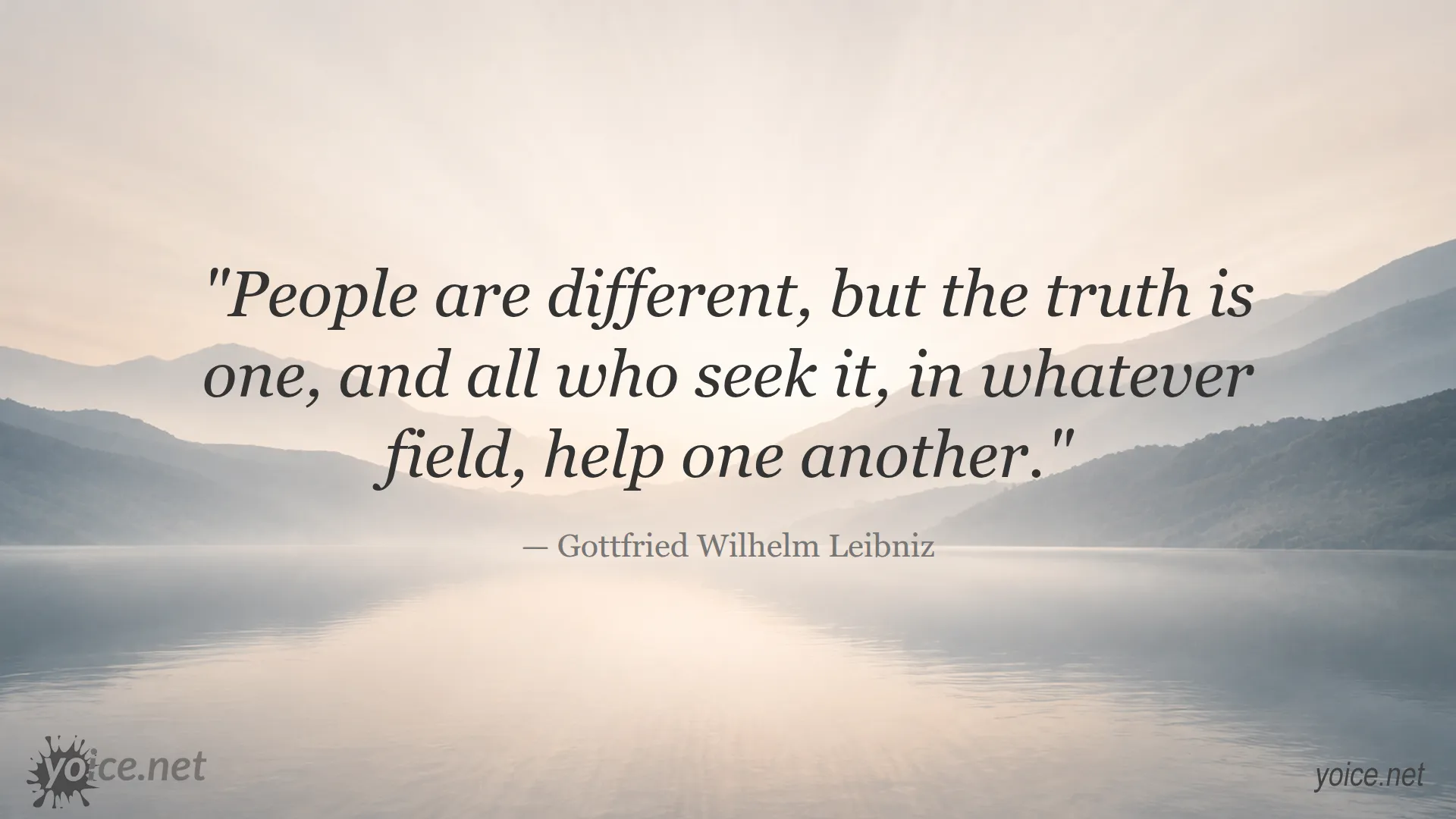
"People are different, but the truth is one, and all who seek it, in whatever field, help one another."
Gottfried Wilhelm Leibniz
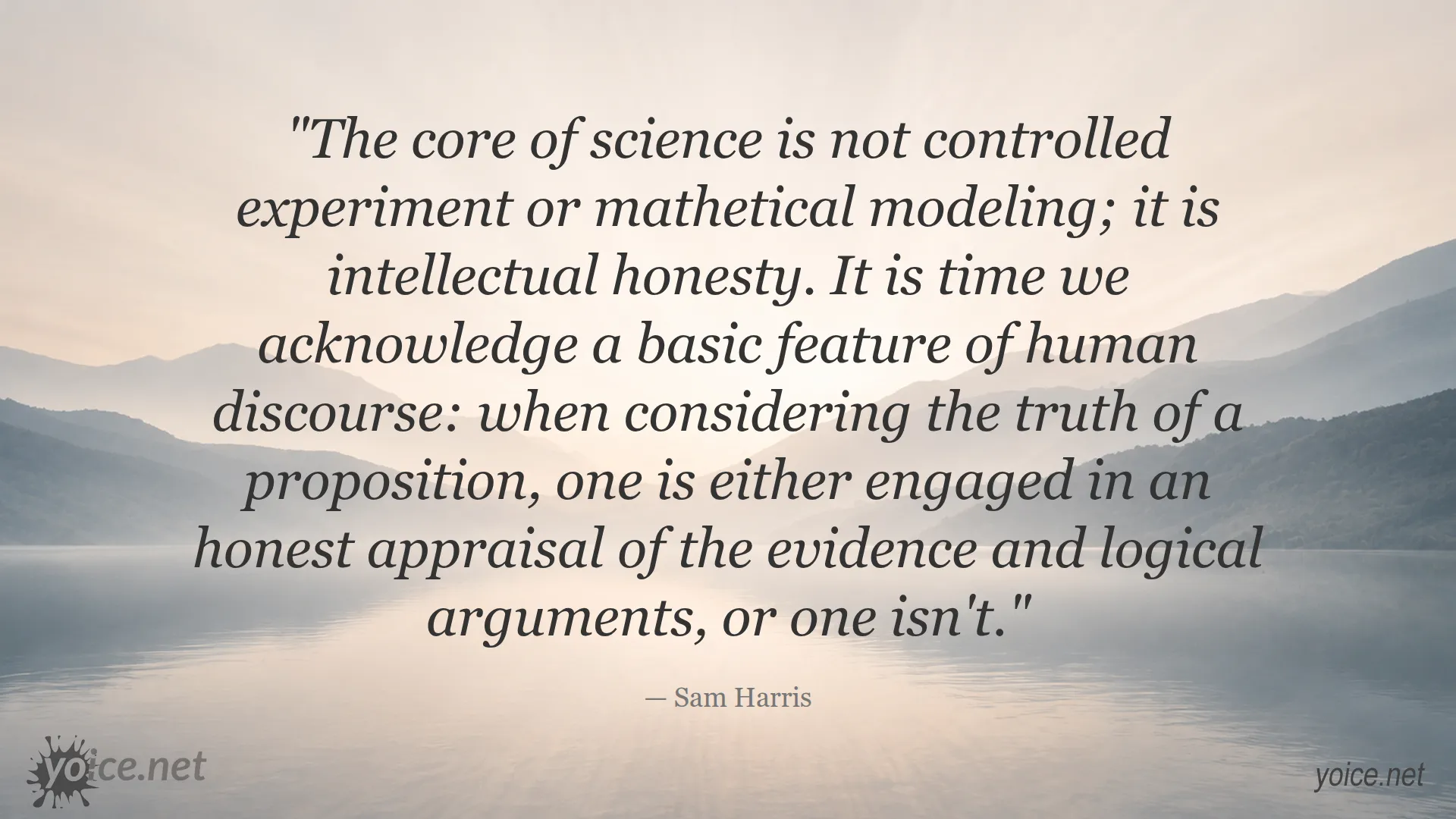
"The core of science is not controlled experiment or mathetical modeling; it is intellectual honesty. It is time we acknowledge a basic feature of human discourse: when considering the truth of a proposition, one is either engaged in an honest appraisal of the evidence and logical arguments, or one isn't."
Sam Harris
 Copyright © yoice.net – Quote Artwork
 Copyright © yoice.net – Quote Artwork
 Copyright © yoice.net – Quote Artwork
 Copyright © yoice.net – Quote Artwork
 Copyright © yoice.net – Quote Artwork
 Copyright © yoice.net – Quote Artwork
 Copyright © yoice.net – Quote Artwork
 Copyright © yoice.net – Quote Artwork
 Copyright © yoice.net – Quote Artwork
 Copyright © yoice.net – Quote Artwork
 Copyright © yoice.net – Quote Artwork
 Copyright © yoice.net – Quote Artwork
 Copyright © yoice.net – Quote Artwork
 Copyright © yoice.net – Quote Artwork
 Copyright © yoice.net – Quote Artwork
 Copyright © yoice.net – Quote Artwork
 Copyright © yoice.net – Quote Artwork