 Copyright © yoice.net – Quote Artwork
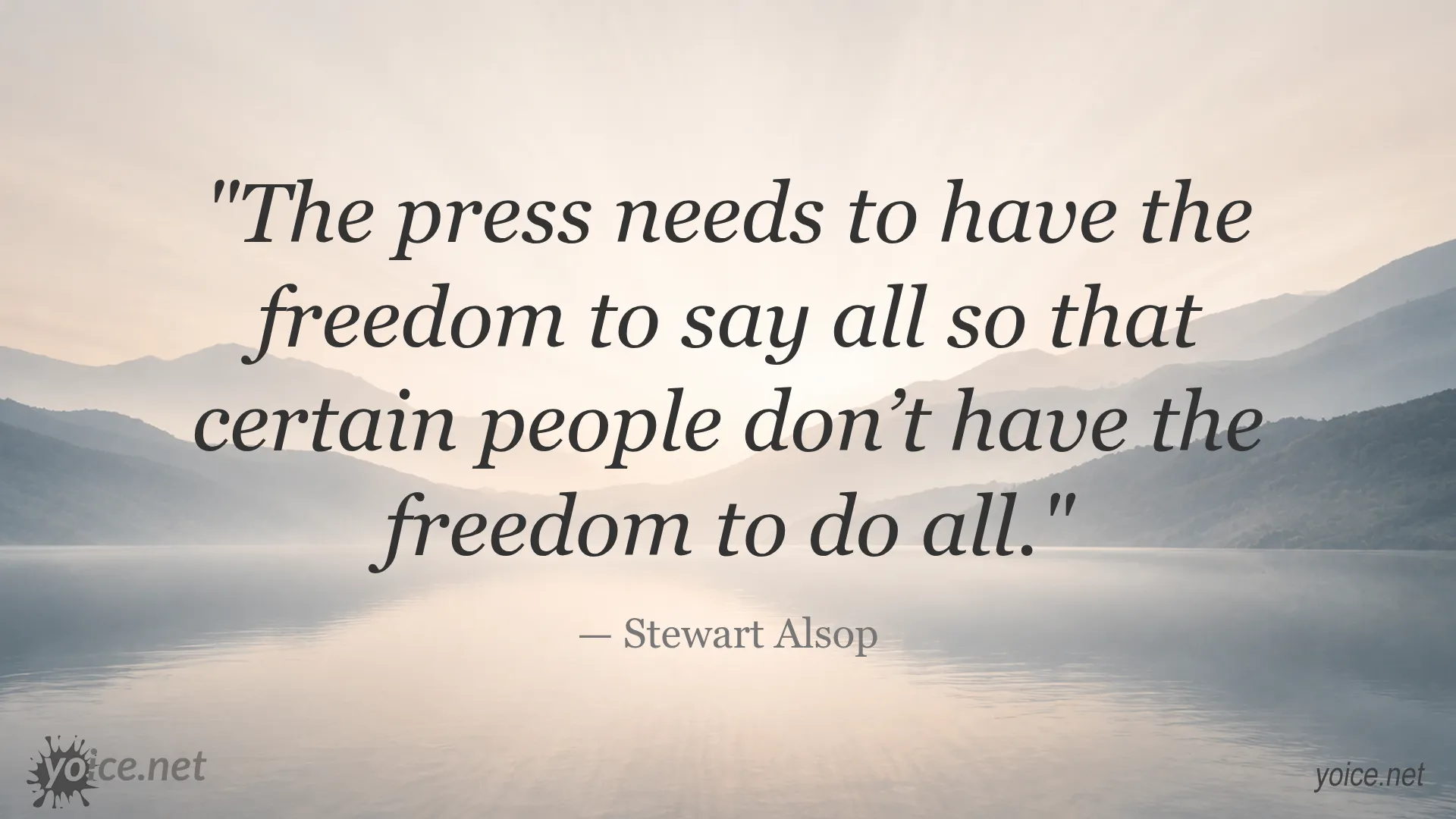
"The press needs to have the freedom to say all so that certain people don’t have the freedom to do all."
Stewart Alsop

Censorship Quotes – Reflections on Information Control
A collection of censorship quotes highlighting philosophical and cultural views on information and opinion control.
This collection of censorship quotes offers thoughtful insights into the concepts of controlling information and freedom of expression. The quotes reflect philosophical and cultural perspectives on the reasons for and effects of restricting content. They provide a basis for reflecting on the balance between protection and freedom within communication. The selection presents various views on the practice and significance of censorship across different contexts. These quotes encourage critical thinking about the role of censorship in societies.
"The press needs to have the freedom to say all so that certain people don’t have the freedom to do all."
Stewart Alsop
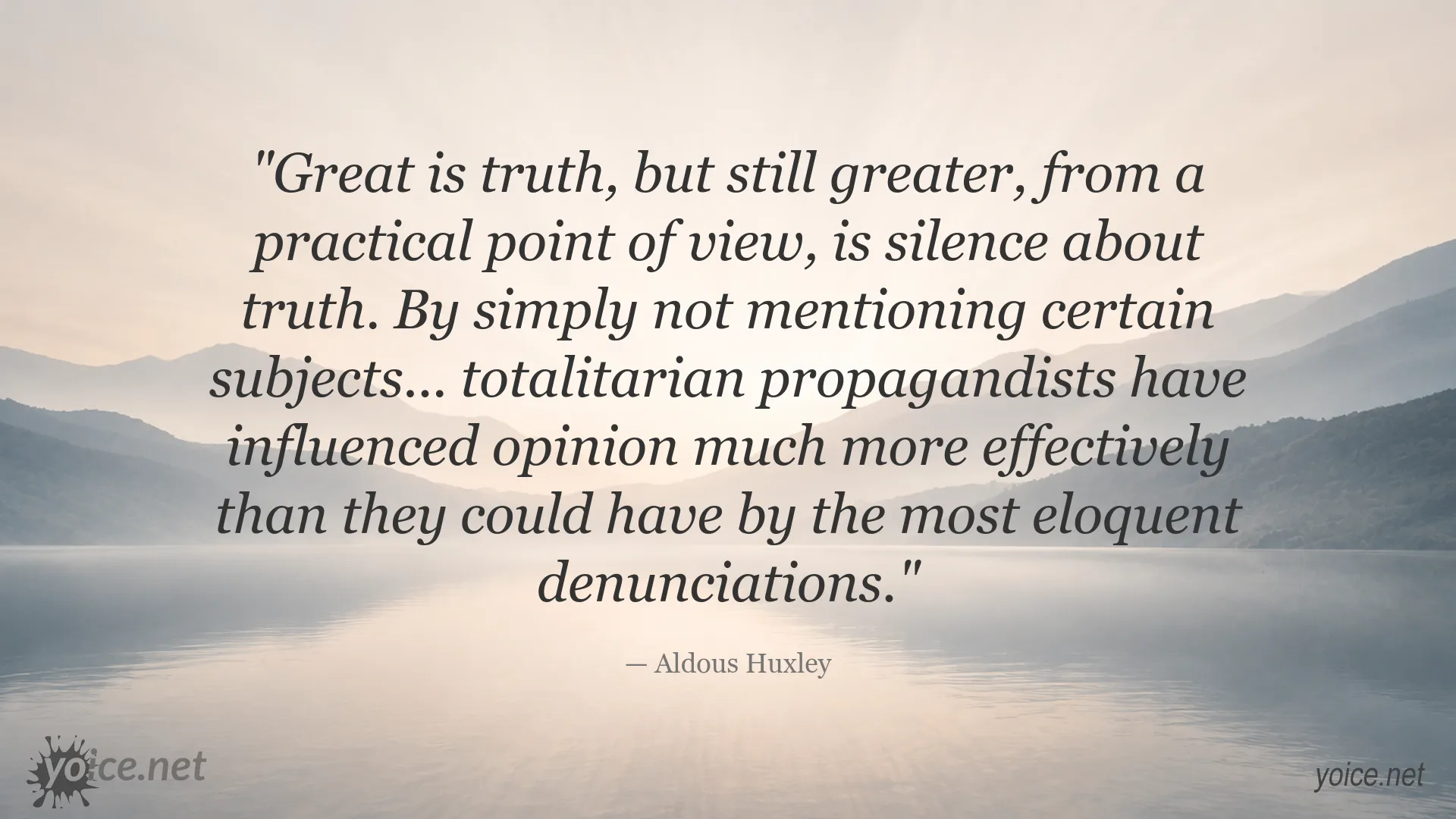
"Great is truth, but still greater, from a practical point of view, is silence about truth. By simply not mentioning certain subjects... totalitarian propagandists have influenced opinion much more effectively than they could have by the most eloquent denunciations."
Aldous Huxley
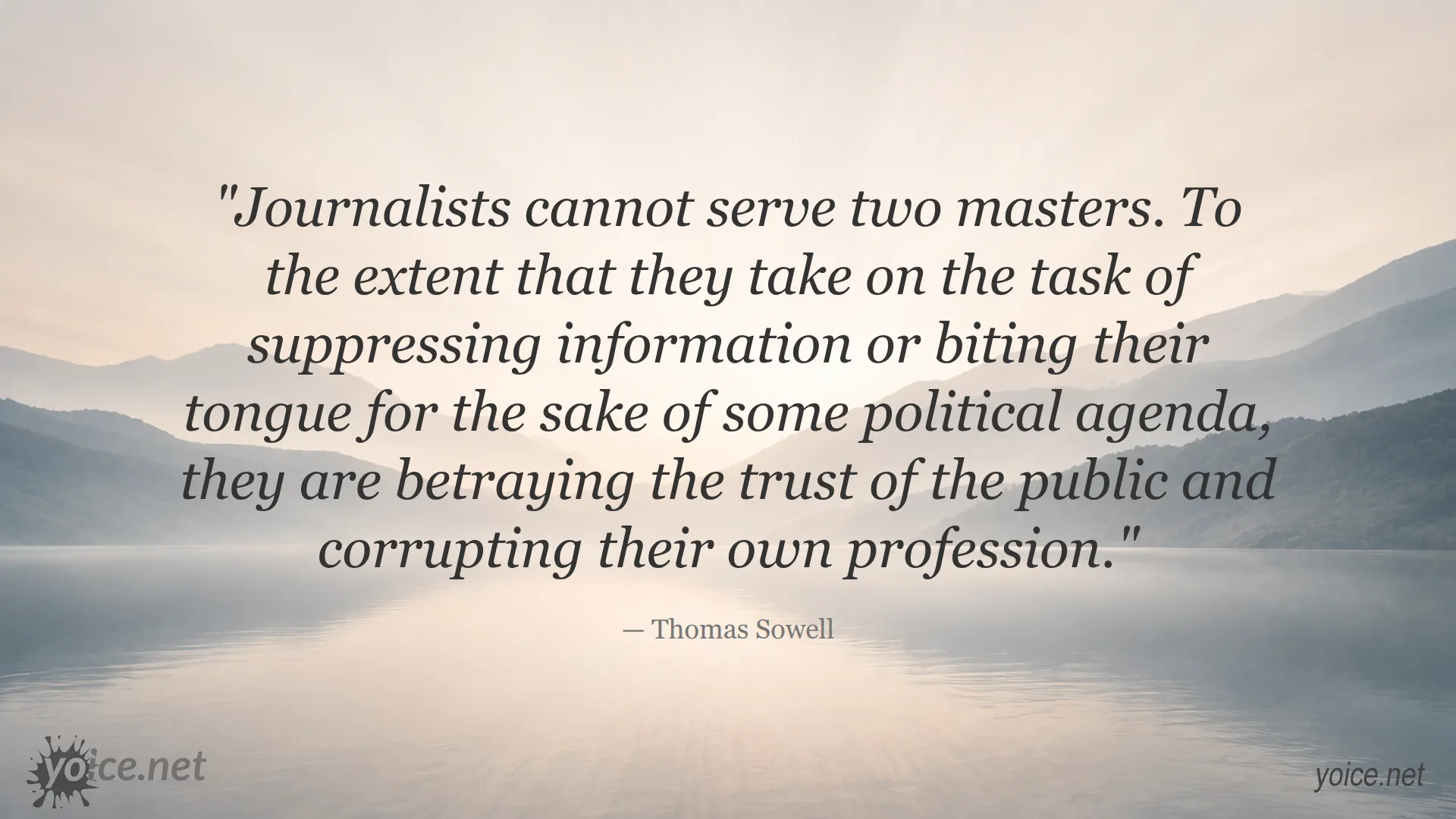
"Journalists cannot serve two masters. To the extent that they take on the task of suppressing information or biting their tongue for the sake of some political agenda, they are betraying the trust of the public and corrupting their own profession."
Thomas Sowell
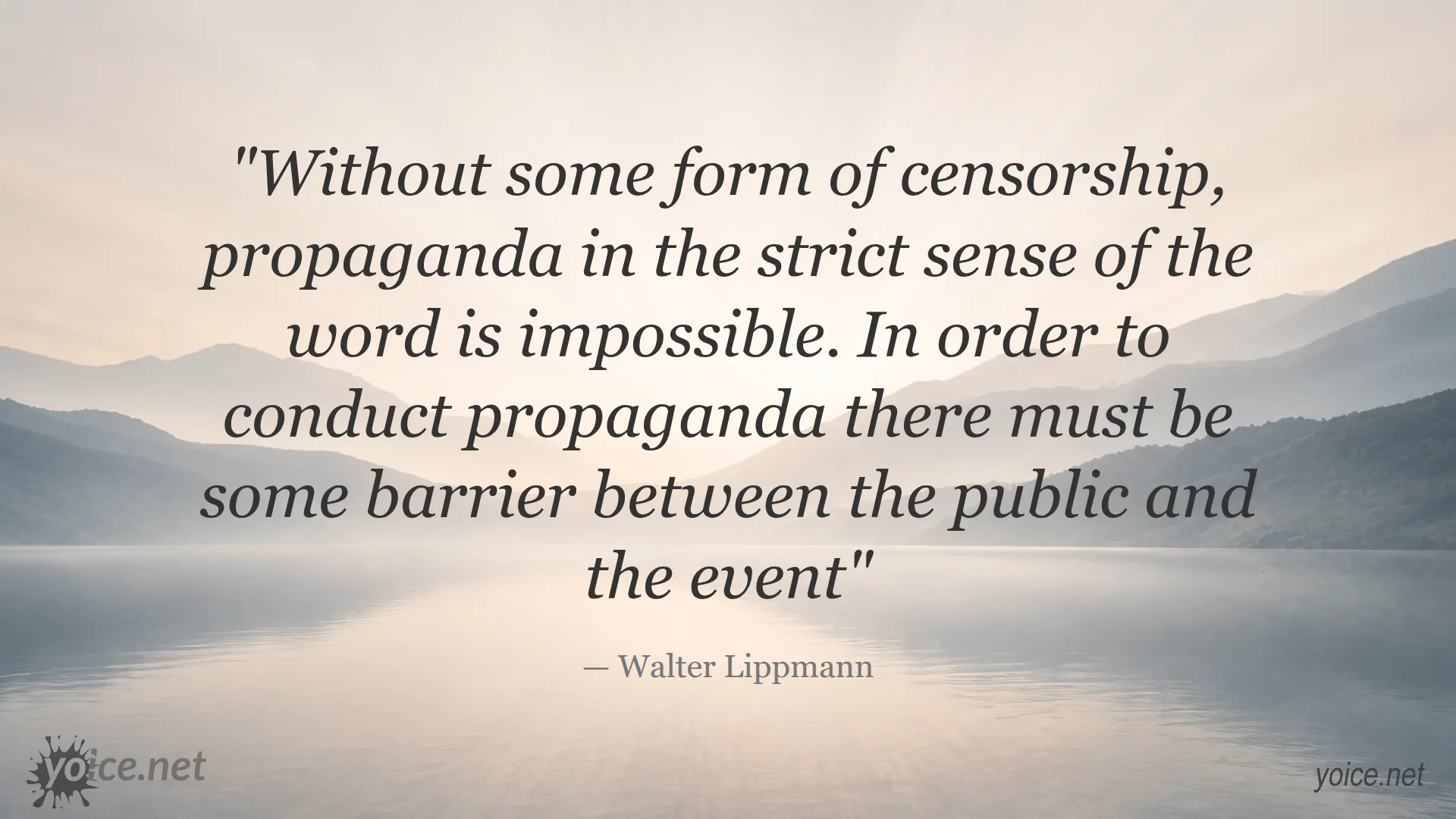
"Without some form of censorship, propaganda in the strict sense of the word is impossible. In order to conduct propaganda there must be some barrier between the public and the event"
Walter Lippmann
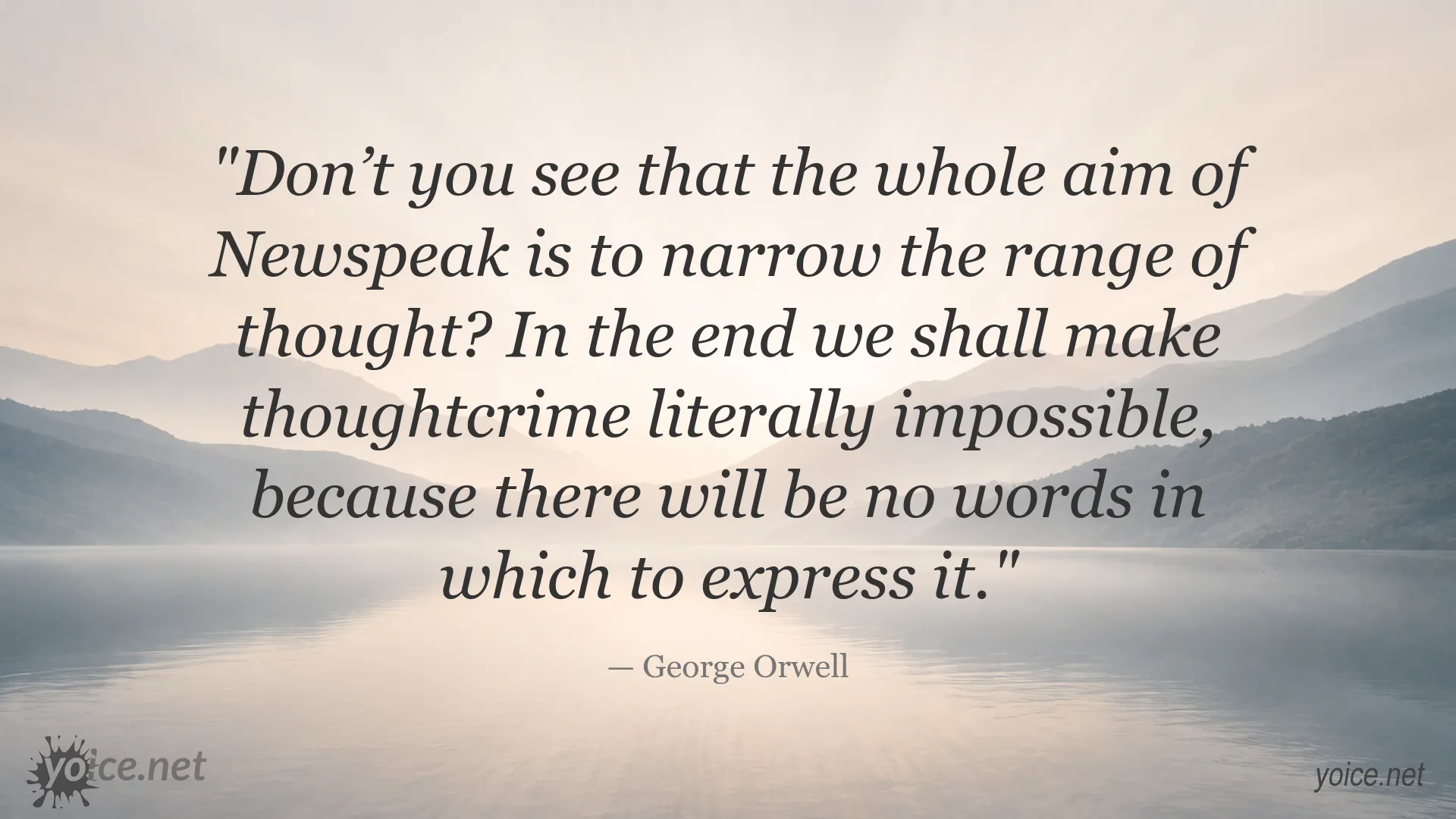
"Don’t you see that the whole aim of Newspeak is to narrow the range of thought? In the end we shall make thoughtcrime literally impossible, because there will be no words in which to express it."
George Orwell
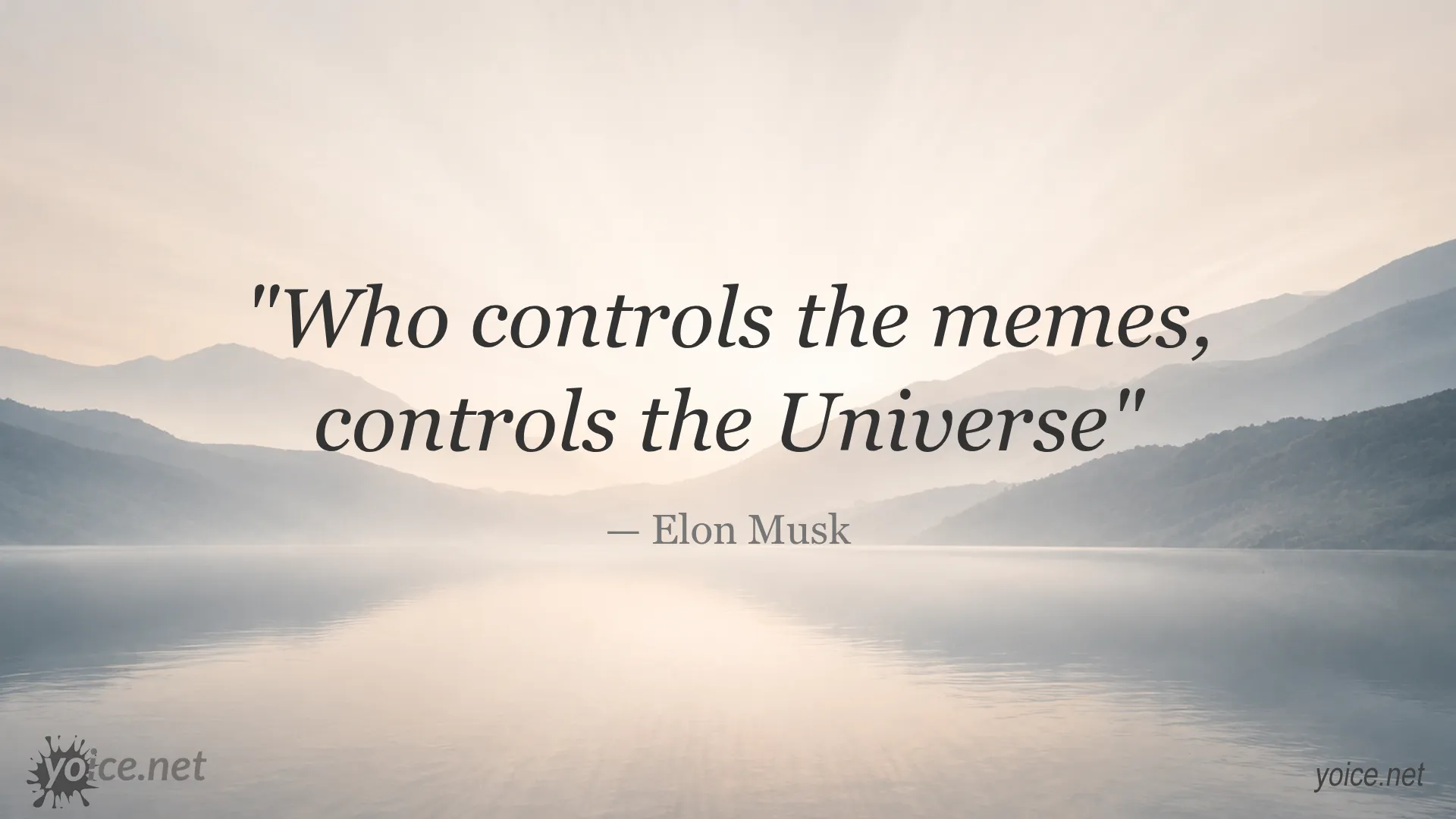
"Who controls the memes, controls the Universe"
Elon Musk
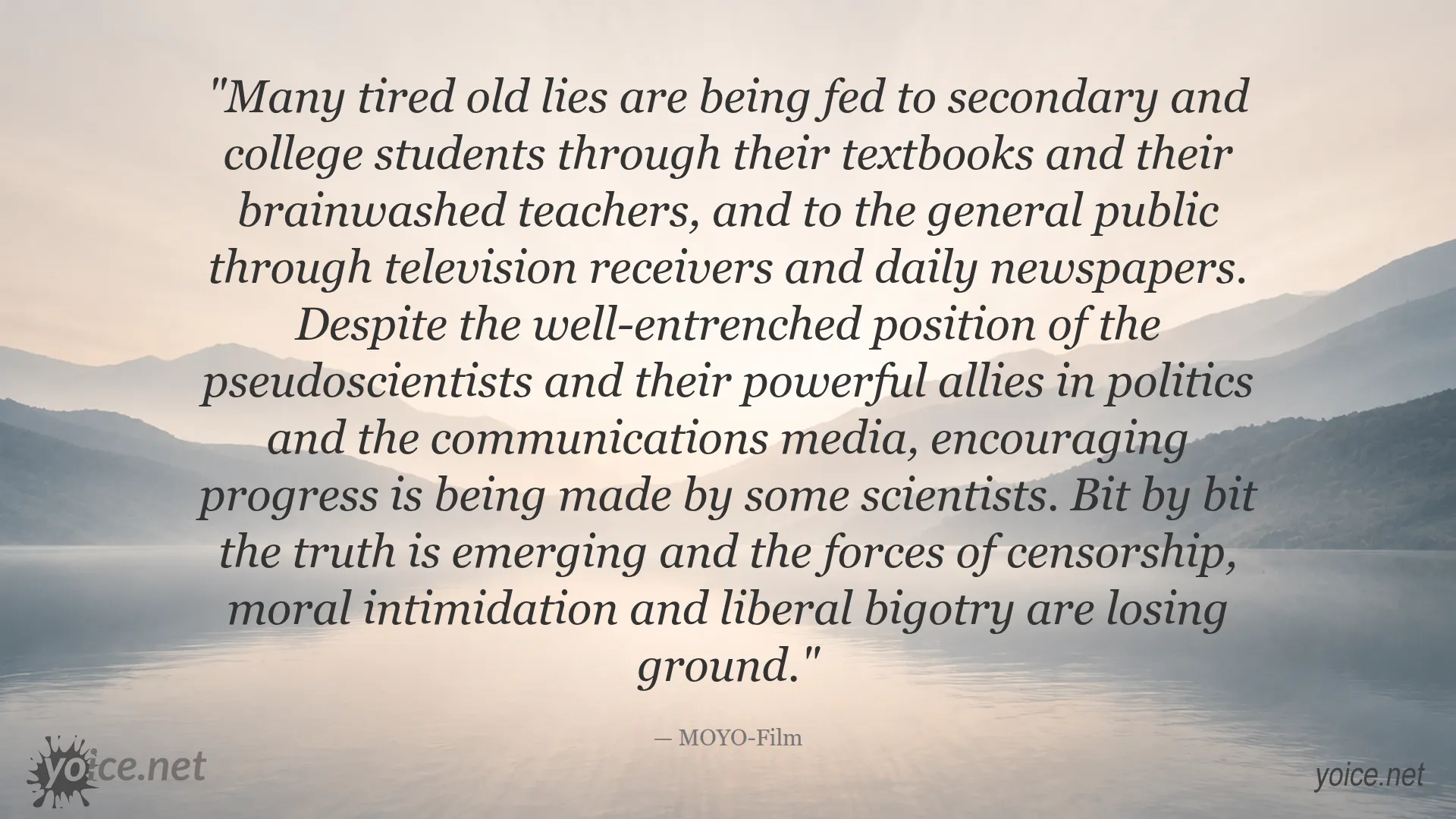
"Many tired old lies are being fed to secondary and college students through their textbooks and their brainwashed teachers, and to the general public through television receivers and daily newspapers. Despite the well-entrenched position of the pseudoscientists and their powerful allies in politics and the communications media, encouraging progress is being made by some scientists. Bit by bit the truth is emerging and the forces of censorship, moral intimidation and liberal bigotry are losing ground."
MOYO-Film
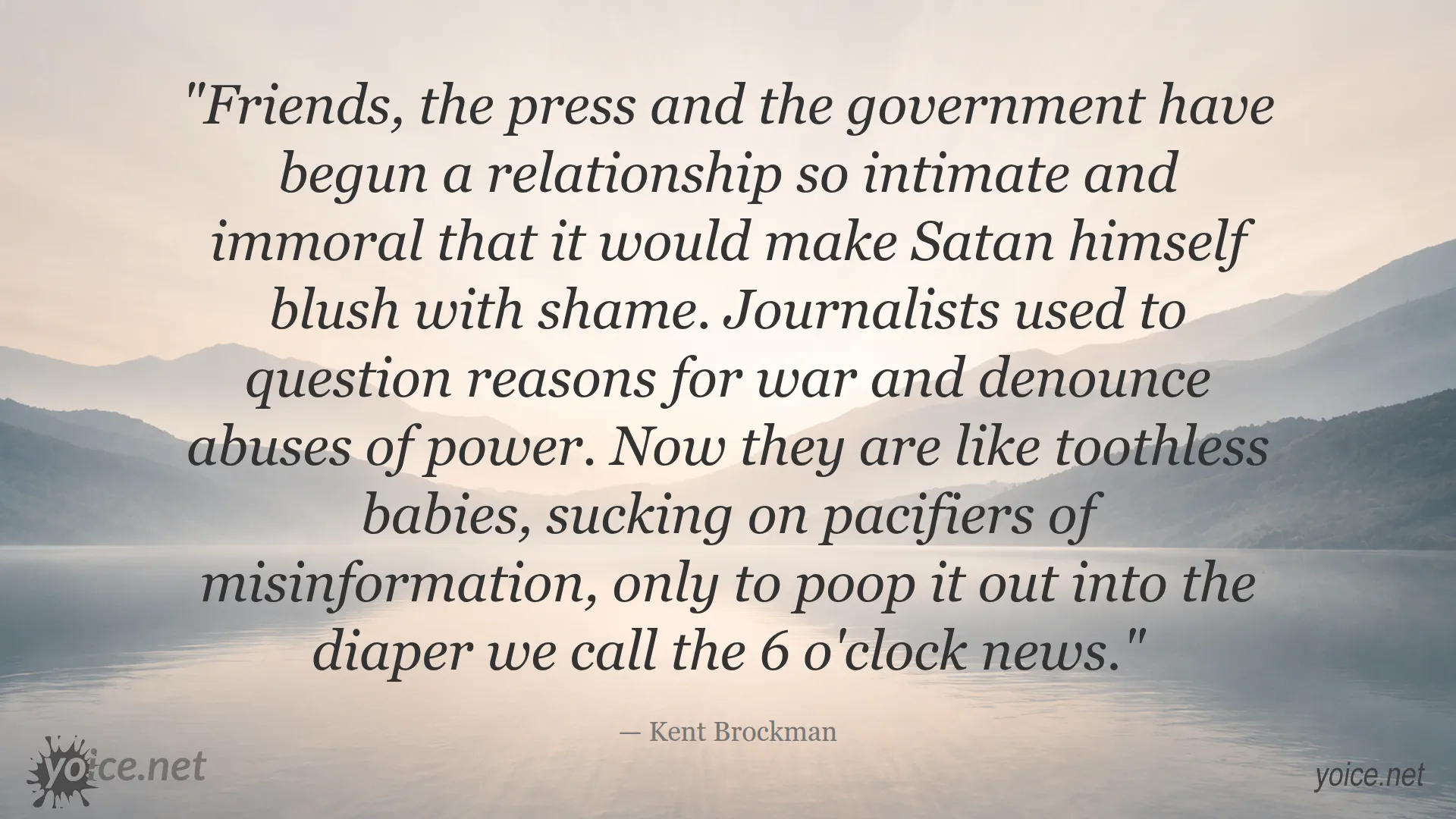
"Friends, the press and the government have begun a relationship so intimate and immoral that it would make Satan himself blush with shame. Journalists used to question reasons for war and denounce abuses of power. Now they are like toothless babies, sucking on pacifiers of misinformation, only to poop it out into the diaper we call the 6 o'clock news."
Kent Brockman
"Not a day goes by without the mainstream media reporting on some war, epidemic, or other problem in the world. The problem is that this type of reporting, as we find it, is sheer madness. Information is distorted or not mentioned at all. It is the partial truths that make the press so dangerous. Wars are sold as “humanitarian interventions,” diseases are pushed to play into the hands of the pharmaceutical industry. There are always two sides to every coin, but we are only shown one side, which is supposed to be the “truth.” They show us what they want us to see and leave out what does not fit into their desired worldview. At this point, we should ask ourselves whether we want to continue consuming this filth and supporting it financially by buying certain tabloids such as Bild, Spiegel & Co. “Either you rebel, or you become complicit.”"
Ignazio Silone
"During lectures, I have repeatedly noticed that it is beneficial to clarify this obvious fact: No, the news is not a reflection of reality, not even a poor one. When we use mainstream media, we observe power relations in terms of definition. Who brings their topics and their view of things to the public? Who can I safely quote, who or what can or must I refer to? Which terms are appropriate and which are not? If the mainstream media say that there is a virus and a disease that I should be afraid of, then I have to take that seriously because those who decide about my life take it seriously. I can claim the opposite and attack the power of definition, but then I have to expect to lose all reputation (Wendler, Hildmann), being transferred (like Friedrich Pürner, head of the health department in the Aichach-Friedberg district until November 2020), or being kicked out of important committees (like Christoph Lütge from the Bavarian Ethics Council in February 2021) without any public resistance."
Prof. Dr. Michael Meyen
"In former times, torture was used. Nowadays, the press is used. That is certainly progress."
Oscar Wilde
"Hastiness and superficiality are the psychic disease of the 20th century and more than anywhere else this disease is reflected in the press. Such as it is, however, the press has become the greatest power within the Western countries, more powerful than the legislative power, the executive, and the judiciary. And one would then like to ask: By what law has it been elected and to whom is it responsible? In the communist East a journalist is frankly appointed as a state official. But who has granted Western journalists their power, for how long a time, and with what prerogatives?"
Alexander Solschenizyn
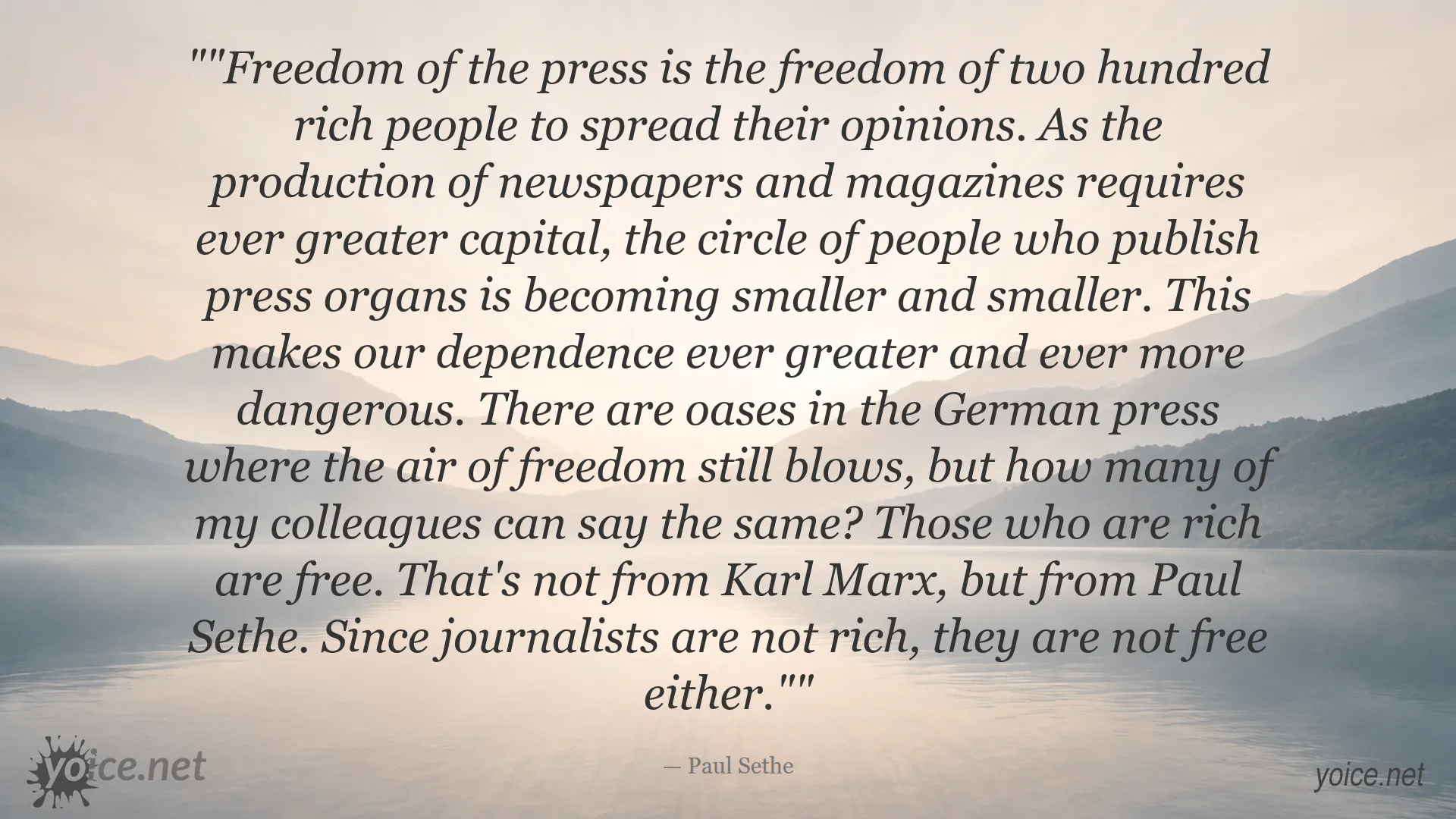
""Freedom of the press is the freedom of two hundred rich people to spread their opinions. As the production of newspapers and magazines requires ever greater capital, the circle of people who publish press organs is becoming smaller and smaller. This makes our dependence ever greater and ever more dangerous. There are oases in the German press where the air of freedom still blows, but how many of my colleagues can say the same? Those who are rich are free. That's not from Karl Marx, but from Paul Sethe. Since journalists are not rich, they are not free either.""
Paul Sethe
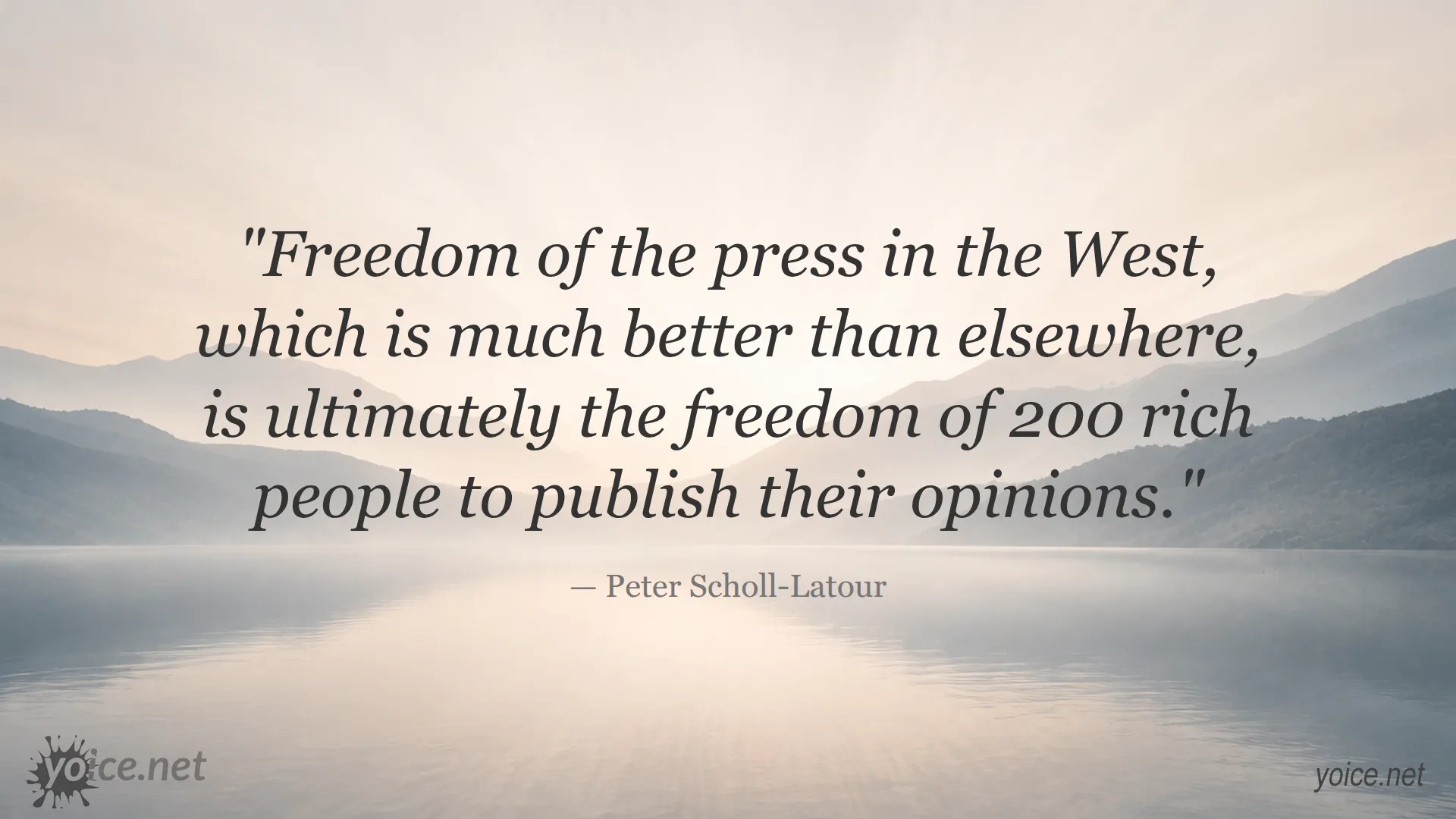
"Freedom of the press in the West, which is much better than elsewhere, is ultimately the freedom of 200 rich people to publish their opinions."
Peter Scholl-Latour
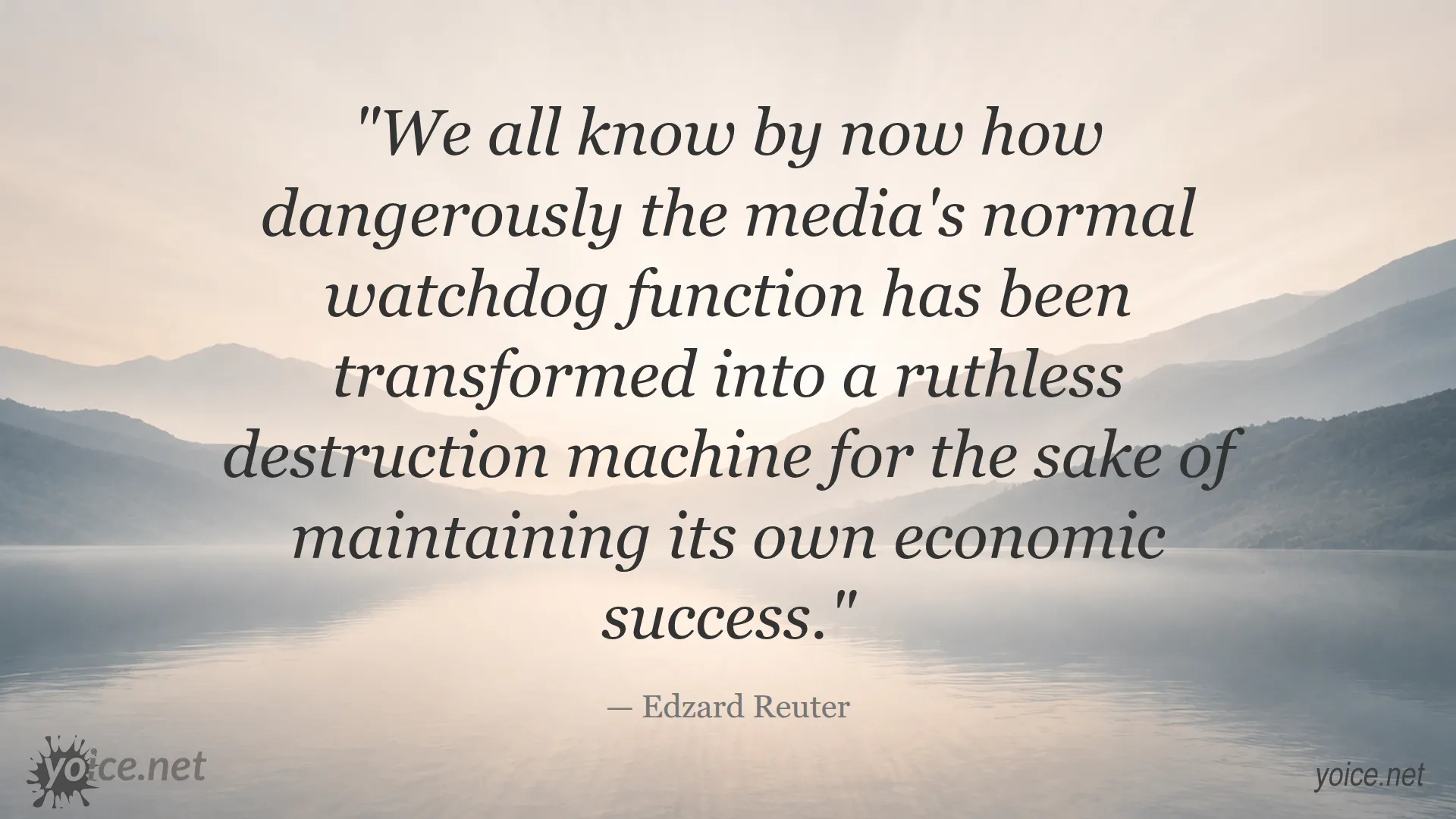
"We all know by now how dangerously the media's normal watchdog function has been transformed into a ruthless destruction machine for the sake of maintaining its own economic success."
Edzard Reuter
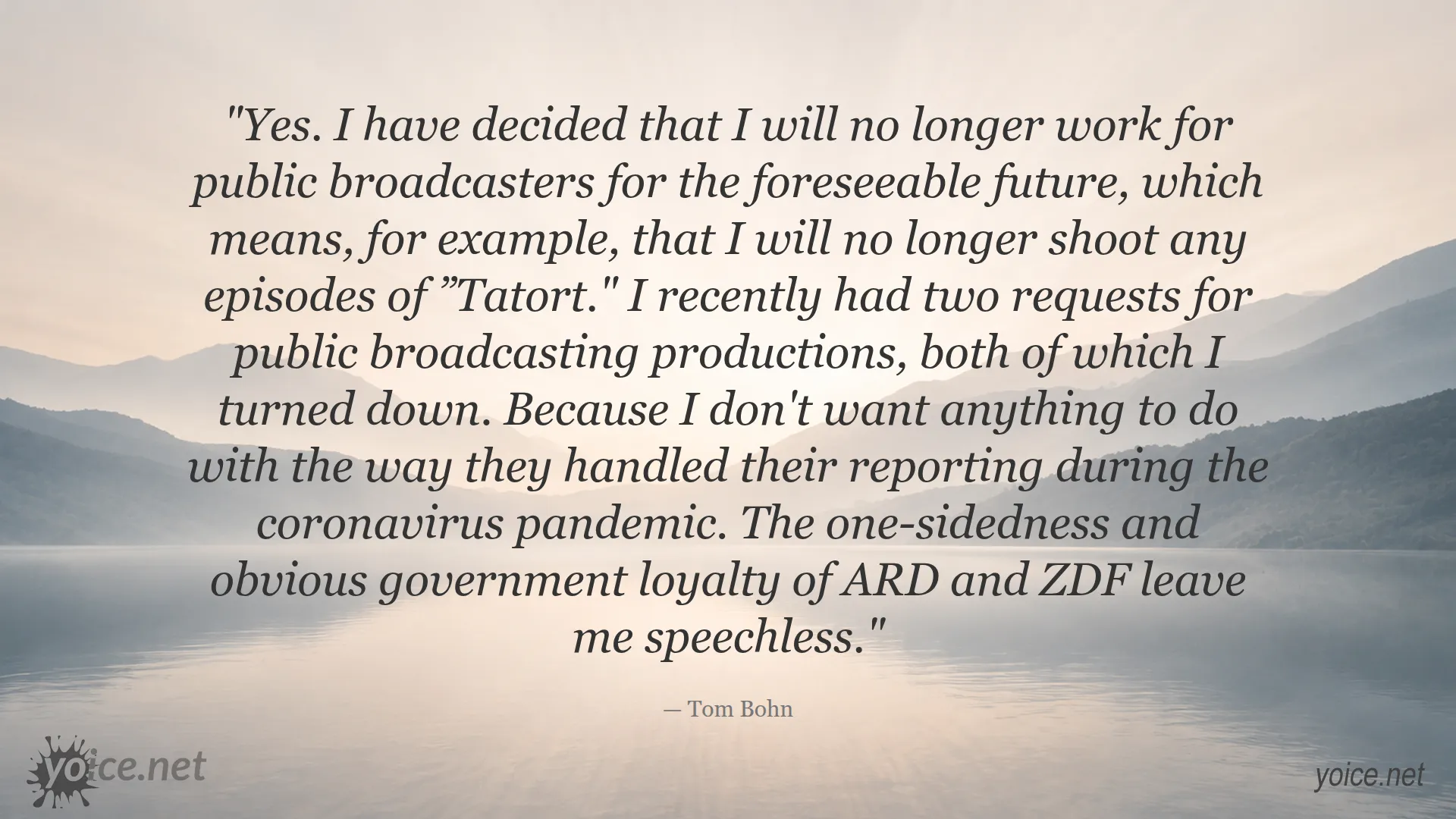
"Yes. I have decided that I will no longer work for public broadcasters for the foreseeable future, which means, for example, that I will no longer shoot any episodes of ”Tatort." I recently had two requests for public broadcasting productions, both of which I turned down. Because I don't want anything to do with the way they handled their reporting during the coronavirus pandemic. The one-sidedness and obvious government loyalty of ARD and ZDF leave me speechless."
Tom Bohn
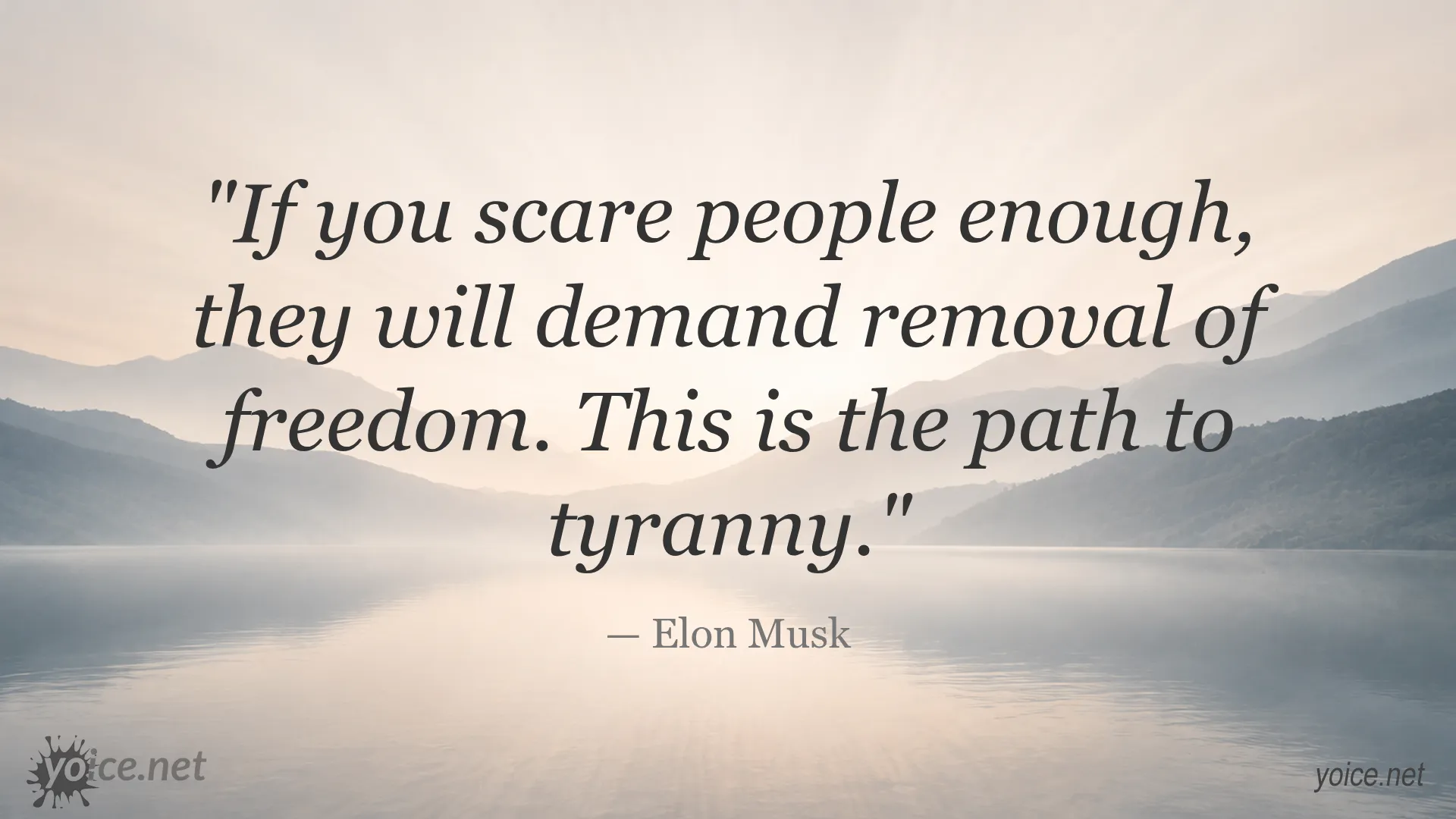
"If you scare people enough, they will demand removal of freedom. This is the path to tyranny."
Elon Musk
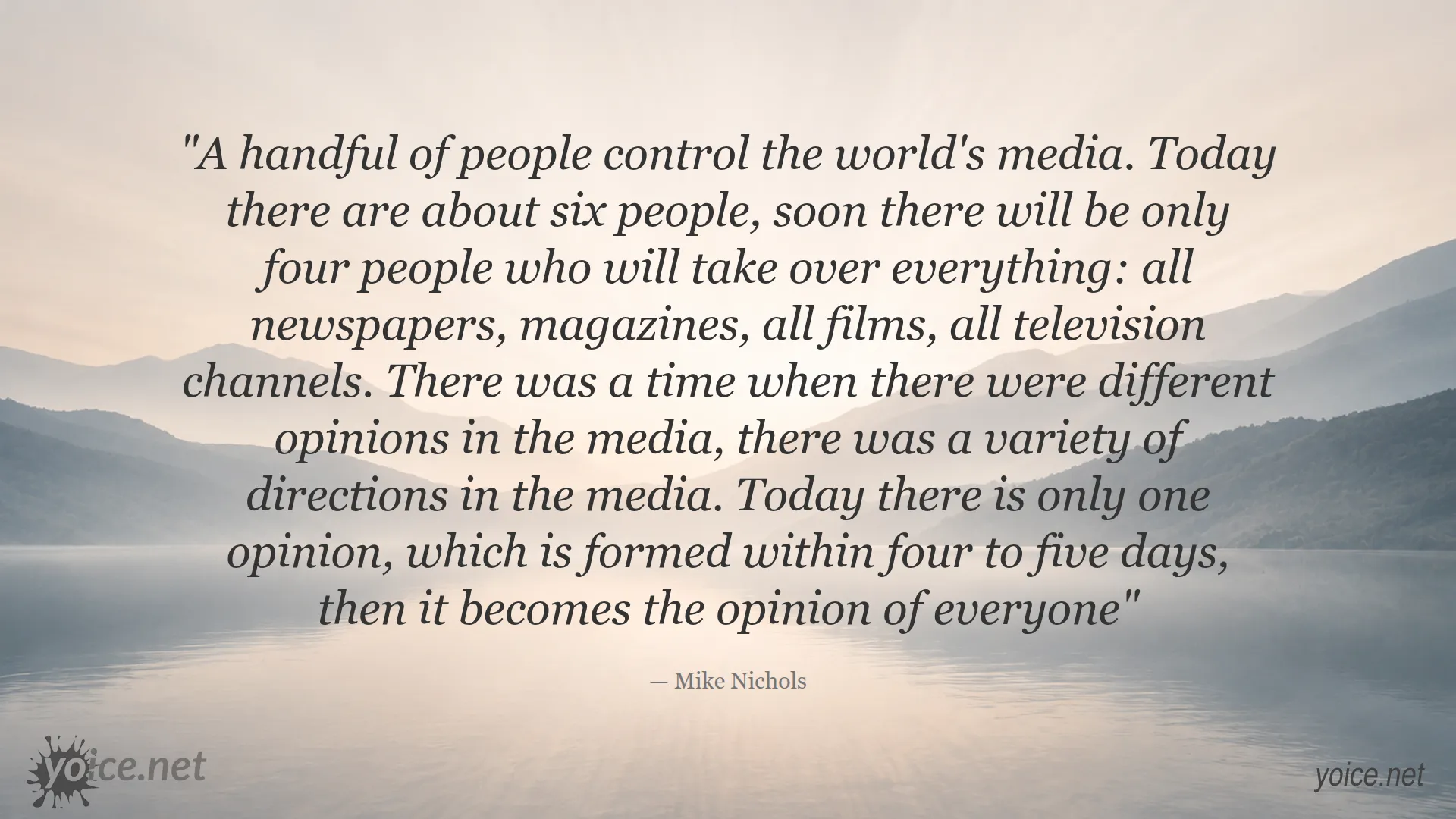
"A handful of people control the world's media. Today there are about six people, soon there will be only four people who will take over everything: all newspapers, magazines, all films, all television channels. There was a time when there were different opinions in the media, there was a variety of directions in the media. Today there is only one opinion, which is formed within four to five days, then it becomes the opinion of everyone"
Mike Nichols
 Copyright © yoice.net – Quote Artwork
 Copyright © yoice.net – Quote Artwork
 Copyright © yoice.net – Quote Artwork
 Copyright © yoice.net – Quote Artwork
 Copyright © yoice.net – Quote Artwork
 Copyright © yoice.net – Quote Artwork
 Copyright © yoice.net – Quote Artwork
 Copyright © yoice.net – Quote Artwork
 Copyright © yoice.net – Quote Artwork
 Copyright © yoice.net – Quote Artwork
 Copyright © yoice.net – Quote Artwork
 Copyright © yoice.net – Quote Artwork
 Copyright © yoice.net – Quote Artwork
 Copyright © yoice.net – Quote Artwork
 Copyright © yoice.net – Quote Artwork
 Copyright © yoice.net – Quote Artwork
 Copyright © yoice.net – Quote Artwork