 Copyright © yoice.net – Quote Artwork
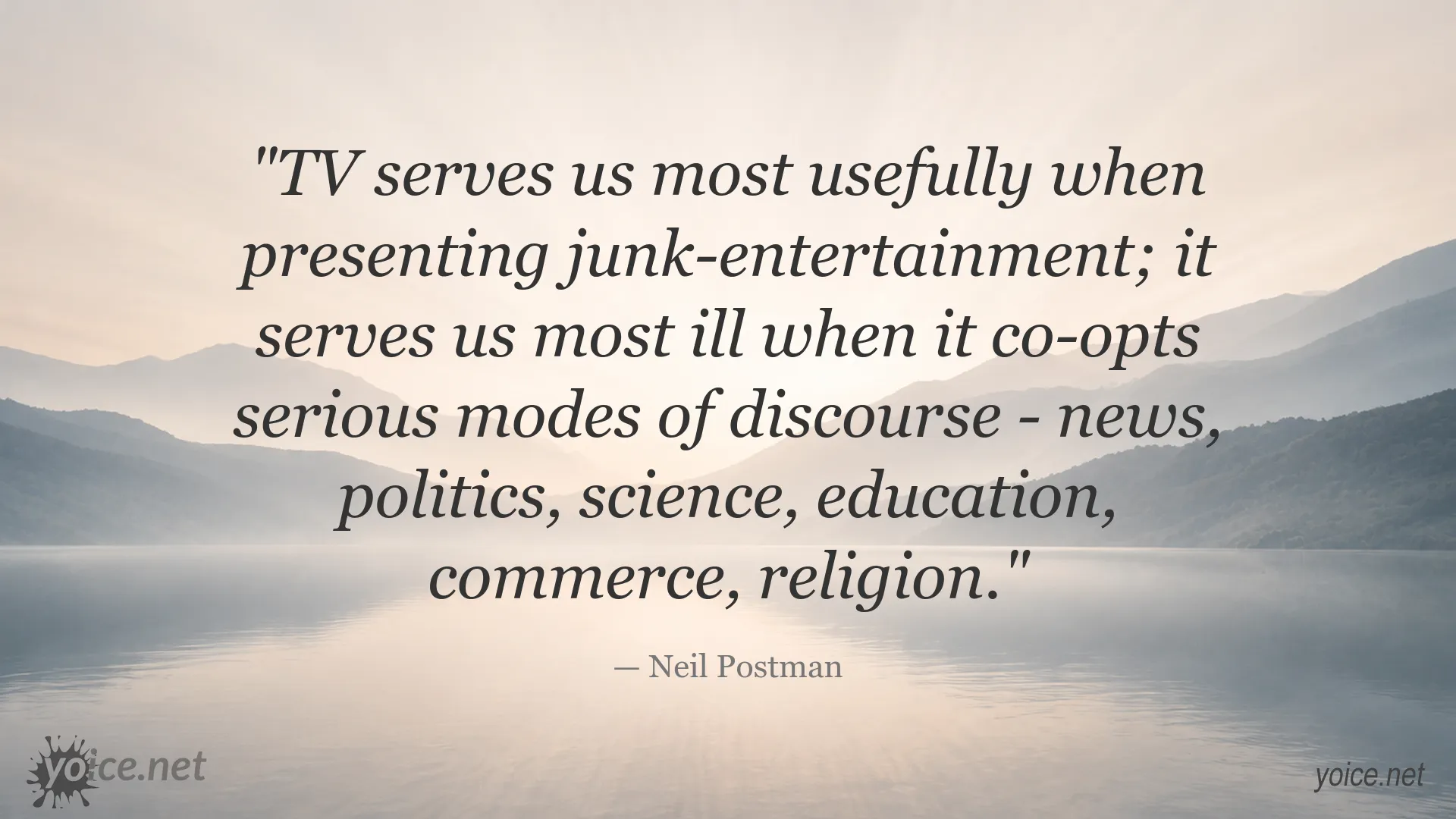
"TV serves us most usefully when presenting junk-entertainment; it serves us most ill when it co-opts serious modes of discourse - news, politics, science, education, commerce, religion."
Neil Postman

Press Quotes – Reflections on the Role of the Press
A set of 428 quotes highlighting the press’s role in communication and its impact on society.
This collection of press quotes presents diverse viewpoints on the press’s role in society. The quotes reflect on communication, information dissemination, and opinion shaping. They encourage reflection on the press as a medium. Drawn from philosophy, culture, and media critique, the quotes offer insight into the press and its influence.
"TV serves us most usefully when presenting junk-entertainment; it serves us most ill when it co-opts serious modes of discourse - news, politics, science, education, commerce, religion."
Neil Postman
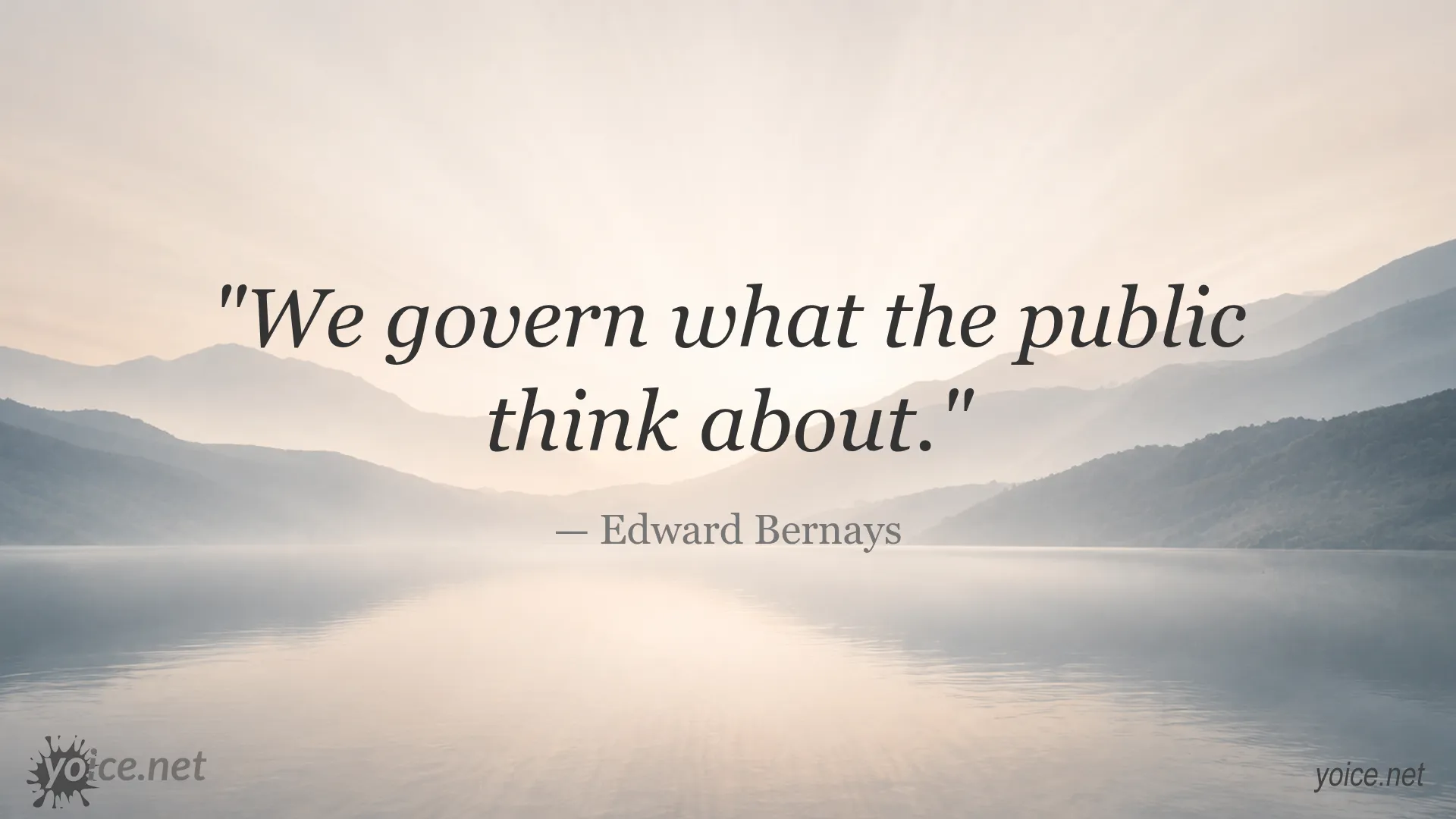
"We govern what the public think about."
Edward Bernays
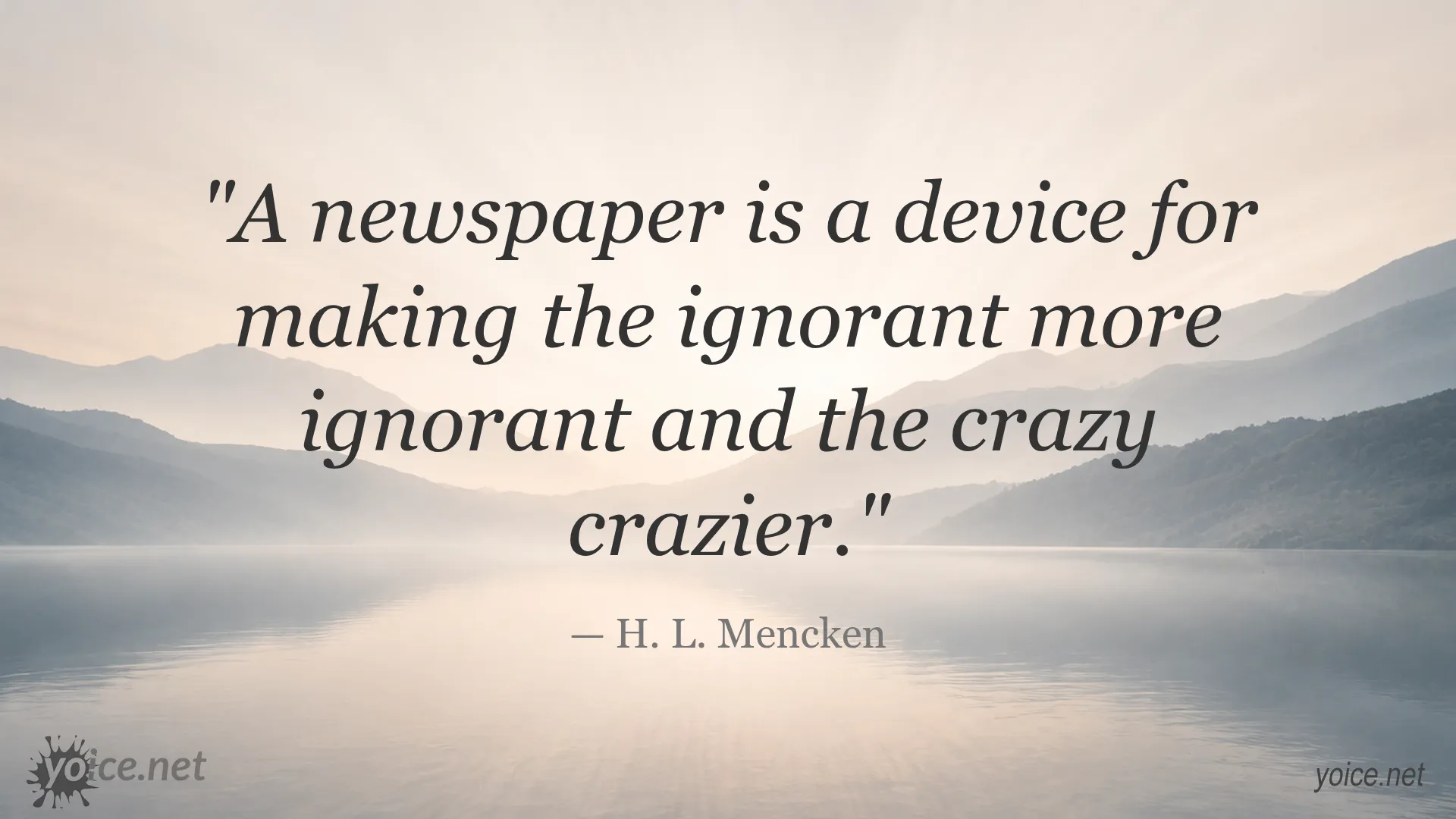
"A newspaper is a device for making the ignorant more ignorant and the crazy crazier."
H. L. Mencken
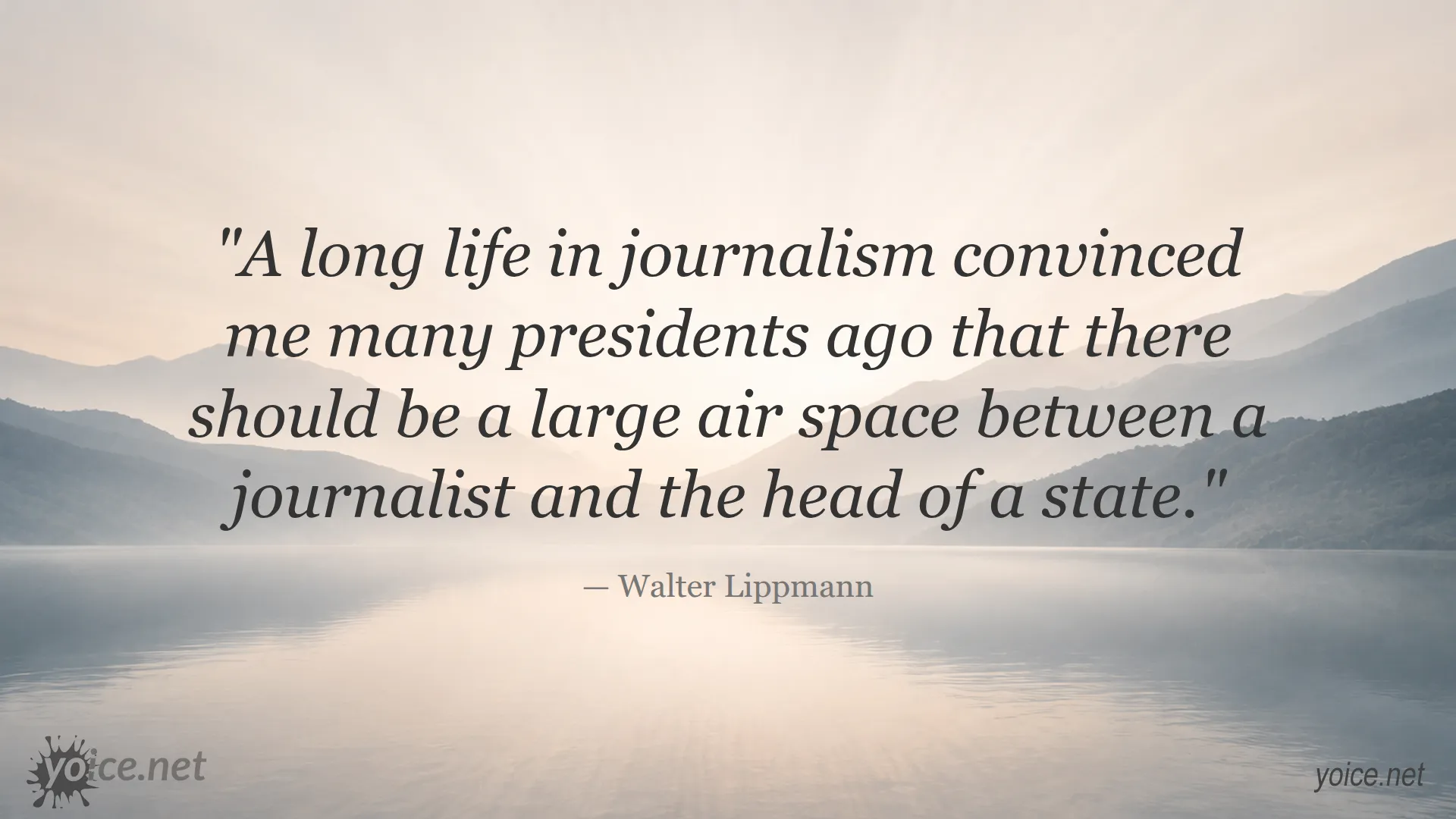
"A long life in journalism convinced me many presidents ago that there should be a large air space between a journalist and the head of a state."
Walter Lippmann
"Universal literacy was supposed to educate the common man to control his environment. Once he could read and write he would have a mind fit to rule. So ran the democratic doctrine. But instead of a mind, universal literacy has given him rubber stamps, rubber stamps inked with advertising slogans, with editorials, with published scientific data, with the trivialities of the tabloids and the platitudes of history, but quite innocent of original thought. Each man's rubber stamps are the duplicates of millions of others, so that when those millions are exposed to the same stimuli, all receive identical imprints. It may seem an exaggeration to say that the American public gets most of its ideas in this wholesale fashion. The mechanism by which ideas are disseminated on a large scale is propaganda, in the broad sense of an organized effort to spread a particular belief or doctrine."
Edward L. Bernays
"Social connections were also transformed beyond recognition. The invention of radio and television led to the rise of the mass media and a corresponding decline in direct human interactions with a merely social function. Evening meetings between neighbors, pub gatherings, harvest festivals, rituals, and celebrations—they were progressively replaced by consumption of what the media presented."
Mattias Desmet
"You don't have any other society where the educated classes are so effectively indoctrinated and controlled by a subtle propaganda system - a private system including media, intellectual opinion forming magazines and the participation of the most highly educated sections of the population. Such people ought to be referred to as "Commissars - for that is what their essential function is - to set up and maintain a system of doctrines and beliefs which will undermine independent thought and prevent a proper understanding and analysis of national and global institutions, issues, and policies"."
Noam Chomsky
"The present crisis of Western democracy is a crisis in journalism."
Walter Lippmann
"As a culture moves from orality to writing to printing to televising, its ideas of truth move with it."
Neil Postman
"It is not entirely true that a TV producer or reporter has complete control over the contents of programs. The interests and inclinations of the audience have as much to do with the what is on television as do the ideas of the producer and reporter."
Neil Postman
"We are not witnessing viral epidemics; we are witnessing epidemics of fear. And both the media and the pharmaceutical industry carry most of the responsibility for amplifying fears, fears that happen, incidentally, to always ignite fantastically profitable business. Research hypotheses covering these areas of virus research are practically never scientifically verified with appropriate controls. Instead, they are established by "consensus." This is then rapidly reshaped into a dogma, efficiently perpetuated in a quasi-religious manner by the media, including ensuring that research funding is restricted to projects supporting the dogma, excluding research into alternative hypotheses. An important tool to keep dissenting voices out of the debate is censorship at various levels ranging from the popular media to scientific publications."
Etienne de Harven
"Assemble a mob of men and women previously conditioned by a daily reading of the newspapers; treat them to amplified band music, bright lights...and in next to no time you can reduce them to a state of almost mindless subhumanity. Never before have so few been in a position to make fools, maniacs, or criminals of so many."
Aldous Huxley
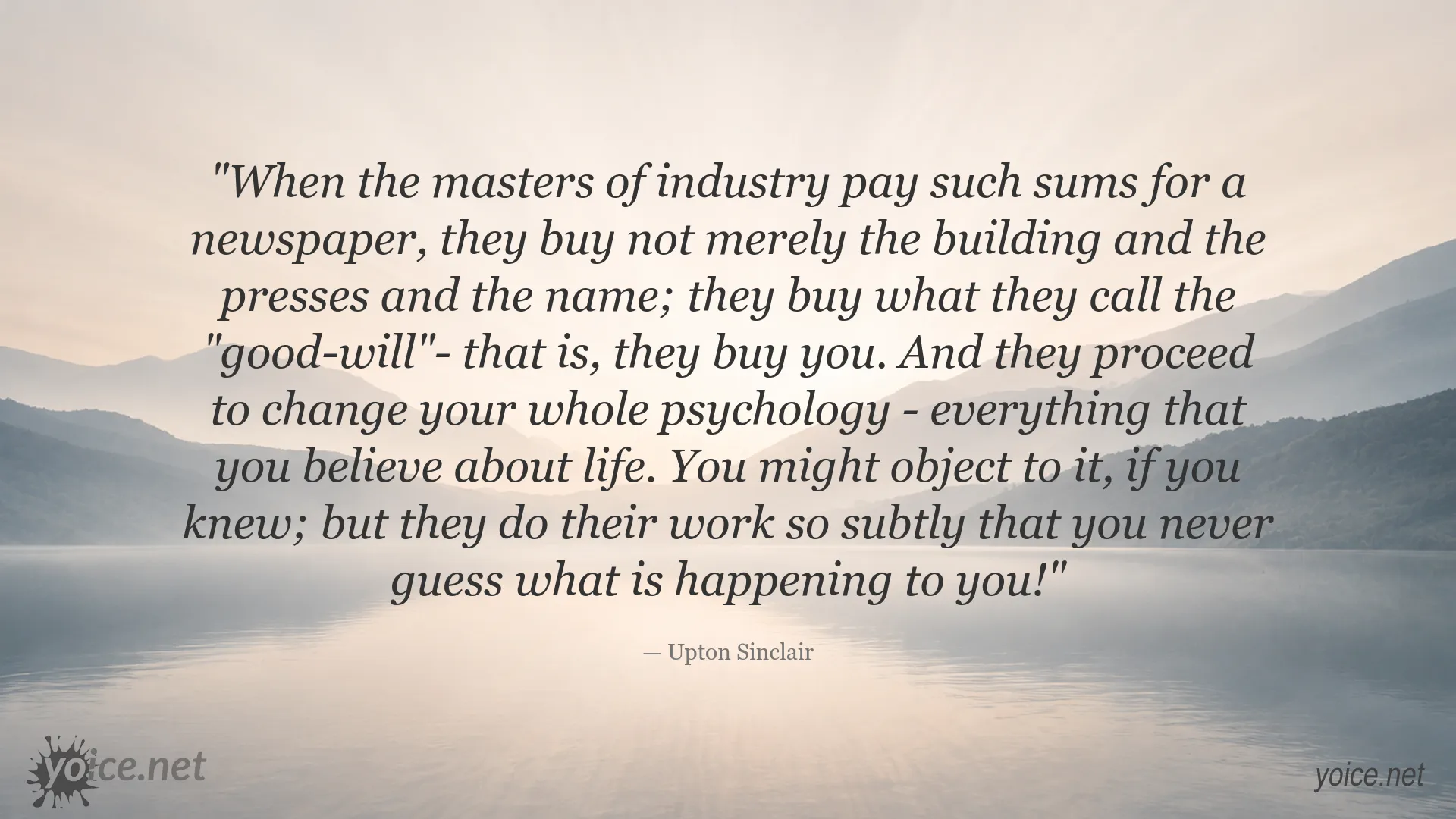
"When the masters of industry pay such sums for a newspaper, they buy not merely the building and the presses and the name; they buy what they call the "good-will"- that is, they buy you. And they proceed to change your whole psychology - everything that you believe about life. You might object to it, if you knew; but they do their work so subtly that you never guess what is happening to you!"
Upton Sinclair
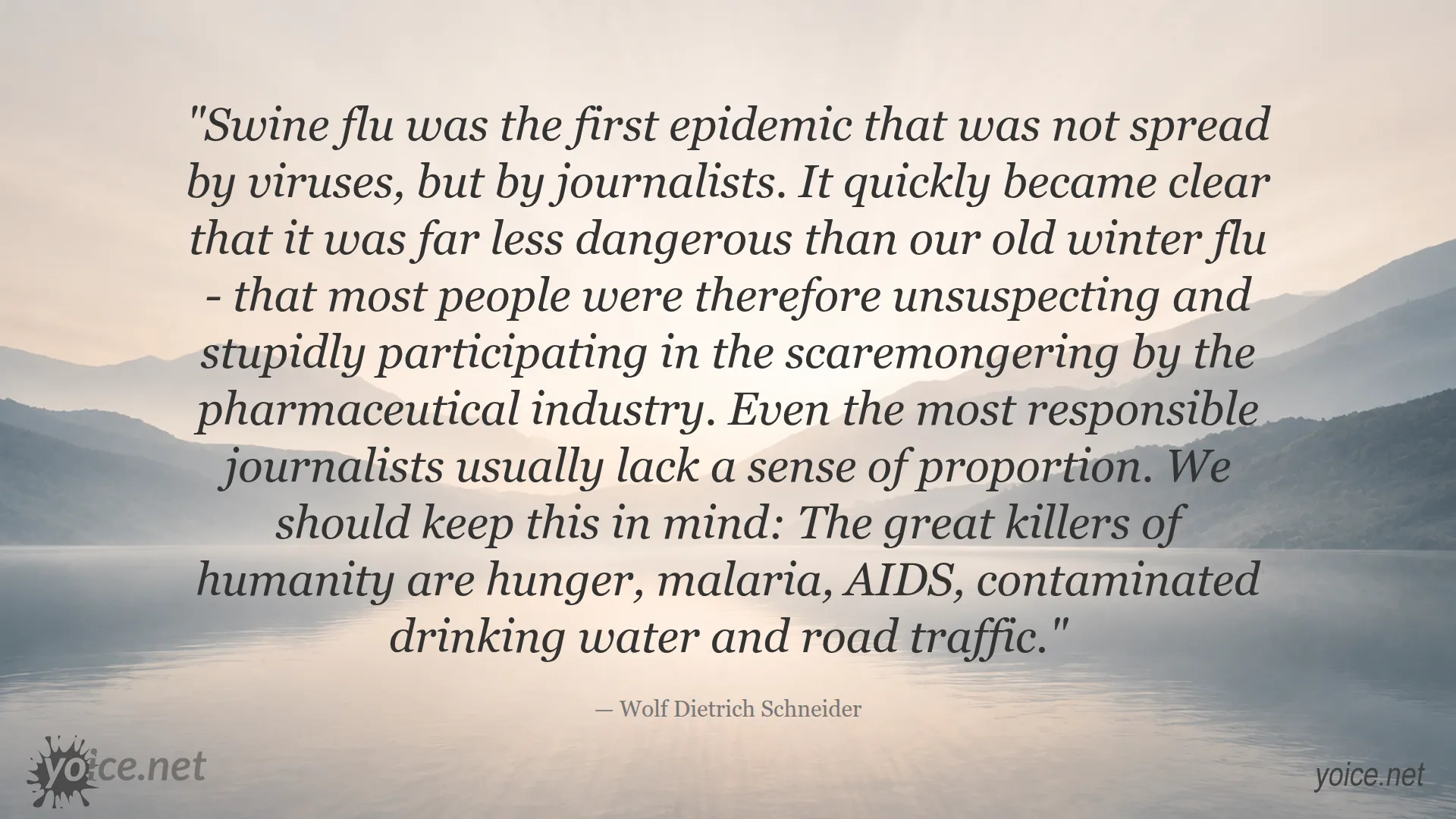
"Swine flu was the first epidemic that was not spread by viruses, but by journalists. It quickly became clear that it was far less dangerous than our old winter flu - that most people were therefore unsuspecting and stupidly participating in the scaremongering by the pharmaceutical industry. Even the most responsible journalists usually lack a sense of proportion. We should keep this in mind: The great killers of humanity are hunger, malaria, AIDS, contaminated drinking water and road traffic."
Wolf Dietrich Schneider
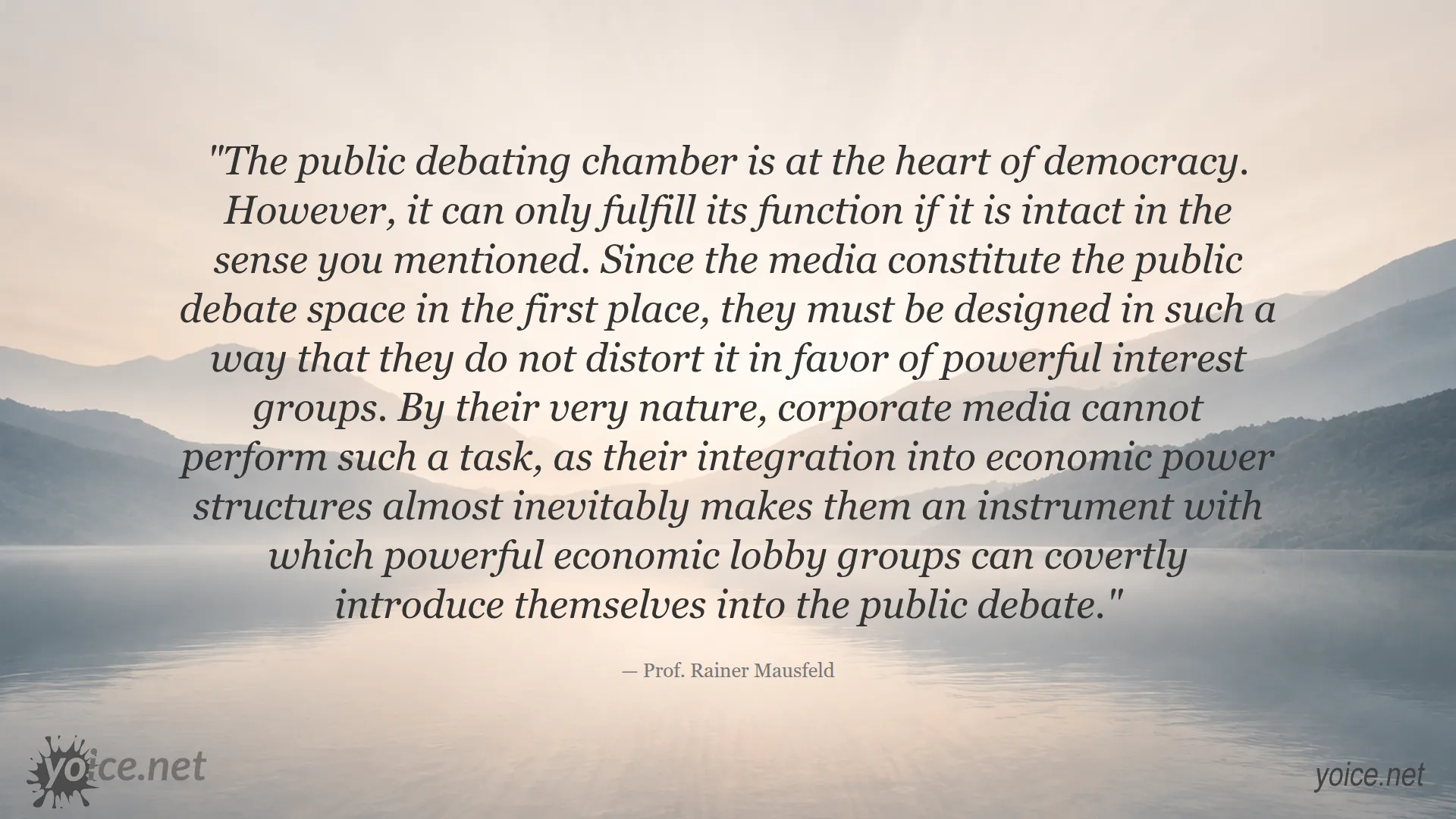
"The public debating chamber is at the heart of democracy. However, it can only fulfill its function if it is intact in the sense you mentioned. Since the media constitute the public debate space in the first place, they must be designed in such a way that they do not distort it in favor of powerful interest groups. By their very nature, corporate media cannot perform such a task, as their integration into economic power structures almost inevitably makes them an instrument with which powerful economic lobby groups can covertly introduce themselves into the public debate."
Prof. Rainer Mausfeld
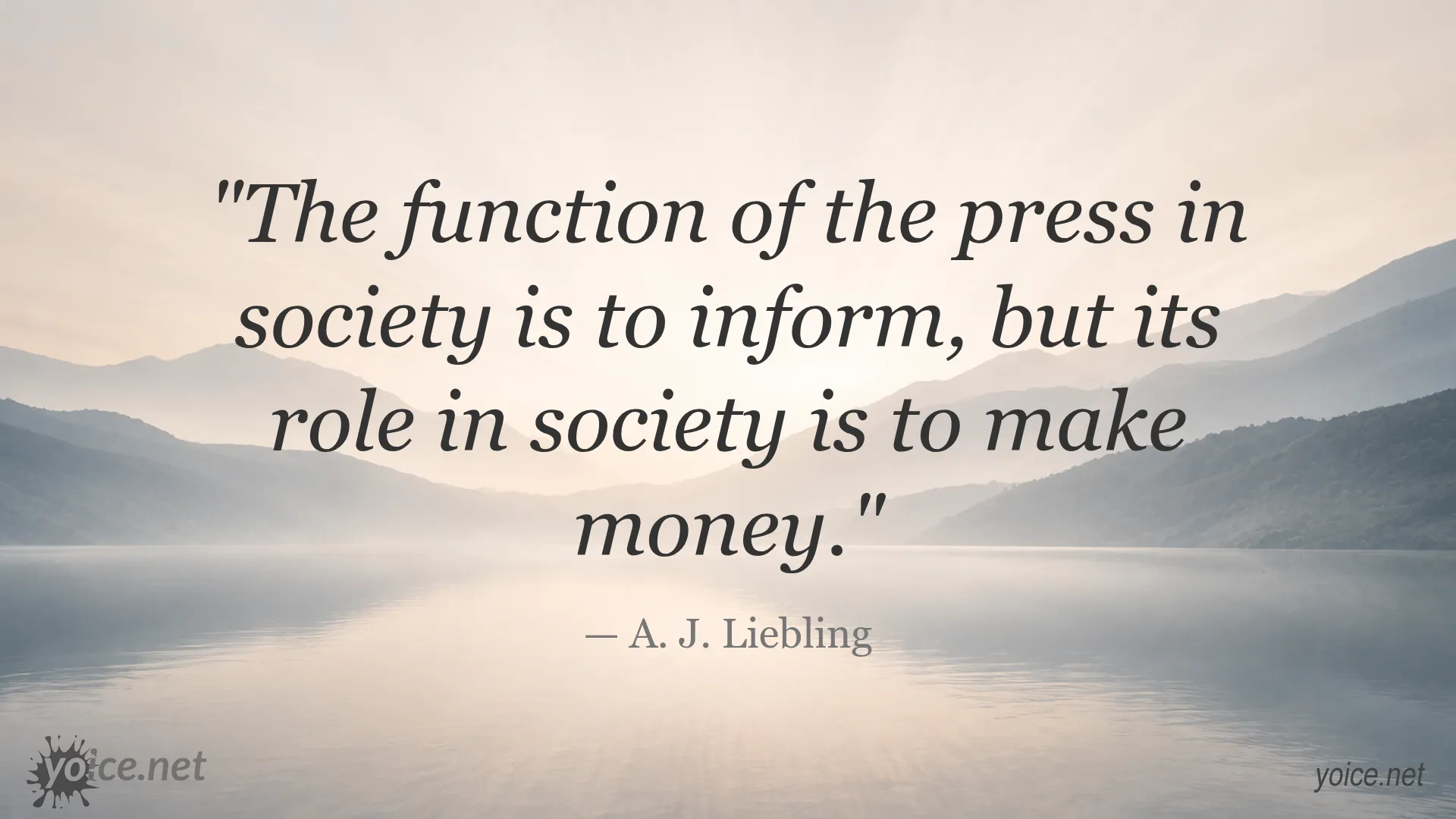
"The function of the press in society is to inform, but its role in society is to make money."
A. J. Liebling
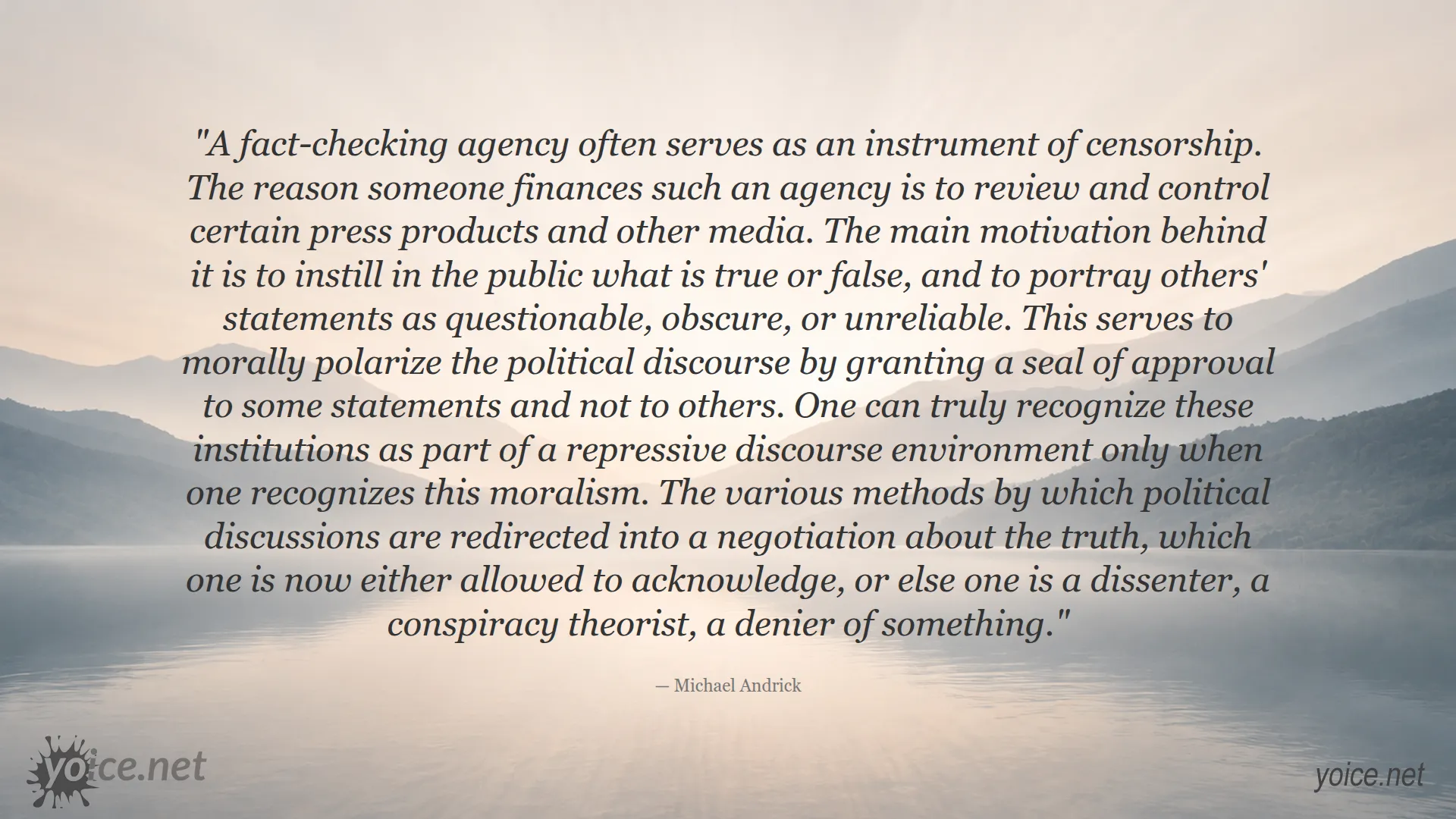
"A fact-checking agency often serves as an instrument of censorship. The reason someone finances such an agency is to review and control certain press products and other media. The main motivation behind it is to instill in the public what is true or false, and to portray others' statements as questionable, obscure, or unreliable. This serves to morally polarize the political discourse by granting a seal of approval to some statements and not to others.
One can truly recognize these institutions as part of a repressive discourse environment only when one recognizes this moralism. The various methods by which political discussions are redirected into a negotiation about the truth, which one is now either allowed to acknowledge, or else one is a dissenter, a conspiracy theorist, a denier of something."
Michael Andrick
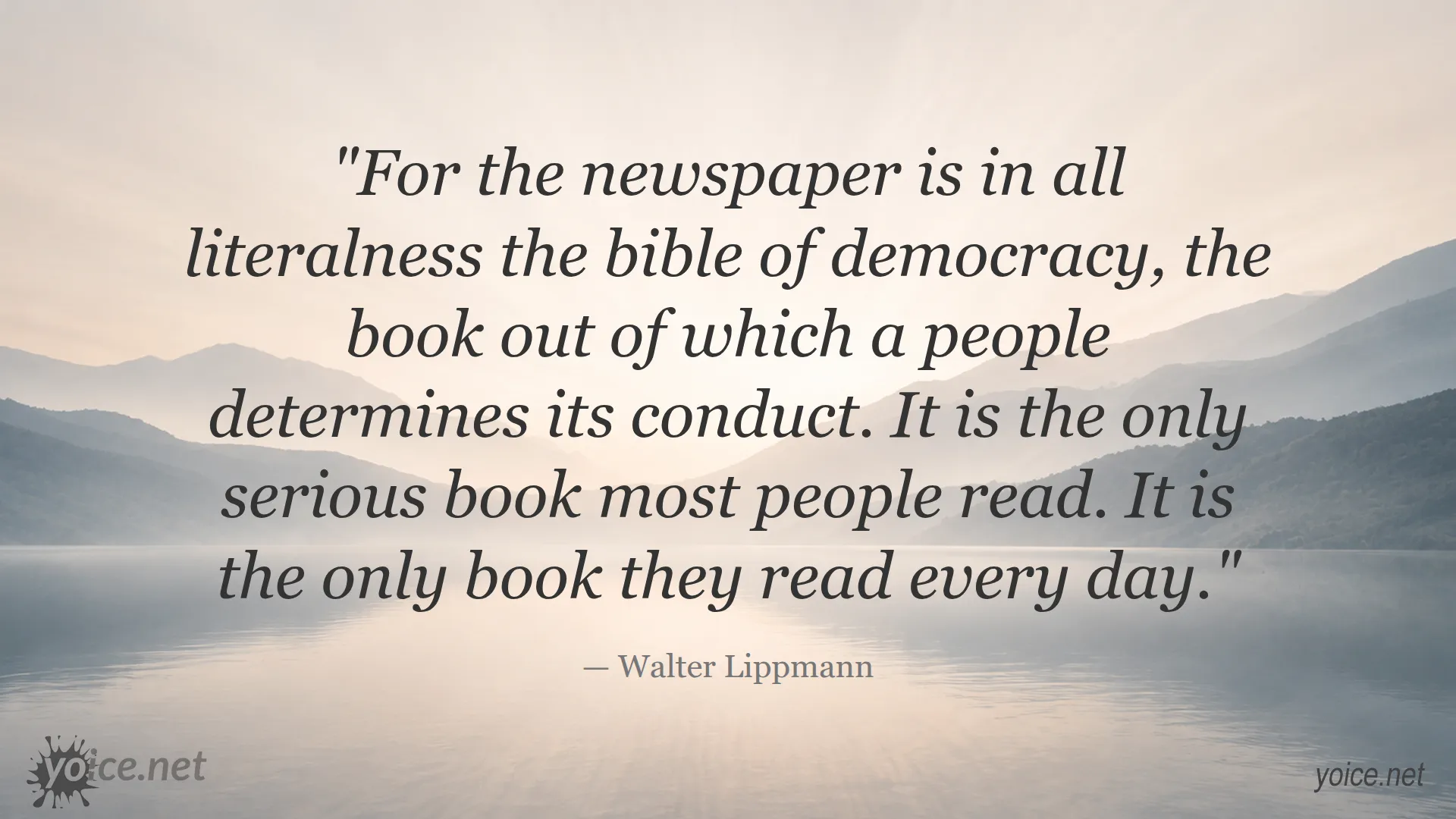
"For the newspaper is in all literalness the bible of democracy, the book out of which a people determines its conduct. It is the only serious book most people read. It is the only book they read every day."
Walter Lippmann
 Copyright © yoice.net – Quote Artwork
 Copyright © yoice.net – Quote Artwork
 Copyright © yoice.net – Quote Artwork
 Copyright © yoice.net – Quote Artwork
 Copyright © yoice.net – Quote Artwork
 Copyright © yoice.net – Quote Artwork
 Copyright © yoice.net – Quote Artwork
 Copyright © yoice.net – Quote Artwork
 Copyright © yoice.net – Quote Artwork
 Copyright © yoice.net – Quote Artwork
 Copyright © yoice.net – Quote Artwork
 Copyright © yoice.net – Quote Artwork
 Copyright © yoice.net – Quote Artwork
 Copyright © yoice.net – Quote Artwork
 Copyright © yoice.net – Quote Artwork
 Copyright © yoice.net – Quote Artwork
 Copyright © yoice.net – Quote Artwork